
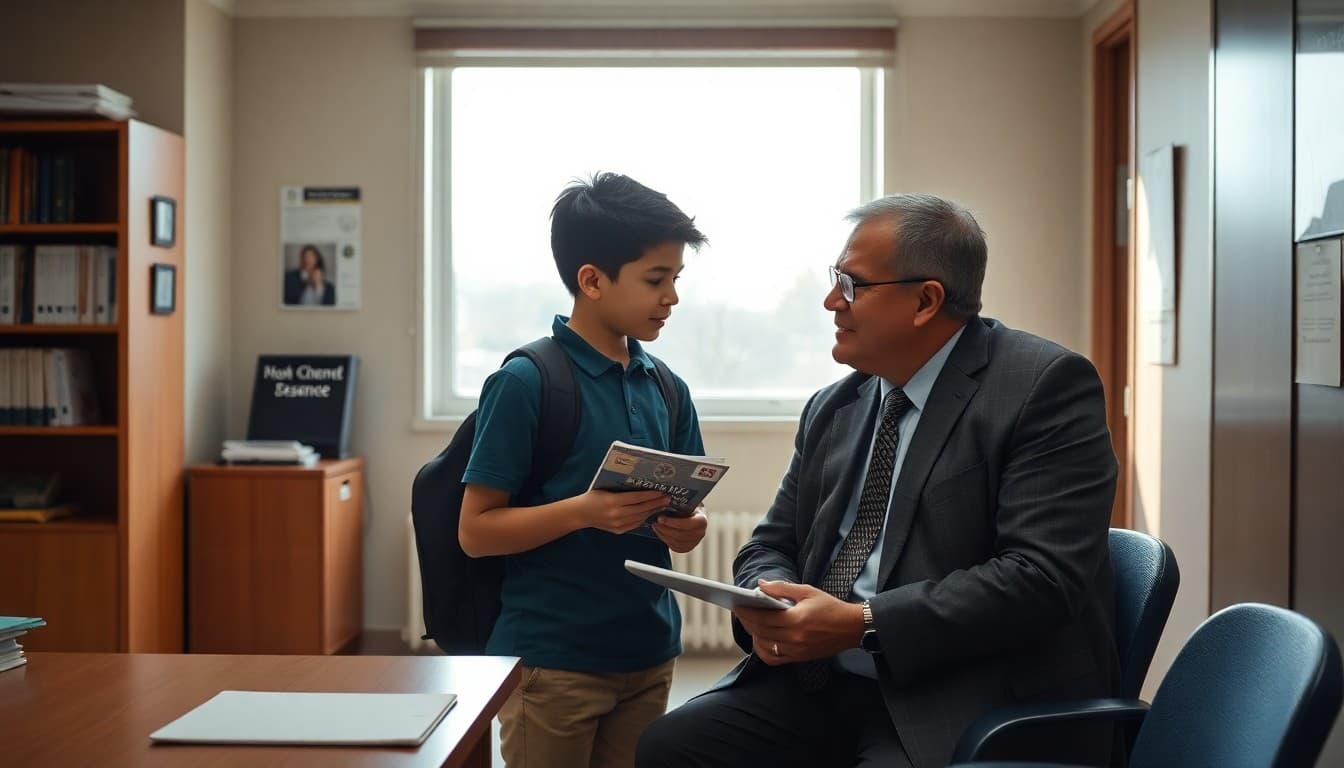
School Newsletter: Principal Shadow Day Invitation for Students

A principal shadow day is one of the more underused leadership programs in schools. When it is done well and communicated clearly, it draws a more diverse set of applicants than most people expect and creates students who feel genuinely connected to how their school works. Here is how to write the announcement that makes that happen.
Describe the Experience Specifically
Vague descriptions produce vague interest. Tell students and families exactly what a shadow day involves: What time does it start? What will the student do? Will they sit in on meetings? Visit classrooms with the principal? Help with morning carpool? Make a decision about something real?
The more specific you are, the easier it is for a student to picture themselves in the role and decide they want to apply. "Students will spend a half day observing and participating in school administration" is far less compelling than "Students will attend a staff briefing, observe the principal handle a real scheduling question, tour the building during passing time, and share one idea for improving something at school."
Explain the Selection Process
Transparency builds trust. Whether you are using a short written application, teacher nominations, or a random draw from interested students, explain how it works. State the criteria clearly: Is this open to all grade levels? Are there academic or behavioral eligibility requirements? How many students will be selected?
If this is a recurring program, note how often it happens and whether past participants can apply again. Families want to know whether this is a meaningful program with structure or a one-off that may not happen again.
Include the Application or Nomination Process
Make it easy to apply. A short Google Form with two or three questions is ideal. Questions that work well: "Why are you interested in shadowing the principal?" and "What is one thing you would want to learn about how our school works?" Keep the application brief enough that it does not feel like a barrier, but substantive enough that it reflects genuine interest.
Include the deadline prominently and be firm about it. A two-week application window gives interested students and families enough time to respond without letting interest fade.
Template Excerpt for Principal Shadow Day Announcement
Here is a structure to adapt:
"We are inviting students in grades [X-X] to apply for a Principal Shadow Day experience at [School Name]. Shadow day participants spend [half day / full morning] with Principal [Name], observing the day-to-day work of school leadership. This is a real look at how decisions get made, not a tour. Students will attend [specific activities]. To apply, complete the short form at [link] by [Date]. We will select [number] students per [quarter / semester]. No prior student government experience required; curiosity about how school works is the main qualification."
Quote a Previous Participant
If you have run this program before, ask a past participant to contribute a two-sentence quote about their experience. Student testimonials are significantly more persuasive than administrator descriptions. "I did not expect to sit in on a real conversation about the bell schedule, but it made me understand how many people are affected by decisions that seem small" is worth more than a paragraph of adult explanation.
Frame It as a Leadership Program, Not a Reward
Some schools inadvertently position shadow day as a reward for good behavior or academic achievement. That framing limits your applicant pool and can feel exclusionary. Frame it instead as a leadership development opportunity that builds perspective and connection to the school. You will attract more interesting candidates and create a more meaningful experience.
Follow Up in the Newsletter After Shadow Days Occur
Once a shadow day has taken place, include a brief note in the newsletter. Share a quote from the principal about what struck them about the student's questions or observations. This visibility matters for two reasons: it validates the participants and it signals to the rest of the school community that the program is real, taken seriously, and worth applying for next time.
Get one newsletter idea every week.
Free. For teachers. No spam.
Frequently asked questions
What is a principal shadow day and why should schools offer it?
A principal shadow day invites a student to spend a portion of the school day observing and participating in the administrative work of running a school. Students attend meetings, observe how decisions are made, and get a candid look at school leadership. It builds leadership capacity, strengthens student-administration relationships, and gives students a genuine sense of ownership over their school community.
How should schools select students for principal shadow day?
Many schools use a brief application process: one or two questions about why the student is interested and what they hope to learn. Others select through teacher nominations. A transparent selection process is important because students who are not selected deserve to understand the criteria. Whatever your process, communicate it clearly in the newsletter announcement.
What should a principal shadow day newsletter announcement include?
Describe what the experience involves, who is eligible, how to apply or be nominated, the application deadline, and when shadow days are scheduled. Include a brief quote from a previous participant if this is not the first time running the program. If it is new, include a note from the principal about why they are looking forward to it.
How do you make principal shadow day announcements inclusive?
Frame the opportunity broadly. Some students and families assume shadowing programs are only for students with perfect records or student council involvement. Explicitly mention that the program is open to all students meeting basic eligibility criteria and emphasize curiosity and interest in school leadership as the primary qualifications.
What newsletter tool helps schools manage application links and responses?
Daystage supports embedded links and RSVP features that work well for structured programs like shadow day applications. You can link directly to a Google Form or application page from the newsletter and track which families actually clicked through, which helps when you need to follow up with interested families who have not yet completed an application.

Adi Ackerman
Author
Adi Ackerman is a former classroom teacher and curriculum writer with 8 years in K-8 schools. She writes about school communication, parent engagement, and what actually works in real classrooms.
More for Guides
Ready to send your first newsletter?
3 newsletters free. No credit card. First one ready in under 5 minutes.
Get started free