
Personalizing School Newsletters Without Violating Student Privacy
When most people think about email personalization, they think about mail merge: inserting a recipient's name into the subject line or opening sentence. That is one form of personalization, and it has limited value in school newsletters because parents already know they are receiving a classroom communication. The personalization that actually builds connection in school newsletters is something different: specificity, classroom detail, and a voice that sounds like a real person wrote it.
What personalization means in school newsletters
A personalized school newsletter is one that could only have been written by a teacher who was in that specific classroom this week. It references real moments, actual projects, specific units of study, and observations that no generic template could generate.
Compare these two classroom spotlight descriptions:
- "This week students worked on their science projects."
- "This week the class built working circuits using batteries, wires, and LEDs. The room smelled like solder by Thursday and every single team got at least one light to turn on."
The second one is personalized. Not because it includes anyone's name, but because it describes a specific thing that happened. Parents reading it feel like they got a window into the classroom. That feeling is what personalization produces when it works.
Using child names correctly
Child names can appear in school newsletters in limited ways without creating FERPA concerns. Mentioning a student by name in a general, positive context is typically fine: "Congratulations to Mia, who represented our class in the district spelling bee." This references publicly observable information, not an educational record.
Names become a problem when they are linked to educational records: academic performance, disciplinary history, attendance, special education status, or any classification that comes from the school's official records. "Mia has shown strong growth on her reading assessments this quarter" crosses that line, even though it is framed positively. The reading assessment data is a protected educational record.
When in doubt about a name mention, ask: could this sentence reveal anything about the student's academic standing, behavior, or special status? If yes, remove the name.
Classroom-specific language and cultural warmth
Some of the most effective personalization comes from language that reflects the specific culture of the classroom. If your class has a running joke about a vocabulary word from October, mentioning it in November shows parents that the classroom has a shared identity. If the class gave a project a nickname, using that nickname in the newsletter lets parents in on something real.
This kind of personalization does not require any student data. It requires the teacher to remember what happened and to write about it specifically. No privacy risk, and the result is a newsletter that parents feel rather than just process.
Warm vs. generic: the real difference
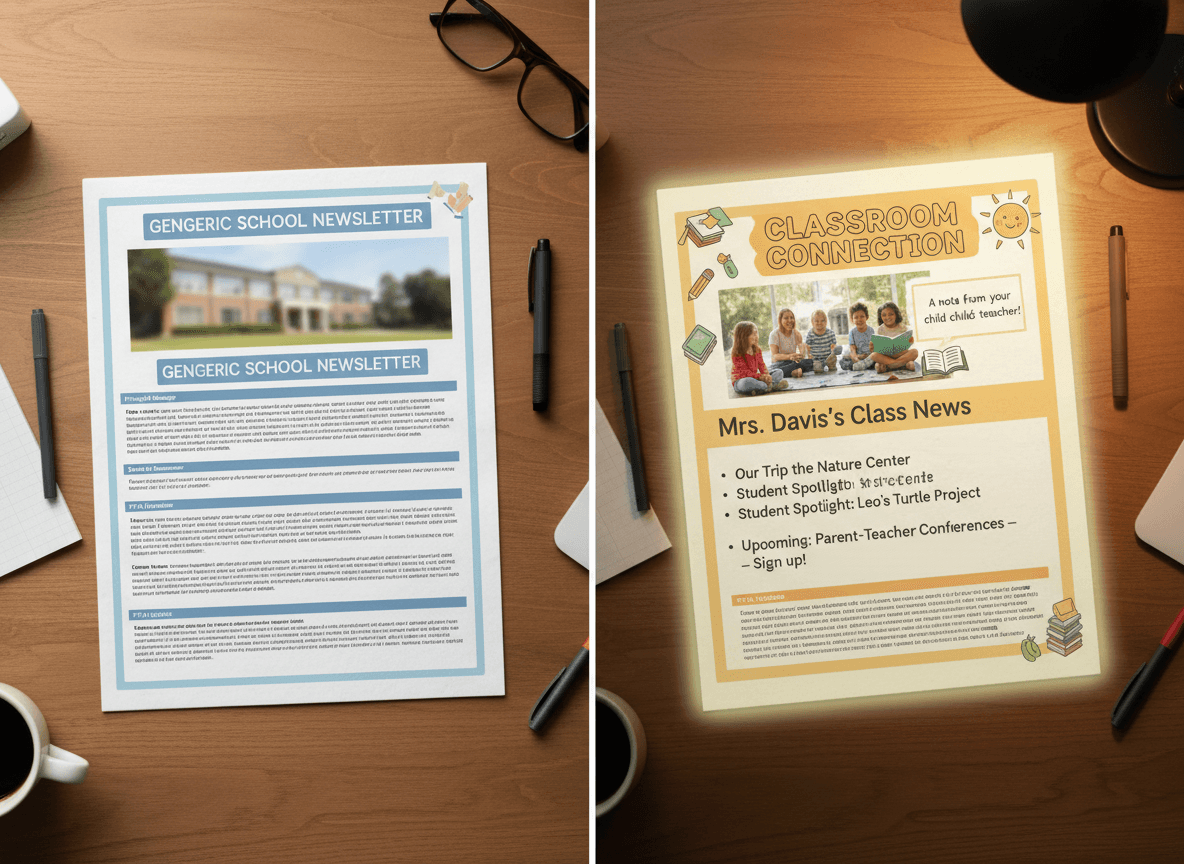
Generic newsletters are easy to spot because they could have been written without spending a single day in the classroom. Every sentence could apply to any class, any teacher, any school. "We had a wonderful week of learning." "Students are working hard." "Thank you for your continued support."
Warm newsletters are specific. They contain details that only someone who was there would know. They reference the actual work students are doing in language that shows the teacher paid attention. They ask parents questions about their child's week that connect to what the class is studying.
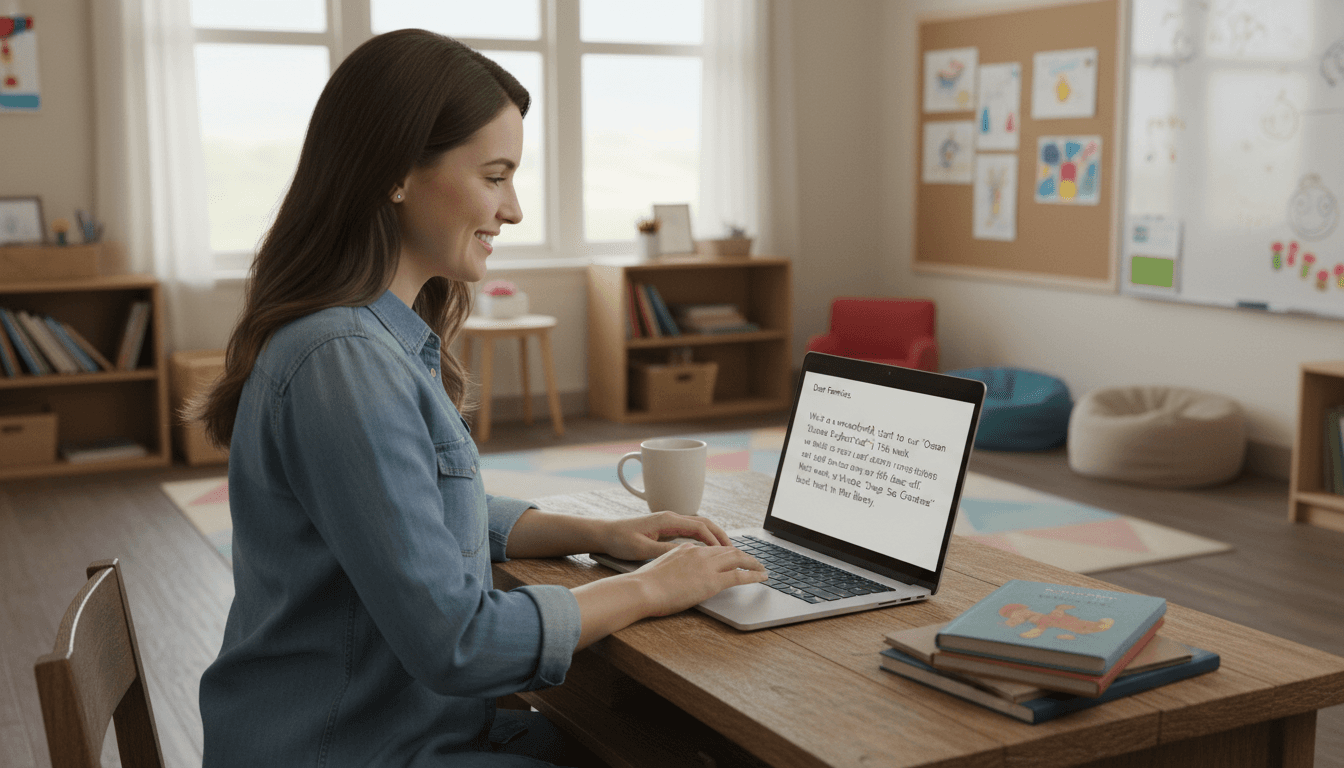
Daystage's AI draft tool helps remove the blank-page barrier, but the specificity still has to come from you. The AI produces structure. The personal details come from your notes, your observations, and your memory of what actually happened in the room this week.
Inviting parent involvement as a personalization strategy
One of the most effective personalization techniques is asking parents to do something specific with their child based on what the class is studying. "Ask your child tonight what the difference is between a simile and a metaphor. They will have an answer." "See if your child can explain why we need to carry when we multiply two-digit numbers."
These prompts make the newsletter feel personal because they connect the classroom to the specific child at home. They give parents a way in. They make dinner conversation about school more likely. And they do not require any student-specific data. Every family in the class gets the same prompt, and it is individually useful for each of them.
The line between personal and private
Personalization and privacy are not in conflict as long as the distinction is clear. Personalization means writing specifically about real classroom experiences. Privacy means not linking individual student names to protected educational information.
You can write a deeply personal newsletter without mentioning a single student's name. You can describe what the class did, what the room felt like, what was hard and what went well, what parents should ask about at home, all of it specific and warm, none of it private.
The newsletters that parents save and re-read are always the specific ones. Not because they contain private information, but because they contain real information. Specificity is the whole point.
A note on individualized newsletters
Some teachers ask whether they should send different newsletters to different families, customized to each child's experience. In most cases, this is not worth the effort. The personalization that matters to parents is not about their specific child's week; it is about feeling connected to the classroom their child is in. A well-written classroom newsletter creates that connection for every family without requiring individual customization.
Reserve individualized communication for situations that actually require it: a specific concern about a student, a one-on-one update that should not be shared with the class, or a follow-up to a parent conversation. The newsletter is for everyone. The personal message is for one family at a time.
Get one newsletter idea every week.
Free. For teachers. No spam.
Frequently asked questions
When should teachers personalize school newsletters, and when does it cross into student privacy issues?
Personalize at the classroom level rather than the individual student level. Writing 'your child's class started fractions this week' is appropriate personalization. Writing 'your child scored below grade level on the fractions quiz' is private student information that belongs in a one-on-one communication, not a newsletter. The newsletter is for the class community, not individual academic reporting.
What does meaningful personalization look like in a school newsletter?
Meaningful personalization includes using the teacher's name and voice consistently, referencing specific classroom events rather than generic activities, including culturally relevant content for your school's community, and occasionally inviting parent participation in ways that are specific to your classroom. These elements make parents feel connected without requiring any data-driven personalization technology.
How can teachers make school newsletters feel personal without using student names or data?
Use 'your child' rather than no personal reference at all. Reference specific things that happened in your classroom this week, like the specific book you read or the exact science experiment you conducted. Write in first person with your own voice rather than in institutional third person. Specific details signal personal attention more than name personalization does.
What are common personalization mistakes in school newsletters?
Using 'your child' so frequently that it becomes mechanical is a common mistake. Another is adding a 'personalized' note that applies to every family equally, which reads as mass mail even if it uses personal-sounding language. True personalization in newsletters comes from specificity about what is happening in this classroom, not from mail-merge tokens.
What is the best tool for teachers who want to write personalized school newsletters efficiently?
Daystage uses a block-based editor with sections for classroom-specific content like what students are learning and upcoming events. The structure encourages teachers to write specific weekly details rather than generic recurring text, which is what makes newsletters feel personal to the families receiving them.

Adi Ackerman
Author
Adi Ackerman is a former classroom teacher and curriculum writer with 8 years in K-8 schools. She writes about school communication, parent engagement, and what actually works in real classrooms.
More for Guides
Ready to send your first newsletter?
3 newsletters free. No credit card. First one ready in under 5 minutes.
Get started free