
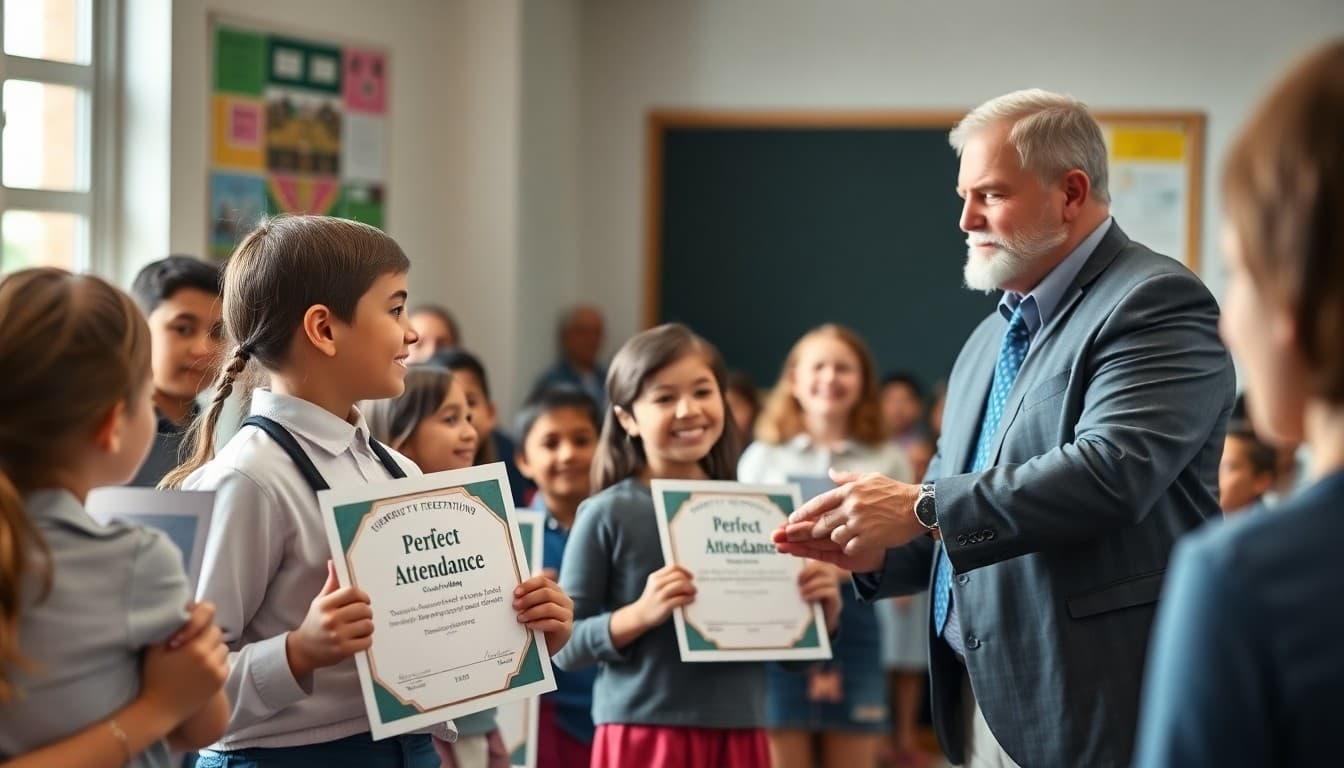
School Newsletter: Perfect Attendance Celebration Template

Attendance recognition newsletters celebrate one of the most important factors in student success: showing up consistently. Done thoughtfully, they motivate students and families, build a culture of engagement, and communicate that the school values presence. Done carelessly, they create equity tensions and pressure families to send sick kids to school. This template covers both the celebration and the nuance.
Open with why attendance matters, briefly
"We are proud to celebrate the students who have achieved strong attendance records this [semester / quarter / year]. Research consistently shows that students who attend school at least 95% of the time score higher on academic assessments, have stronger relationships with teachers and peers, and are better prepared for the next grade level. Every day of school matters, and we want to recognize the students and families who make consistent attendance a priority." One paragraph is enough. The newsletter should spend most of its space on the recognition itself, not the rationale.
Define your recognition thresholds clearly
State what each category means in plain numbers. "This semester, we are recognizing three attendance achievement levels: Perfect Attendance: Zero absences during the [semester dates]. This includes [state what counts: excused and unexcused / only unexcused / any absence including school-sponsored activities]. Honor Attendance: One or two absences for the semester (98% or above). Strong Attendance: Fewer than five absences for the semester (97% or above, approximately)." Clear definitions prevent the disappointed families who thought their student qualified but discover a field trip counted.
List the recognized students by grade or class
"The following students achieved [recognition level] during [semester]. We congratulate each student and thank their families for supporting consistent school attendance. Kindergarten: [names]. First Grade: [names]." And so on through all grade levels. Using first name and last initial protects partial privacy while still giving students the recognition. Check your school's media policy before publishing full names.
Share the school-wide attendance data
"School-Wide Attendance This Semester: [X]% of our students achieved 95% or better attendance this semester. [X] students achieved perfect attendance. Our school's average daily attendance rate was [X]%, compared to [X]% last semester. [Grade level] had the highest percentage of students with strong attendance at [X]%." Aggregate data shows families that the recognition reflects a real community pattern, not just an individual reward.

Describe the recognition ceremony or celebration
"Students who achieved perfect attendance will receive [certificate / award / special recognition] at the [ceremony name] on [date]. Perfect attendance students are also invited to a [brief description of reward: lunch with the principal, a special class activity, an end-of-year celebration event]. Certificates will be mailed home to families of strong attendance students who are not receiving the ceremony award." Naming the tangible recognition gives students and families something concrete to anticipate.
Note the support available for families navigating attendance challenges
Include this section briefly and without identifying anyone. "We know that consistent attendance is not always easy. Families who face transportation challenges, chronic illness, housing instability, or other barriers to attendance are encouraged to contact our counseling office at [email]. We have resources to support families in navigating these challenges and keeping students in school. These conversations are confidential."
Close with the next recognition period
"We will recognize attendance achievements again at the end of [next period]. Students who are working toward strong attendance for the year still have time to earn the annual recognition. Every day counts. Thank you for being a partner in your student's education."
Get one newsletter idea every week.
Free. For teachers. No spam.
Frequently asked questions
Is perfect attendance a good metric to celebrate publicly?
Perfect attendance celebrations are common but not universally endorsed. Proponents argue they incentivize consistent school attendance, which is genuinely correlated with academic outcomes. Critics point out that perfect attendance rewards students who had no illnesses, family emergencies, or necessary medical appointments, which are often outside the student's control, and can pressure families to send sick children to school. A nuanced approach recognizes strong attendance (95% or above) rather than only perfect attendance, and avoids singling out students who missed significant time for health or family reasons in the recognition.
What threshold should a school use for attendance recognition?
Most school attendance research uses 90% as the chronic absenteeism threshold (below which students show significant academic impact) and 95% or above as the target for strong attendance. A recognition newsletter that celebrates students at the 95% and above threshold (roughly 9 or fewer absences in a 180-day year) is more inclusive than one that only recognizes perfect attendance, while still meaningfully celebrating the families who prioritize consistent school presence. Some schools use 98% or perfect as a special honor tier and 95% as a general recognition tier.
How do you communicate attendance data to the whole school community?
Share the school's aggregate attendance data: the percentage of students who met the 90%, 95%, and 100% thresholds, how the school's attendance compares to the prior year, and any grade levels or subgroups that showed notable improvement. Aggregate data celebrates school-wide progress without singling out students who struggled with attendance. It also gives families context for where their student falls within the school community's attendance picture.
How do you address chronic absenteeism in an attendance recognition newsletter without shaming families?
Do not address chronic absenteeism directly in the recognition newsletter. The recognition newsletter is for celebration. Chronic absenteeism should be addressed through individual family outreach, not through a community-wide communication that makes families who are struggling feel publicly identified. You can include a brief note about the importance of consistent attendance and the support resources available, but keep it brief and frame it as informational rather than corrective.
Can Daystage help schools send attendance recognition newsletters?
Yes. Daystage works well for recognition newsletters because you can include student names by class, aggregate attendance data, and celebration details in a clean format. Schools that send attendance recognition newsletters at the end of each quarter or semester report that families engage with them positively and that the recognition motivates students to maintain strong attendance going into the next period.

Adi Ackerman
Author
Adi Ackerman is a former classroom teacher and curriculum writer with 8 years in K-8 schools. She writes about school communication, parent engagement, and what actually works in real classrooms.
More for Guides
Ready to send your first newsletter?
3 newsletters free. No credit card. First one ready in under 5 minutes.
Get started free