
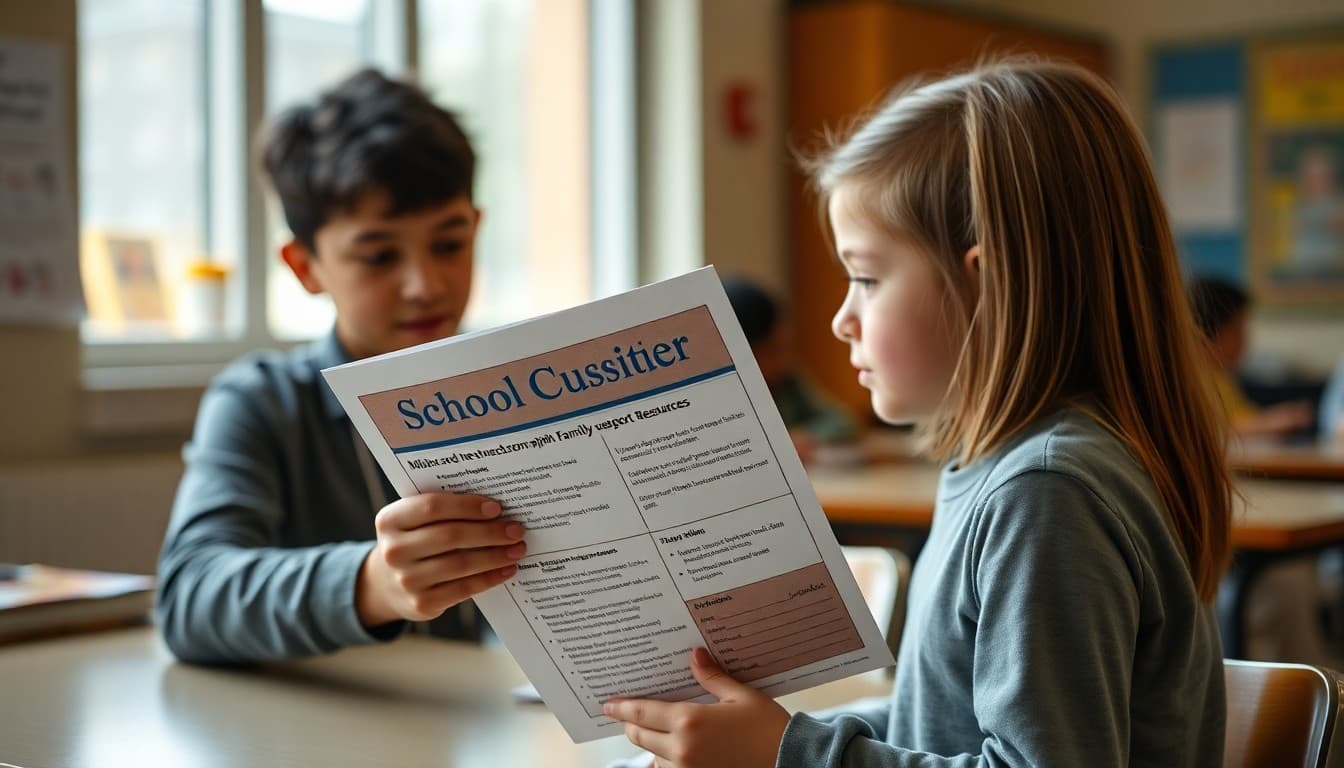
School Newsletter: Military Family Resources and Support

Military families move every two to three years on average. Their children change schools more frequently than any other demographic, often mid-year, sometimes across state lines. School newsletters that acknowledge this reality and provide concrete, actionable resources do something genuinely valuable: they help military families navigate a system that was not designed for their situation and that sometimes actively creates barriers for their children.
The Interstate Compact: Rights Military Families Often Do Not Know They Have
Every state in the U.S. has adopted the Interstate Compact on Educational Opportunity for Military Children. This compact gives military-connected students specific rights that most families, and honestly many school staff, do not know exist. Military children are entitled to: enrollment on the same day they arrive even without all standard documentation, placement in comparable academic programs to those they left (including gifted programs, AP courses, and IEP services), participation in extracurricular activities without waiting for standard tryout periods, and graduation flexibility if a military move prevented completion of specific course requirements. Including a plain-language summary of these rights in a back-to-school newsletter section helps military families advocate for their children from the first week of school.
Recognizing Deployment Stress in Your Communication
A newsletter that acknowledges the reality of military family life without being patronizing is genuinely appreciated by military families. A short paragraph in the counselor's corner or principal's message that says "if your family is navigating a deployment right now, our school counselor is available and experienced in supporting students through that experience" costs nothing and signals that the school sees these families as part of the community rather than an administrative exception. Include the school counselor's name, contact, and appointment method so families who need support know exactly where to go.
The School Liaison Officer: A Resource Many Schools Near Bases Underuse
Every military installation has a School Liaison Officer (SLO) whose job is to help military families navigate the local school system. The SLO is a free resource who can help families understand enrollment procedures, advocate for placement decisions, and connect to district programs. If your school is near a military installation, include the SLO's contact information in your annual back-to-school newsletter section on military family resources. Many military families do not know this resource exists. Many schools near bases have never thought to mention it. Bridging that gap takes two lines of newsletter text.
Template: Military Family Resources Newsletter Section
Here is a ready-to-adapt section for any school with military-connected students:
"Support for Military-Connected Families
If your family includes an active duty, reserve, or recently separated service member, we want you to know about the resources available at [School Name] and in our community.
School transitions: Military children are protected under the Interstate Compact on Educational Opportunity for Military Children. This includes same-day enrollment, placement in comparable academic programs, and graduation flexibility. Contact the main office for details specific to your situation.
Deployment support: Our school counselor, [Name], is experienced in supporting students whose parent or guardian is currently deployed. Appointments are available daily. Contact: [email/phone].
Military OneSource: 1-800-342-9647, available 24/7 for any military family concern including school issues, mental health support, and financial assistance."
Timing Military Family Communication
Publish a dedicated military family resource section in August and September when new families are enrolling. Military families who PCS (Permanent Change of Station) in the summer are just arriving and most in need of orientation to the new school. A brief reminder in January covers the mid-year PCS families who arrive after winter break. Including military recognition in the May or November newsletter (near Veterans Day and Memorial Day) with a general acknowledgment of military families in the school community builds a sense of belonging across the year without singling out specific families.
What Not to Include in Military Family Newsletter Sections
Do not publish troop movement information or deployment schedules. Do not identify specific students as military-connected without family consent. Do not publish information about families who have experienced a deployment-related casualty without explicit family consent and involvement. Do not make assumptions about a family's support needs based on their military connection. The newsletter section should offer resources and invite families to reach out. The determination of what support is needed belongs to the family, not the school newsletter.
Get one newsletter idea every week.
Free. For teachers. No spam.
Frequently asked questions
What federal programs support military-connected students in schools?
The Interstate Compact on Educational Opportunity for Military Children (the Military Compact) is the primary framework, adopted by all 50 states, that addresses enrollment, placement, attendance, eligibility, and graduation requirements for military children who change schools due to parent deployment or relocation. Separately, the Department of Defense Education Activity (DoDEA) funds partnership programs with schools near military installations. Schools in high-military-density communities may also receive specific funding through Impact Aid, which compensates for federal land that reduces local property tax revenue.
What should a school newsletter include about the Interstate Compact for military families?
The newsletter section should explain that the Military Compact guarantees military children protection during school transitions: enrollment priority (children do not have to wait for normal enrollment windows), placement consideration (children may be placed in comparable programs to what they left, including gifted, special education, and extracurriculars), and graduation flexibility (states may waive specific credit requirements when military moves prevent completion of exact course sequences). Military families who do not know these rights exist cannot advocate for their children when a school inadvertently denies them.
How should schools handle the death or injury of a service member parent in newsletter communications?
Do not publish specific family information about a service member casualty in the school newsletter without the family's explicit consent and involvement. The family of a service member who has died or been seriously injured should be contacted directly and privately first. If the school community is gathering resources or support for the family, the newsletter can describe the support opportunity without identifying the specific family until they have given permission. Coordinate closely with the school counselor and the family's Casualty Notification Officer if one is involved.
What resources should military family newsletter sections regularly promote?
Military OneSource (1-800-342-9647) provides 24/7 support on any subject including school transitions, mental health, and family services. The School Liaison Officer (SLO) on the nearest military installation is a direct contact for school-related transition issues. The Military Child Education Coalition provides resources for families navigating school changes. Operation Homefront and similar nonprofits support families during deployment. Include at least two of these resources with contact information in any newsletter section specifically addressing military families.
Can Daystage help schools near military bases reach military families who move frequently?
Yes. Daystage makes it straightforward to update your newsletter subscriber list when new military families enroll mid-year and to ensure they receive recent issues. Schools near military installations often have high mobility rates, and a platform that makes subscriber management easy ensures every new family gets the same newsletter access from their first week in the school. Some schools also use Daystage to archive all newsletters so new families can catch up on what they missed before arriving.

Adi Ackerman
Author
Adi Ackerman is a former classroom teacher and curriculum writer with 8 years in K-8 schools. She writes about school communication, parent engagement, and what actually works in real classrooms.
More for Guides
Ready to send your first newsletter?
3 newsletters free. No credit card. First one ready in under 5 minutes.
Get started free