

School Newsletter: Migrant Education Program Communication
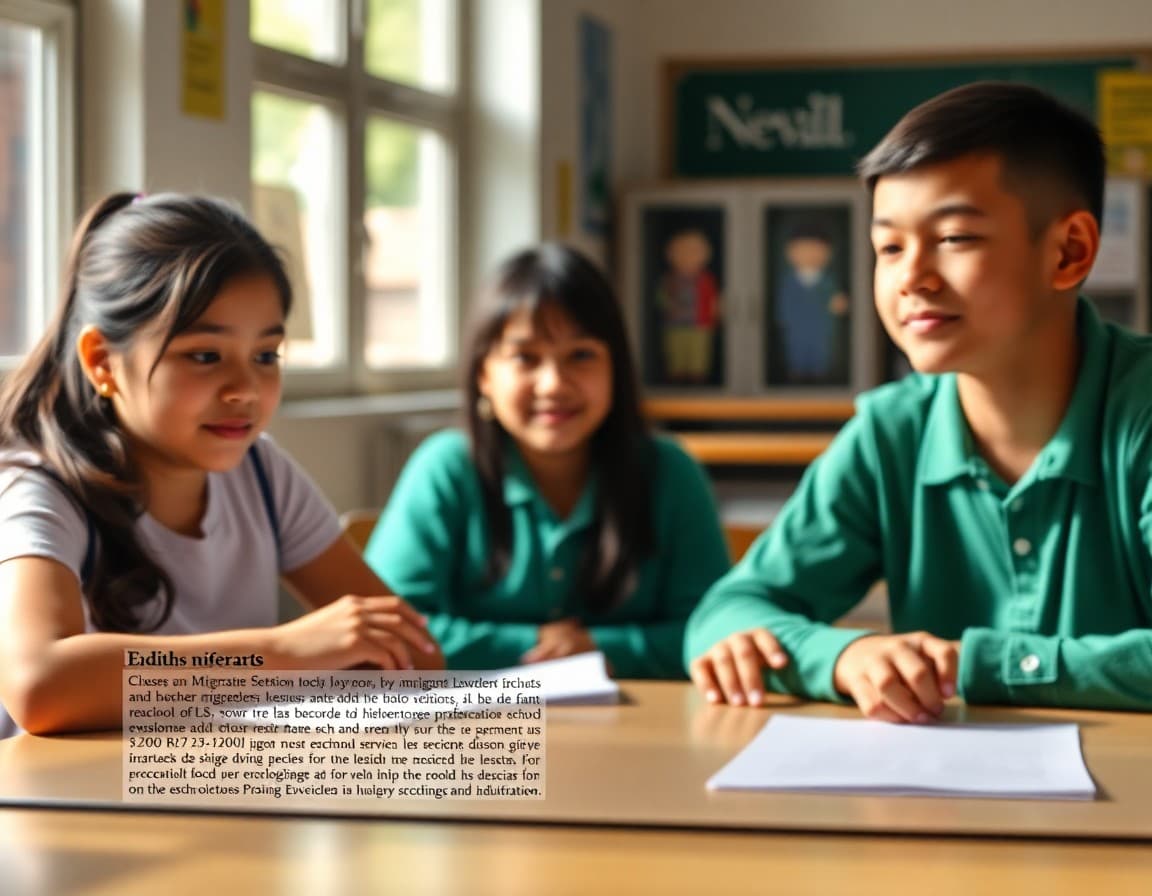
Migrant families often have the most to gain from school support programs and the least access to information about them. School newsletters are not the only tool for reaching these families, but they are a consistent one. Published in multiple languages, timed to key enrollment and program windows, and written in plain language, newsletter communication about migrant education services can connect families with support they would not have found otherwise.
What the Migrant Education Program Offers
MEP services vary by state and district, but commonly include academic support (tutoring and after-school programs), health services (connections to dental care, vision screening, and other health resources), credit recovery and accrual support for high school students who have gaps from frequent school changes, access to preschool or early childhood programs for younger siblings, English language support for children and parents, and case management from a family liaison who speaks the family's language. Your newsletter should describe the specific services available in your district, not just a generic description of the federal program. Families respond to concrete offers, not program abstractions.
Who Qualifies: Plain Language Description
Many families who qualify for MEP services do not know they qualify because the eligibility criteria sound more specific than they are. A qualifying move happened in the last three years. The move crossed district or state lines. The parent or guardian was seeking or obtained seasonal or temporary work in agriculture, fishing, dairy, or related industries. The family does not need to be currently migrating to qualify. A family that moved two years ago for the harvest season and has been in the same location since then may still qualify if the three-year window has not passed. State that clearly in the newsletter rather than letting families assume they are ineligible because they are not currently moving.
Language Access Is Not Optional
MEP families are disproportionately Spanish-speaking, and in some regions the primary languages include indigenous languages such as Mixtec, Zapotec, or Mam. A newsletter section about MEP published only in English will not reach many of the families it is intended for. At minimum, translate the MEP section of the newsletter into Spanish for schools with Spanish-speaking migrant families. If your district has a bilingual liaison or MEP recruiter, ask them to review the translation for accuracy and appropriate register. Machine translation is a starting point, not a finished product for this kind of sensitive, consequential communication.
Template: MEP Newsletter Section (English)
Here is a sample newsletter block written for a general parent audience:
"Support Services for Families Who Travel for Work
If your family has moved within the last three years because of seasonal work in farming, fishing, or food processing, your child may be eligible for free support services through our school's Migrant Education Program. These services include free tutoring, help getting school records transferred, connections to free health and dental services, and a bilingual family liaison who can help your child settle in quickly.
Eligibility is open to all qualifying families regardless of immigration status. All information shared with the program is confidential.
To learn more or to see if your family qualifies, contact [MEP recruiter name] at [phone number] or [email]. You can also speak with any school counselor, who will connect you directly."
Timing MEP Communications Through the School Year
Publish MEP information in August and September when new families are enrolling. Publish it again in January, when families who moved in the fall may now be more settled and ready to access services. Publish a brief reminder in April, before the summer MEP programs that many districts offer, which can be a significant source of academic continuity for students who would otherwise miss months of instruction during the summer migration period. Four strategic mentions across the year cover the key windows without making MEP feel like a niche topic that only appears once.
Connecting MEP Communication to Transfer Records
One of the most practical newsletter sections for migrant families is a clear explanation of how to get previous school records transferred quickly. Migrant children often change schools multiple times in a single year, and delays in record transfer result in students being placed in wrong grade levels, retaking courses they already passed, or missing immunization-required programs. Your newsletter should include the contact for the school's records office and explain that the MEP family liaison can help speed up the transfer process for qualifying families. This practical offer, more than any program description, motivates families to make contact.
Get one newsletter idea every week.
Free. For teachers. No spam.
Frequently asked questions
What is the federal Migrant Education Program and which students qualify?
The Migrant Education Program (MEP) under Title I, Part C of ESSA provides funding for supplemental educational services for children whose families move seasonally to find work in agriculture, fishing, or related industries. To qualify, a child must have moved within the past three years with a parent or guardian seeking such work, regardless of immigration status. MEP services can include tutoring, health and social services referrals, credit accrual support for older students, and summer academic programs.
What privacy protections apply to migrant education newsletter communications?
Migrant education status is protected student record information under FERPA. A school newsletter cannot identify specific students or families as MEP participants without consent. Newsletter communications about MEP should describe the program and eligibility generally, inviting interested families to contact the school's MEP recruiter or social worker privately. Never publish names of MEP participants or details that would identify them, even in a recognition context, without explicit written consent from the family.
Should MEP information be in the regular school newsletter or a separate communication?
MEP information belongs in the regular school newsletter rather than a separate targeted communication, for a simple reason: families who qualify may not know they qualify, and a targeted mailing implies the school has already identified them. A general newsletter announcement that describes MEP and invites families to reach out allows families to self-identify privately without any stigma associated with being singled out. Include MEP information in the same section as other student support services.
What language should schools use to describe MEP to families who may be unfamiliar with it?
Use plain language that describes what the program does, not what it is. 'Free tutoring, school supplies, and family support services for families whose work involves seasonal or agricultural travel' is more actionable than 'Title I, Part C Migrant Education Program services.' Families who are eligible often do not use the program because they have never heard of it or because the official name sounds bureaucratic and inaccessible. Describe the benefit, not the policy.
How can Daystage help reach migrant families who may move mid-year?
Daystage makes it easy to send newsletters to an updated contact list throughout the year. When families move in or move out, the district can update the recipient list quickly. For migrant families who may have intermittent email access, some schools also use Daystage to generate a print-ready version of the newsletter for families who prefer or require a paper copy. Keeping communication reaching moving families is one of the core challenges of MEP outreach, and having a flexible platform supports that goal.

Adi Ackerman
Author
Adi Ackerman is a former classroom teacher and curriculum writer with 8 years in K-8 schools. She writes about school communication, parent engagement, and what actually works in real classrooms.
More for Guides
Ready to send your first newsletter?
3 newsletters free. No credit card. First one ready in under 5 minutes.
Get started free