
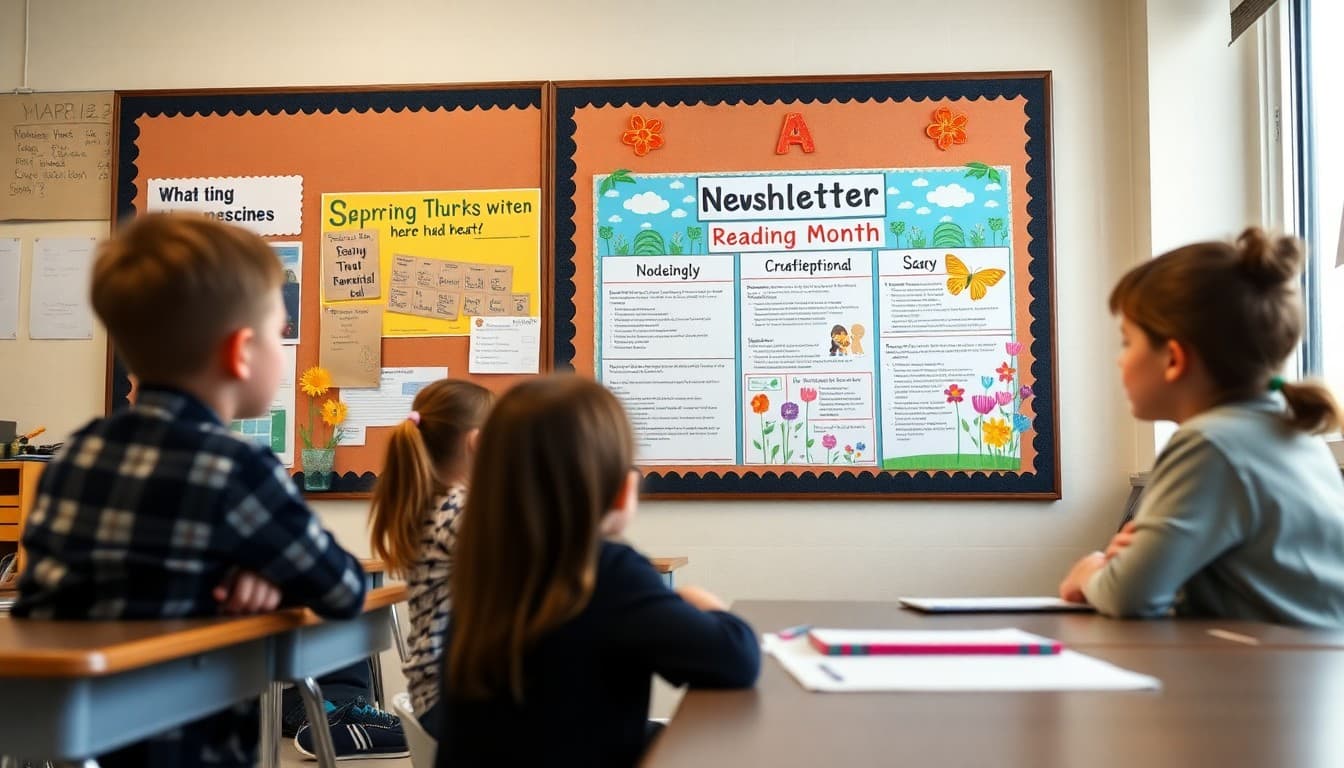
School Newsletter: March Edition Ideas and Spring Content
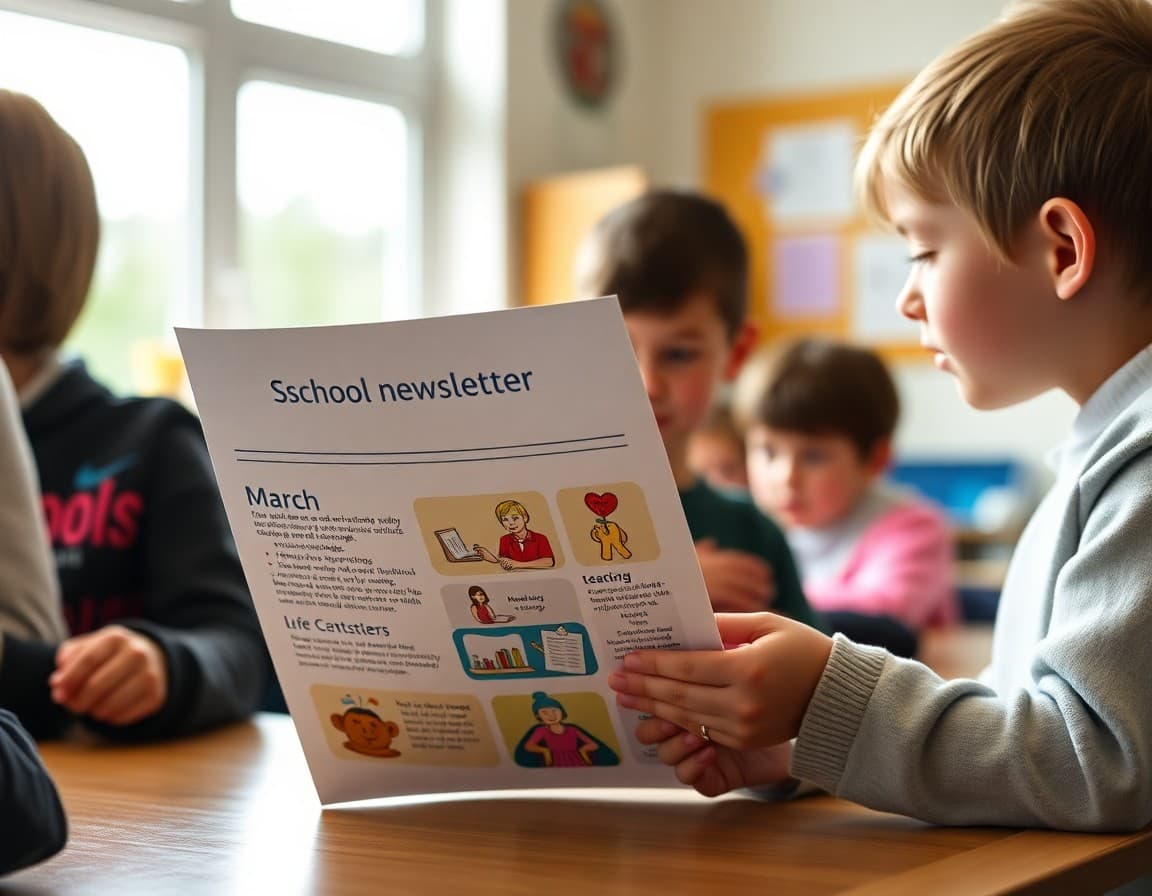
March is National Reading Month, state testing season, and the countdown to spring break, all simultaneously. The March newsletter is one of the most information-dense issues of the year. The key is resisting the urge to cover everything equally and instead giving parents a clear sense of what requires their attention right now versus what they can plan around over the next few weeks.
Reading Month as the March Anchor
National Reading Month begins March 1 with Dr. Seuss's birthday and provides a clear thematic anchor for the entire month's newsletter content. Feature the school's reading challenge progress tracker prominently. Include the librarian's March book picks. Mention any author visits, read-a-thon events, or classroom read-aloud initiatives. "Our school has logged 3,847 books toward our 5,000-book March challenge. Every student who logs 10 books by March 31 receives a reading certificate at the April assembly." Specific numbers and clear incentives drive reading challenge participation far better than general encouragement.
Spring Break Dates and Transition Content
Spring break dates are among the most-searched pieces of information families look for in the March newsletter. Publish them in the first paragraph of the calendar section and repeat them in the "important dates" callout box. Include: the last day of school before break, the return date, whether after-school programs are running during break, and any meal service information for families who rely on school nutrition. A separate sentence about summer programs that open registration in spring gives families with longer planning horizons a head start.
Dr. Seuss Week Activities
If your school observes Dr. Seuss Week in the first week of March, give it a dedicated section. List the daily spirit day themes, any school-wide events (Seuss character parade, read-aloud from a community guest, book character costume contest), and any supplies parents need to prepare. "Friday is Read-In Day. Students may bring their favorite book from home to share during free reading time. No special supplies needed." That level of specificity prevents five different versions of what parents need to send to school from circulating in the parent Facebook group.
State Testing Preparation Communication
For schools where state testing begins in late March or April, the first half of March is the right time to prepare families. Write a straightforward section that covers: what grades are tested, the testing window dates, what the tests measure, and what families can do. "Students in grades 3-5 will complete state assessments between April 14-18. The assessments measure reading and math skills in alignment with state grade-level standards. The most helpful thing families can do is ensure students arrive on time, well-rested, and having eaten breakfast. We do the rest." That tone is confident and practical without creating anxiety.
March Calendar Template
Here is an efficient March calendar format:
Mon Mar 2 , Dr. Seuss's birthday, Reading Month begins
Mon Mar 2 - Fri Mar 6 , Dr. Seuss Spirit Week (daily themes listed above)
Mon Mar 9 , Science fair registrations due
Fri Mar 20 , Spring equinox, first day of spring
Fri Mar 21 , Last day before spring break (noon dismissal)
Mon Mar 31 , School resumes
Tue Apr 1 , Book fair opens in library
Mon Apr 7 - Fri Apr 11 , State testing, grades 3-5
Fri Apr 18 , Science fair, gymnasium, families welcome 3-5 PM
Science Fair Communication
If your school holds a spring science fair, the first March newsletter is where families need to see registration and project deadlines. "Science fair registration closes March 9. Students in grades 3-5 are encouraged (not required) to participate. Project materials, display boards, and mentor teacher sign-up are available in Ms. Kim's classroom." Include a brief description of what is expected for first-time participants and a link to the science fair guidelines on the school website. Families who want their child to participate but do not know the process will not ask unless you invite the question explicitly.
Spring Outdoor Learning Preview
March is when outdoor classroom activities become possible in most US climates (though northern states may need to wait until April). If your school has a garden, outdoor classroom, or nature area, preview the spring activities families and students can look forward to. "Our school garden will be ready for planting by late March. Third grade will plant a vegetable garden alongside the 5th grade garden mentors, a tradition that has been running for six years. Students go home with produce starting in May." That kind of specific, personal preview builds excitement for spring and demonstrates that your school's outdoor programming has a real track record.
Get one newsletter idea every week.
Free. For teachers. No spam.
Frequently asked questions
What is the biggest newsletter communication challenge in March?
Information overload. March packs in Reading Month, spring break, standardized testing prep, science fair, spring sports season, and the first real outdoor learning weather of the year, all in four weeks. The March newsletter that tries to cover all of this in equal depth produces a wall of text that parents do not finish. Prioritize by immediacy: what does a parent need to act on this week goes first. Spring break dates and testing schedules affect plans made weeks in advance and should be repeated across multiple March issues.
How do you make National Reading Month content feel relevant instead of obligatory?
Connect it to something specific happening at your school rather than using generic reading awareness language. 'Our school set a goal of 5,000 books read by March 31. We hit 4,212 as of today' is compelling. 'Reading Month is a great time to develop lifelong reading habits' is not. The reading challenge tracker, the librarian's book recommendations, the student who just completed their 50th book, the teacher who reads aloud to their class every morning: these specific stories make Reading Month feel real rather than like a mandated awareness observance.
What should the March newsletter say about state testing?
Three things: the specific dates testing begins for each grade level, what parents can do to support their child (rest, breakfast, on-time arrival, a calm morning), and who to contact if their child needs an accommodation that has not yet been arranged. Avoid language about test scores or consequences. 'These assessments measure grade-level skills and help us plan instruction' is the right framing. Also mention that the school will share individual results with families after the testing window closes and when to expect them.
How do you write about spring break without inadvertently excluding lower-income families?
Lead with school information (return date, summer program registration if relevant) and follow with family content that acknowledges a range of spring break experiences. 'Whether your family is traveling or staying local, spring break is a good time to visit the public library's reading challenge sign-up, check out free community events at [LINK], or simply slow down from the school year pace.' This framing includes all families without making those who are not traveling feel invisible or judged.
Does Daystage have a spring newsletter template appropriate for March content?
Yes. Daystage's spring newsletter template uses fresh green and light blue tones appropriate for March and April. The template is flexible enough to serve both the academic content-heavy March issues and the more celebratory April content without requiring a new template design. Schools that use the same spring template from March through May create a visual continuity that helps parents associate the design with the final quarter of the school year.

Adi Ackerman
Author
Adi Ackerman is a former classroom teacher and curriculum writer with 8 years in K-8 schools. She writes about school communication, parent engagement, and what actually works in real classrooms.
More for Guides
Ready to send your first newsletter?
3 newsletters free. No credit card. First one ready in under 5 minutes.
Get started free