
Emergency Communication vs. Your School Newsletter: When to Use Which Channel
The newsletter is a trust vehicle. Parents open it because it consistently delivers useful, non-urgent information on a predictable schedule. The moment you use the newsletter for something it was not designed for (an emergency, a crisis, an urgent safety issue), you put that trust at risk and risk the communication itself being read too slowly or ignored.
Understanding which communication channel to use for which situation is one of the most important decisions in school communication planning. Here is a clear framework.
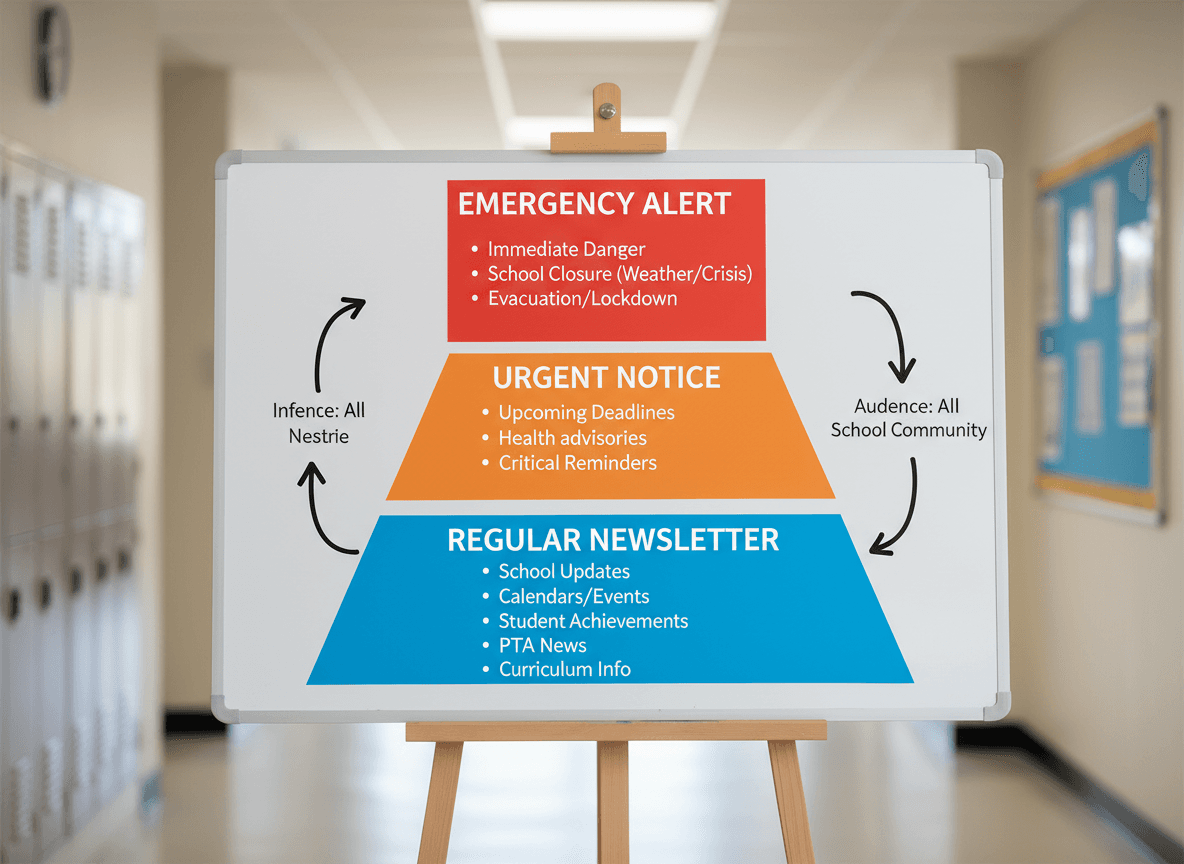
The 3-tier communication model
Every school communication falls into one of three tiers. The tier determines the channel, the timing, and the tone.
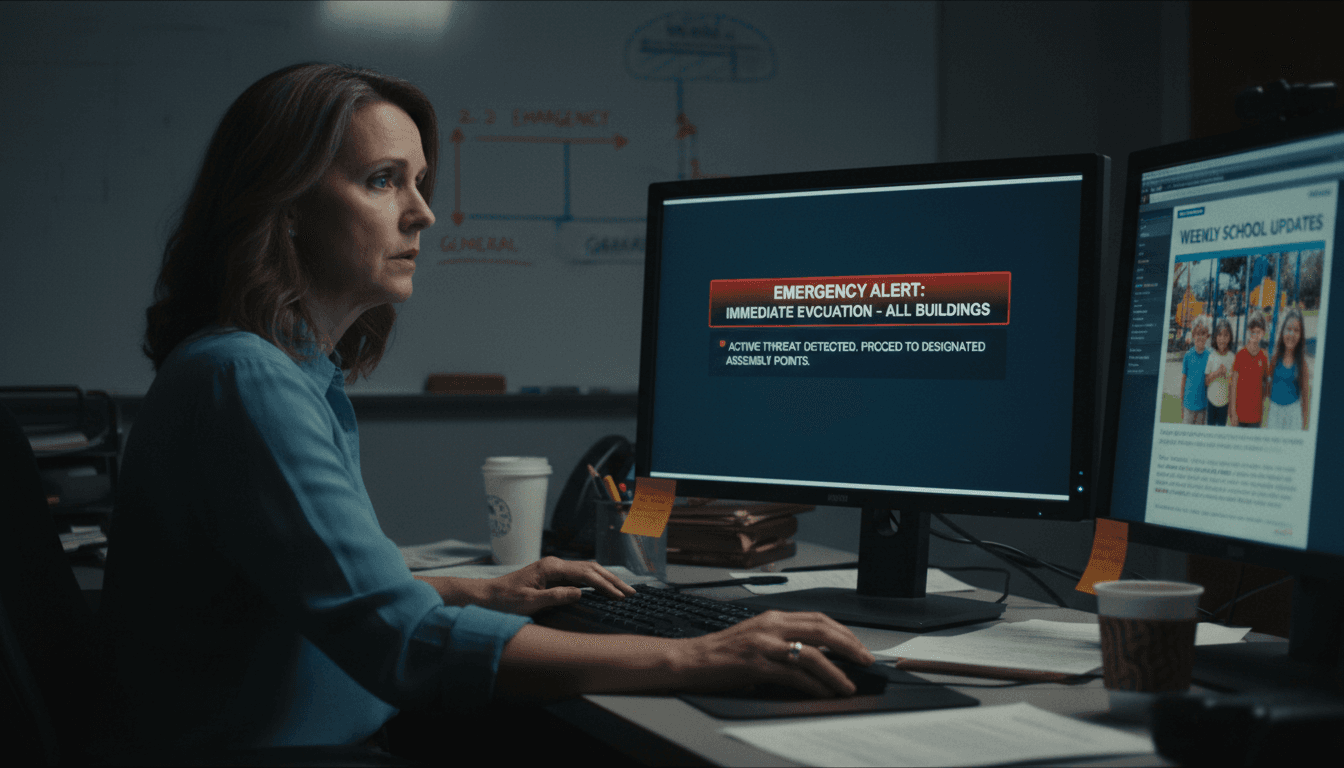
Tier 1: Emergency alerts are for active threats to physical safety. A lockdown, a fire, an evacuation in progress, or an immediate security situation. These require a system that reaches parents within minutes: a mass text or robocall system, not email. Email is not fast enough and does not guarantee delivery in the right timeframe for an active emergency.
Tier 2: Urgent notices are for situations that require parent awareness within hours, not days. A school closure due to weather, a gastrointestinal illness affecting a significant number of students, a policy change that takes effect immediately, or a safety incident that has already been resolved but that parents need to know about. These can use email, but they should go through a dedicated urgent-message channel, not the regular newsletter send. A separate subject line format (something like "URGENT: [School Name]. [Date]") signals that this is not the weekly update.
Tier 3: Regular newsletter is for everything else. Upcoming events, curriculum updates, reminders, classroom highlights, volunteer opportunities, and routine policy reminders. This is where 95 percent of school communication belongs.
What never belongs in a newsletter
Two categories of content should never appear in a regular newsletter, even if the incident has passed:
Active safety threats should never be communicated through the newsletter. By the time the newsletter arrives in inboxes, an active threat requires real-time information that a weekly newsletter cannot provide. Parents who learn about a lockdown from the newsletter rather than a real-time alert will lose trust in the school's communication system immediately.
Individual student health emergencies should never appear in any school communication. Mentioning that a specific child was seriously injured, experienced a medical emergency, or was involved in an incident is a privacy violation regardless of the channel. Even a well-intentioned mention ("please keep [student] in your thoughts") reveals information the student's family may not have authorized sharing.
When an incident has passed: how to communicate afterward
After a significant event (a lockdown that was lifted, an illness outbreak that has been contained, a community loss), parents need information that falls between emergency alert and regular newsletter. This is where many schools struggle.
The principle is: communicate what parents need to know, what the school has done, and what comes next. Omit speculation, individual identifying details, and anything that could cause unnecessary alarm. Send this as a dedicated message, not embedded in the weekly newsletter. The subject line should be specific and calm: "Update on today's incident at [School Name]" rather than vague or alarming language.
After the incident communication goes out, the regular newsletter resumes its normal schedule. Do not cancel or delay the newsletter because of an incident unless the school is actively closed. The newsletter's consistency is part of what signals normalcy.
Keeping newsletter trust during difficult moments
When difficult things happen in a school community (a student death, a teacher departure mid-year, a community tragedy), the regular newsletter continues to serve a purpose: it signals that school is continuing, that learning is happening, and that the teacher is present and engaged.
It is appropriate to acknowledge a difficult moment briefly in the newsletter's opening paragraph, especially if it affects the classroom directly. A brief acknowledgment that recognizes the community is going through something hard, without disclosing private information or speculating about circumstances, maintains the personal voice of the newsletter while being honest about what is happening.
What to avoid: using the newsletter to process community trauma in detail, speculating about causes or circumstances, or communicating information that should only come from administrators. The newsletter is the classroom teacher's channel. It should reflect the classroom teacher's perspective and authority, not information that belongs to the school or district level.
Building your communication tier system
Schools that handle crisis communication well have built the three-tier system in advance, not in the moment. This means:
- A designated emergency alert system (text or robocall) that is tested at the start of the year and that every parent is enrolled in
- A designated urgent email channel with a clear format (separate from the newsletter, different subject line prefix, different from-address if possible)
- A regular newsletter that arrives at a predictable time and is never used for urgent information
- Clear guidance for teachers about what they should communicate through their classroom newsletter vs. what should come from the school or district level
Parents who understand this system know where to look when something happens. Parents who do not understand it will check the newsletter for emergency information and be frustrated when it is not there.
The newsletter protects itself by staying in its lane
The newsletter's usefulness depends on parents trusting that it contains predictable, useful information on a consistent schedule. Every time the newsletter is used for something outside that scope (urgent news, emergency updates, information that should come from an administrator), it erodes that trust slightly.
Parents who have been conditioned to check the newsletter for important updates will open it during emergencies looking for information that is not there. Parents who understand the newsletter is a regular communication vehicle will check the right channel during emergencies because they know that is not what the newsletter is for.
Protect your newsletter by keeping it in its lane. That discipline is what makes it trusted.
Get one newsletter idea every week.
Free. For teachers. No spam.
Frequently asked questions
When should a school use the newsletter for emergency communication versus a separate channel?
Never use the newsletter for active emergencies. The newsletter is a scheduled communication tool, and parents associate it with routine updates, not urgent situations. For active safety events, use phone calls, SMS, or a dedicated emergency notification system. The newsletter is appropriate for follow-up communication after an incident has passed and the situation is resolved.
What belongs in a school newsletter versus an emergency communication?
The newsletter covers weekly learning updates, upcoming events, parent reminders, and community information. Emergency communications cover immediate safety threats, school closures with same-day impact, active health alerts, and situations requiring parent action within the hour. The test is whether parents need to act immediately. If yes, use an emergency channel, not the newsletter.
How should schools communicate after an emergency through their newsletter?
Send a follow-up newsletter within 48 to 72 hours of a resolved incident that parents heard about. Acknowledge what happened briefly, describe what the school did in response, and state what the current situation is. Keep it factual and brief. This restores the newsletter's role as a trusted information source without dwelling on the incident longer than necessary.
What are common mistakes schools make when handling emergency communication through regular channels?
Burying emergency information in the regular newsletter is the most damaging mistake because it trains parents to treat all newsletter communication as low-urgency. Sending emergency-level information through a channel that requires parents to click a link is also problematic. Speed and directness matter in emergencies. The newsletter provides neither.
What is the best tool for schools that want to keep their newsletter communication separate from emergency alerts?
Daystage is designed for structured newsletter communication and is not a replacement for emergency notification systems. Using Daystage for regular newsletters and a separate system for emergencies keeps the communication channels clearly defined for parents, which is itself a safety best practice.

Adi Ackerman
Author
Adi Ackerman is a former classroom teacher and curriculum writer with 8 years in K-8 schools. She writes about school communication, parent engagement, and what actually works in real classrooms.
More for Guides
Ready to send your first newsletter?
3 newsletters free. No credit card. First one ready in under 5 minutes.
Get started free