

District Newsletter vs. School Newsletter: When to Use Each
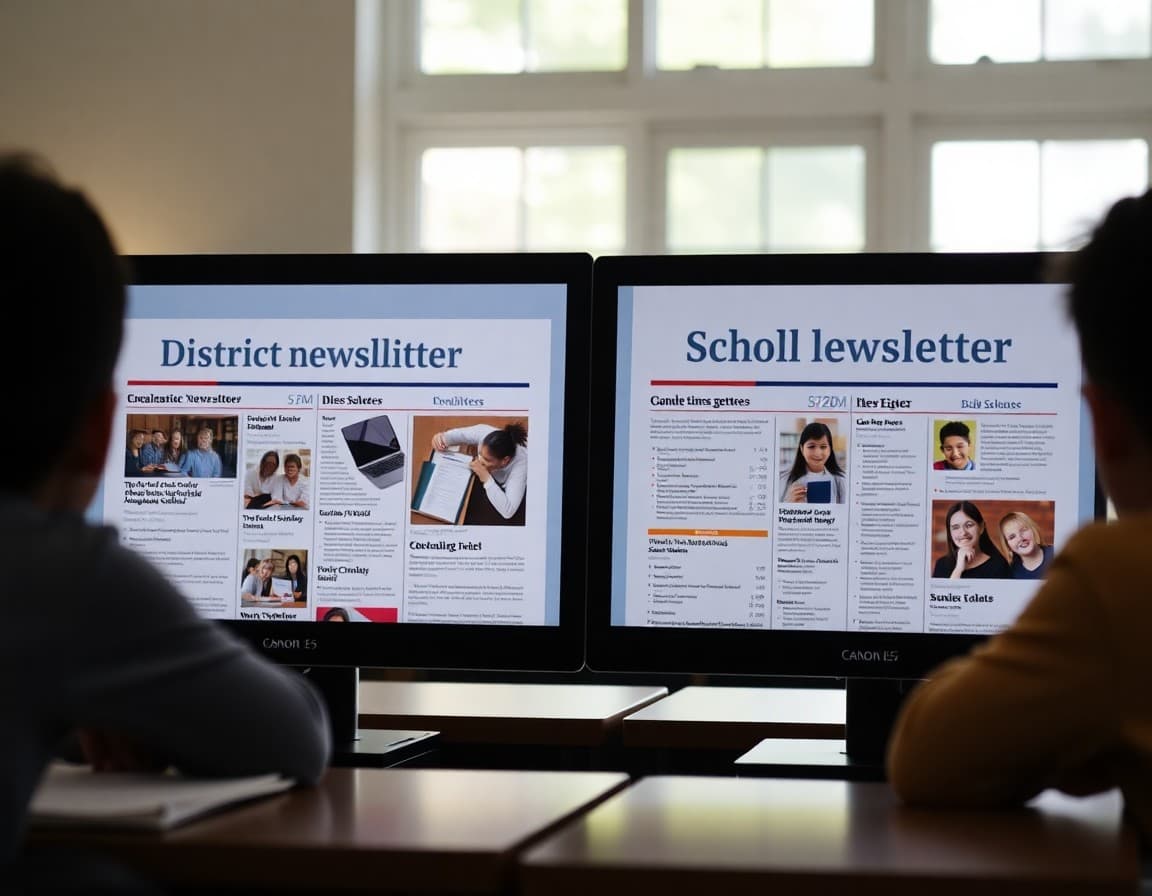
When a district and its schools both send newsletters without coordinating, families with children at multiple campuses end up receiving four, five, or six separate emails each month covering overlapping content. They start ignoring all of them. Clear communication lanes between district and campus newsletters solve this problem and make every communication more effective because families know which newsletter to go to for which type of information.
The Core Difference Between District and School Newsletters
A district newsletter communicates to all families regardless of which school their child attends. It covers anything that applies district-wide: board decisions, policy changes, district programs open to all students, and recognition of achievements across all campuses. A school newsletter communicates campus-specific information: what is happening at Lincoln Elementary this month, what the principal at Roosevelt Middle School wants families to know, which teachers at Washington High are accepting volunteers. These two purposes should not overlap, and when they do, the result is parent fatigue and communication that gets ignored.
What Belongs at the District Level
District newsletters are most effective for: school board meeting dates and key agenda items, district budget updates and bond measure information, changes to attendance boundaries or enrollment procedures, district-wide curriculum adoptions or academic program launches, superintendent communications about multi-campus initiatives, legal notices and compliance communications that all families must receive, and recognition of district-wide awards (teacher of the year, district student achievement awards). These are topics where sending from the district office adds credibility and authority that individual school newsletters cannot replicate.
What Belongs at the School Level
School newsletters handle everything specific to one campus: the principal's monthly message, classroom highlights and teacher updates, campus-specific event dates (spirit days, fundraisers, field trips, school performances), volunteer opportunities at that campus, campus-level attendance or academic updates, and spotlight recognition of students and staff at that school. School newsletters also handle anything time-sensitive that requires a specific campus response, like a note about a playground closure or a request for specific grade-level volunteers for an upcoming event.
Building the Content Mapping Document
Every district should have a written content mapping document that assigns each communication topic to a level. Here is a simple format:
District Newsletter: Board meetings, policy changes, district programs, superintendent messages, district-wide awards
School Newsletter: Campus events, classroom updates, principal messages, campus-specific volunteer requests, campus achievement data
Either Level (with coordination): School safety updates, health department notices, community partnership announcements
The "either level with coordination" category is where most duplication happens. When both the district and individual schools cover a topic, agree on who sends it and whether the other level needs to cross-reference it or stay silent.
Coordinating Send Schedules to Prevent Inbox Fatigue
If the district newsletter goes out on the first Monday of every month, school newsletters should not also go out that Monday. Stagger the schedule: district sends first week, schools send second or third week. Families with children in multiple schools should never receive three school newsletters and the district newsletter all in the same week. That volume feels like spam regardless of how good the individual newsletters are. A coordinated annual calendar, agreed upon before the school year starts, prevents this.
When to Break the Rules and Use Both Channels
Some situations warrant communication from both the district and the school level. A genuine school safety incident should be communicated from the school principal to that campus community and may also warrant a district communication if it affects multiple campuses or requires district-level policy response. A major policy change affecting only elementary schools might come from the district to all elementary families and then be elaborated on in each elementary school's own newsletter. The rule is not that these channels must always be completely separate; it is that they should not cover identical content without adding something specific to the level they operate at.
Training School-Level Staff on the Distinction
School principals and newsletter editors sometimes duplicate district content because they are not sure what families received at the district level or because they want to be thorough. The fix is simple: give every school newsletter editor access to the district newsletter archive and include a brief review of the most recent district newsletter in the school newsletter editorial process. If the district newsletter addressed something last week, the school newsletter can reference it with "as you may have seen in the district newsletter" and provide the campus-specific follow-up rather than repeating the district-level content in full.
Get one newsletter idea every week.
Free. For teachers. No spam.
Frequently asked questions
What topics belong in a district newsletter rather than a school newsletter?
District newsletters handle topics that affect all families across every campus: board meeting announcements, district-wide policy changes, budget updates, bond measures and referendums, curriculum adoption announcements, and district-wide recognition events. Any content that would be identical across all schools belongs in the district newsletter so each school does not repeat it. School newsletters handle the specific, local content that varies by campus.
Can a district newsletter replace individual school newsletters?
No. District newsletters communicate policy and broad initiatives, but they cannot replicate the campus-specific content that drives parent engagement at the school level. Parents who only receive district newsletters do not get information about their child's specific classroom, upcoming campus events, or the principal's perspective on campus culture. Both levels of communication serve a different function and both are necessary for engaged school communities.
How do you prevent parents from receiving the same content in both the district and school newsletter?
Create an explicit content mapping at the start of the year: a shared document that lists who owns which topics. Policy changes go in the district newsletter. Field trip dates go in the school newsletter. Staff recognition that is campus-specific goes in the school newsletter. District award ceremonies go in the district newsletter. When everyone knows the content map, duplication drops significantly. Review it once a semester to close any gaps.
How often should each newsletter type go out?
Most districts benefit from a monthly district newsletter and a bi-weekly or monthly school-level newsletter. The district newsletter does not need to be frequent because its content is less time-sensitive. School newsletters need enough frequency to communicate campus-specific events before they happen. If your school has a major event every week, a bi-weekly newsletter is probably necessary. A once-a-month schedule works well for schools with predictable monthly rhythms.
Can Daystage manage both district and school newsletters in one platform?
Yes. Daystage's district plan gives the communications office oversight of all school newsletters while giving each school its own sending workspace. The district can send to all families across the district from one account, while each school manages its own campus newsletter independently. This eliminates the need for separate tools at the district and campus level.

Adi Ackerman
Author
Adi Ackerman is a former classroom teacher and curriculum writer with 8 years in K-8 schools. She writes about school communication, parent engagement, and what actually works in real classrooms.
More for Guides
Ready to send your first newsletter?
3 newsletters free. No credit card. First one ready in under 5 minutes.
Get started free