

School Newsletter Data Privacy in 2026: What Teachers Need to Know About Email Platforms
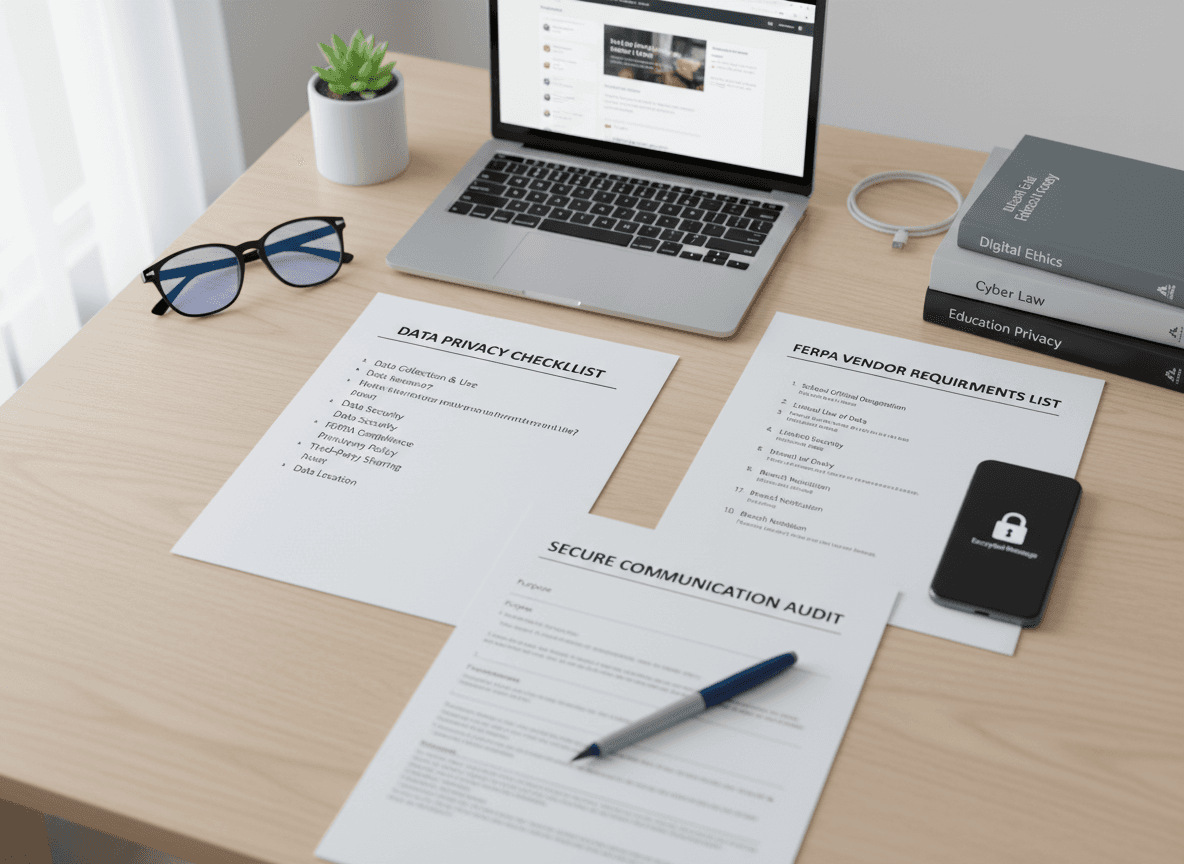
Most teachers who send school newsletters think of their email platform as a neutral delivery tool, something like a postal service for digital content. It is not. Every email platform collects data about the people who receive your newsletters, and in many cases, that data has privacy implications that teachers and administrators do not fully understand. This guide explains what is being collected, what FERPA requires, and how to evaluate whether the platform you are using is appropriate for school communication.
What email platforms collect from your subscribers
When a parent opens your newsletter, the email platform typically records:
- Open events: date, time, and in most cases the general geographic location derived from the IP address at the moment of opening
- Device and client information: whether the email was opened on iPhone vs. Android, Apple Mail vs. Gmail vs. Outlook, and often the operating system version
- Click events: which links in the newsletter were clicked, when, and from what device
- Engagement history: a profile of each subscriber's engagement over time, including how often they open, what they click, and whether they scroll
Note that Apple's Mail Privacy Protection has changed open tracking for Apple Mail users since 2021. Platforms now receive inflated open rates because Apple pre-loads tracking pixels. This is relevant to the accuracy of your analytics, but the data is still being collected by the platform.
What the platform knows about your subscriber list
Beyond individual email events, the platform knows the composition of your list: who is on it, when they were added, their email address, any additional fields you provided (name, language preference, grade level), and how the list has changed over time. For most school newsletters, this list is a set of parent email addresses associated with a specific school. Under FERPA, that connection can make this a protected educational record.
FERPA considers information that identifies a student's relationship to a specific educational institution to be potentially protected. If your subscriber list includes parent names paired with class or grade information, and that information is stored on a third-party server, FERPA's provisions around third-party data sharing apply.
What FERPA requires from third-party vendors
FERPA allows schools to share student education records with third-party vendors only when specific conditions are met. The most important: the vendor must be designated as a "school official" under FERPA and must sign a data use agreement that specifies how the data will be used, how it will be protected, and that the vendor will not use the data for any purpose beyond the specified educational function.
In practice, this means that before you use any email platform to send school newsletters that contain parent-student relationship data, your school or district should have a signed data use agreement with that platform. Many commercial email platforms (Mailchimp, Constant Contact, ActiveCampaign) do not have standard FERPA data use agreements because they are not designed for school use. Using them for school communication without a specific agreement may put your school out of compliance.
COPPA and under-13 data
The Children's Online Privacy Protection Act applies to data collection from children under 13. Most school newsletters are sent to parents rather than students, so COPPA does not typically apply to the newsletter itself. However: if your newsletter includes any interactive elements that students might access (a link to a classroom website, a poll that students participate in, a video that requires account creation), the platform hosting those elements may be collecting data from minors. Verify the data practices of any linked platform before including it in a newsletter.
Questions to ask your email platform
Before using any email platform for school newsletters, ask the following:
- Do you have a standard FERPA data use agreement available for schools? Can I see a copy?
- What data do you collect from my subscribers, and how is it used beyond delivering my newsletters?
- Do you sell, share, or use subscriber data for advertising purposes?
- Where is subscriber data stored, and what security certifications does that storage meet?
- What happens to subscriber data if I cancel my account? Is it deleted or retained?
- Does your platform comply with state student data privacy laws in addition to federal FERPA requirements?
A platform that cannot answer these questions clearly or that does not have standard FERPA agreements is not appropriate for school use, regardless of how good the feature set is.
Why school-specific tools differ from Mailchimp
General-purpose email marketing platforms are built for marketers. Their business models often include aggregate data use, behavioral targeting infrastructure, and integration with advertising networks. Even when these platforms are not actively selling your subscriber data, the data architecture is designed for commercial purposes that are incompatible with school privacy requirements.
School-specific communication tools are built with education privacy requirements from the start. Daystage, for example, is designed specifically for school newsletter use, which means the data handling practices, terms of service, and FERPA compliance structures are built in rather than retrofitted. The practical difference: the platform's default behavior aligns with school privacy requirements rather than requiring you to find the right settings to limit data use.
State law adds another layer
Federal FERPA sets a floor for student data privacy. Many states have enacted stronger student privacy laws: California's SOPIPA, New York's Education Law 2-d, and similar legislation in Texas, Colorado, and others. These state laws often apply to a broader category of data, cover more types of vendors, and require additional disclosures or agreements.
If you are in a state with student data privacy legislation beyond FERPA, your district's compliance requirements are more demanding than the federal baseline. Check with your district's privacy officer or legal counsel before using any email platform that does not already have agreements in place with your district.
The practical approach for teachers
Most teachers cannot negotiate vendor agreements or conduct full legal compliance reviews. What you can do: ask your school or district administrator whether the platform you want to use has an approved vendor agreement in place. Most districts maintain an approved vendor list. If your platform is on the list, use it. If it is not, escalate the question before proceeding.
If you are choosing a platform independently (a classroom teacher choosing a tool without district guidance), choose one designed for school use. The privacy practices built into the platform will protect you and your families more reliably than trying to configure a general-purpose marketing tool to be school-appropriate.
Get one newsletter idea every week.
Free. For teachers. No spam.
Frequently asked questions
When do teachers need to think about data privacy for their school newsletter subscriber list?
Data privacy applies from the moment you collect the first parent email address. In 2026, FERPA, COPPA, and multiple state laws regulate how educational institutions and their vendors handle subscriber data. Before selecting an email platform, ask specifically whether it signs a FERPA Data Processing Agreement and whether it sells or shares subscriber data.
What data does a school newsletter email platform typically collect about subscribers?
Most platforms collect email addresses, open timestamps, device type, IP address, and click behavior on links. Some marketing platforms also use tracking pixels that share behavioral data with third-party advertising networks. School-specific platforms should limit data collection to what is necessary for email delivery and analytics.
How should teachers evaluate an email platform for FERPA compliance before using it for school newsletters?
Ask three questions: Does the platform sign a FERPA Data Processing Agreement? Does it sell subscriber data to third parties? Does it use tracking pixels that share data with advertising networks? If the platform cannot answer yes to the first and no to the second and third, it is not appropriate for a school subscriber list that may include parent contact information linked to student enrollment.
What are common data privacy mistakes schools make when choosing newsletter platforms?
Using a general marketing platform without checking whether it sells subscriber data is the most common mistake. Many marketing email tools monetize audience data through ad network integrations. A school newsletter list with parent contact information should never be on a platform that shares data for advertising purposes.
What is the best email platform for teachers who need a FERPA-aware newsletter tool that does not sell subscriber data?
Daystage is built for school use and does not sell or share subscriber data with third parties or advertising networks. The platform is designed around the privacy requirements of the school context, which is a meaningful difference from general marketing email tools that have no school-specific data policies.

Adi Ackerman
Author
Adi Ackerman is a former classroom teacher and curriculum writer with 8 years in K-8 schools. She writes about school communication, parent engagement, and what actually works in real classrooms.
More for Guides
Ready to send your first newsletter?
3 newsletters free. No credit card. First one ready in under 5 minutes.
Get started free