
School Newsletter Brand Consistency: Why It Matters and How to Achieve It
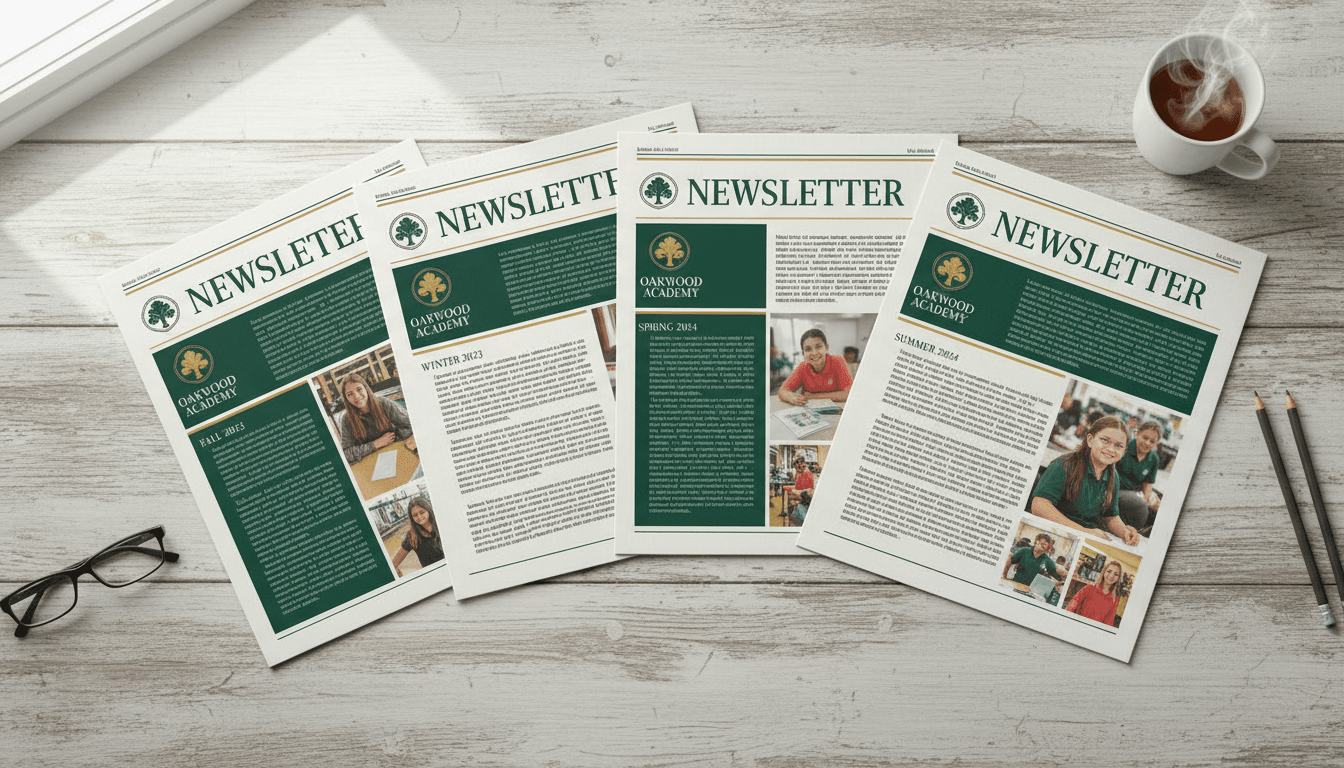
Brand consistency in school newsletters is not about making things look polished. It is about making them predictable. When a parent opens your newsletter and it looks the same as last week, the same as last month, and roughly the same as it looked in September, they process it faster and trust it more. When every newsletter looks different, the inconsistency registers as noise even if parents cannot name why.
What inconsistency actually signals
Parents receive dozens of emails every day from sources with varying levels of authority and credibility. Visual cues signal how seriously to take something. A newsletter that looks professional and consistent signals that the information inside was prepared carefully. One that looks different every time signals improvisation.
This is not a surface-level concern. Research on trust in organizational communication consistently shows that visual consistency correlates with perceived reliability. Parents who trust the newsletter read it. Parents who are uncertain about it skim the subject line and move on.
Inconsistency in school newsletters usually comes from one of three sources: templates that change frequently, multiple staff members using different tools, or design decisions made under time pressure. All three are solvable.
The four elements of newsletter brand consistency
For school newsletters, brand consistency means four things:
- Color: one or two school colors used consistently for headings, borders, and accents
- Typography: the same font (or the same two fonts) for every issue
- Logo placement: school or classroom logo in the same position, same size, every time
- Section order: the same sections in the same sequence in every issue
You do not need a graphic designer to achieve this. You need a template that locks these elements in place and a commitment to not redesigning from scratch each time.
Section order matters more than people expect
Of the four elements above, section order is the one most often undervalued. When upcoming dates always appear in the same place, parents learn to scan directly to that section. When the section order changes week to week, parents have to search for the information they need. That friction costs engagement.
A fixed section order also makes writing faster. You fill in each section in sequence rather than deciding the structure each time. The template guides the writing.
Decide your section order at the start of the year and do not change it. If a section has nothing in it for a given week, leave a brief note: "No parent action items this week." That is better than removing the section entirely, which breaks the pattern parents have learned.
Building a style guide for classroom communication
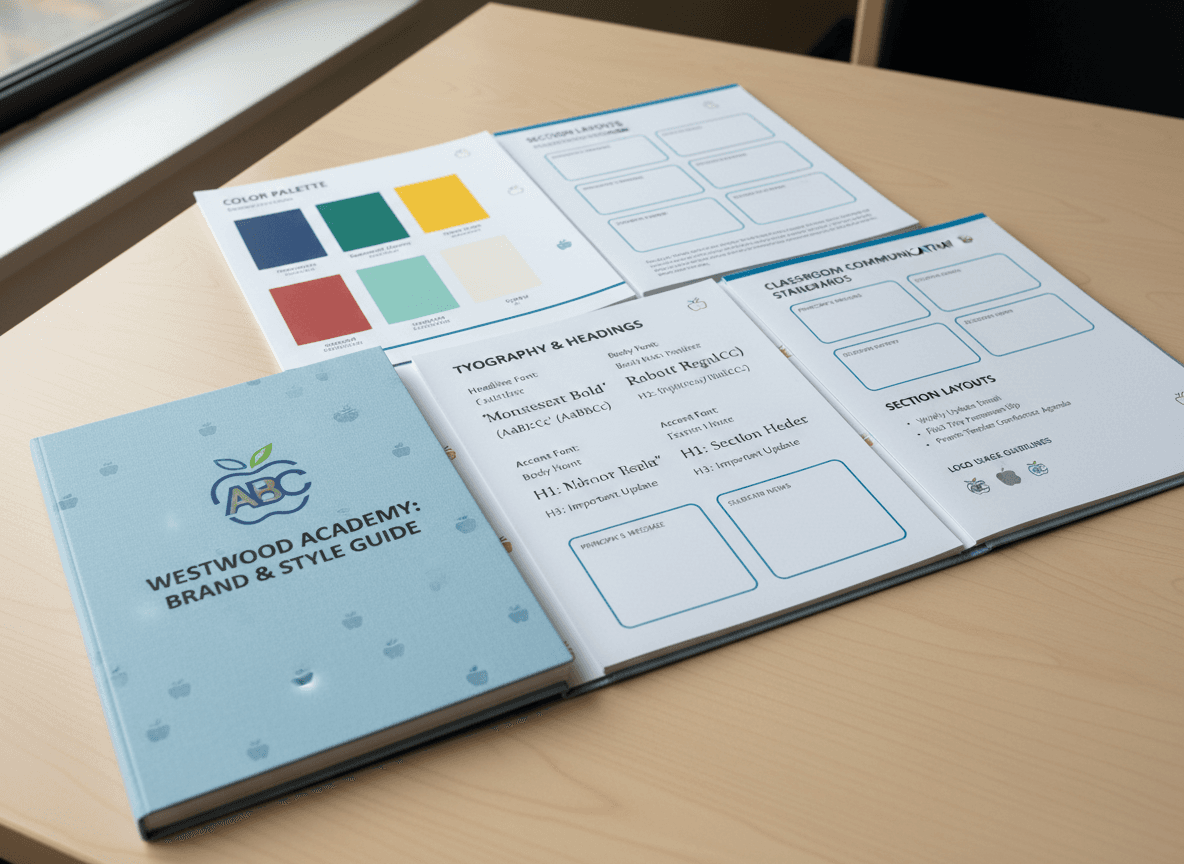
A classroom communication style guide does not need to be a long document. A single page with the following information is enough:
- Primary color (hex code or name)
- Secondary color for accents
- Font for headings and font for body text
- Logo file to use (link or file location)
- Section order for the weekly newsletter
- Subject line format ("Ms. [Name]'s Class: [Month] [Day] Newsletter")
- Send day and time
If you hand your newsletter off to a substitute, a parent volunteer, or a co-teacher, this document tells them everything they need to produce a newsletter that looks and reads like yours. That is the test of a good style guide: can someone else use it and produce something consistent?
Shared templates across a school
When individual classrooms each send newsletters in different formats, the school's parent communication becomes fragmented. Parents with children in multiple classrooms receive newsletters that look nothing alike and follow different section orders.
Principals and communication coordinators who want to address this should build a school-level template that every classroom uses as a starting point. The template sets the school colors, logo, and section order. Teachers personalize the content within that structure.
Platforms like Daystage support this at the school level. Administrators can set up a shared template with the school's branding, and teachers in the school use that template as their starting point. The result is a recognizable family of newsletters rather than unrelated documents that happen to come from the same institution.
When to update your template
Brand consistency does not mean your newsletter can never change. It means changes should be intentional and announced. If you update your template, send a note at the top of the first issue with the new design: "You may notice the newsletter looks a bit different this month. Same content, refreshed layout."
Major redesigns should happen once a year at most: typically at the start of the school year or after winter break. Mid-year design changes create confusion without adding value.
Within-year changes should be limited to content adjustments, not structural ones. Move sections around only if there is a compelling reason. Add a new section only if it will appear consistently going forward. Remove a section only if you are certain it will not return.
The compounding effect of consistency
The payoff from newsletter brand consistency builds over time. In the first month, parents are still learning the structure. By month three, they know exactly where to find action items and upcoming dates without reading the whole newsletter. By the end of the year, the newsletter has become a reliable communication channel that parents trust and check.
That trust is worth more than any design upgrade. A plain newsletter that arrives consistently and looks the same every week will outperform a beautiful newsletter that varies in format and timing. Consistency is the foundation. Everything else is refinement.
Get one newsletter idea every week.
Free. For teachers. No spam.
Frequently asked questions
When should a school establish newsletter brand guidelines?
Establish guidelines before the first newsletter of the school year, not after. Setting colors, fonts, section names, and tone in advance takes 30 minutes and prevents inconsistency that accumulates over months of ad hoc decisions. If you are mid-year, the next natural reset point is the start of the next semester.
What does newsletter brand consistency include for schools?
Brand consistency includes consistent colors that match the school palette, the same logo placement and size in every newsletter, fixed section names and order, consistent tone and writing style, and a predictable send schedule. Visual consistency accounts for about half the impact. Structural and tonal consistency matter equally.
How do principals ensure brand consistency across teacher newsletters in a whole school?
Provide a shared template with locked branding elements and unlocked content areas. Hold a 20-minute onboarding session at the start of the year to walk teachers through the template. Create a one-page style guide with approved colors, fonts, and example phrasing. Reviewing consistency does not require reading every newsletter, just checking headers and section structure periodically.
What are common brand consistency mistakes schools make with their newsletters?
Using different colors in different newsletters because templates are rebuilt from scratch each time is the most common mistake. Another is multiple teachers using different formatting conventions for the same sections, which confuses parents who receive newsletters from more than one classroom. Both are prevented by a shared template with branding locked at the profile level.
What is the best tool for schools that want newsletter brand consistency without requiring design skills from teachers?
Daystage stores school branding in a profile that applies to every newsletter automatically. Colors, logos, and formatting are set once and cannot be accidentally overridden when a new newsletter is created. This removes the human error that causes inconsistency when teachers rebuild layouts each week.

Adi Ackerman
Author
Adi Ackerman is a former classroom teacher and curriculum writer with 8 years in K-8 schools. She writes about school communication, parent engagement, and what actually works in real classrooms.
More for Guides
Ready to send your first newsletter?
3 newsletters free. No credit card. First one ready in under 5 minutes.
Get started free