
School Newsletter: Threatening Graffiti Communication Template

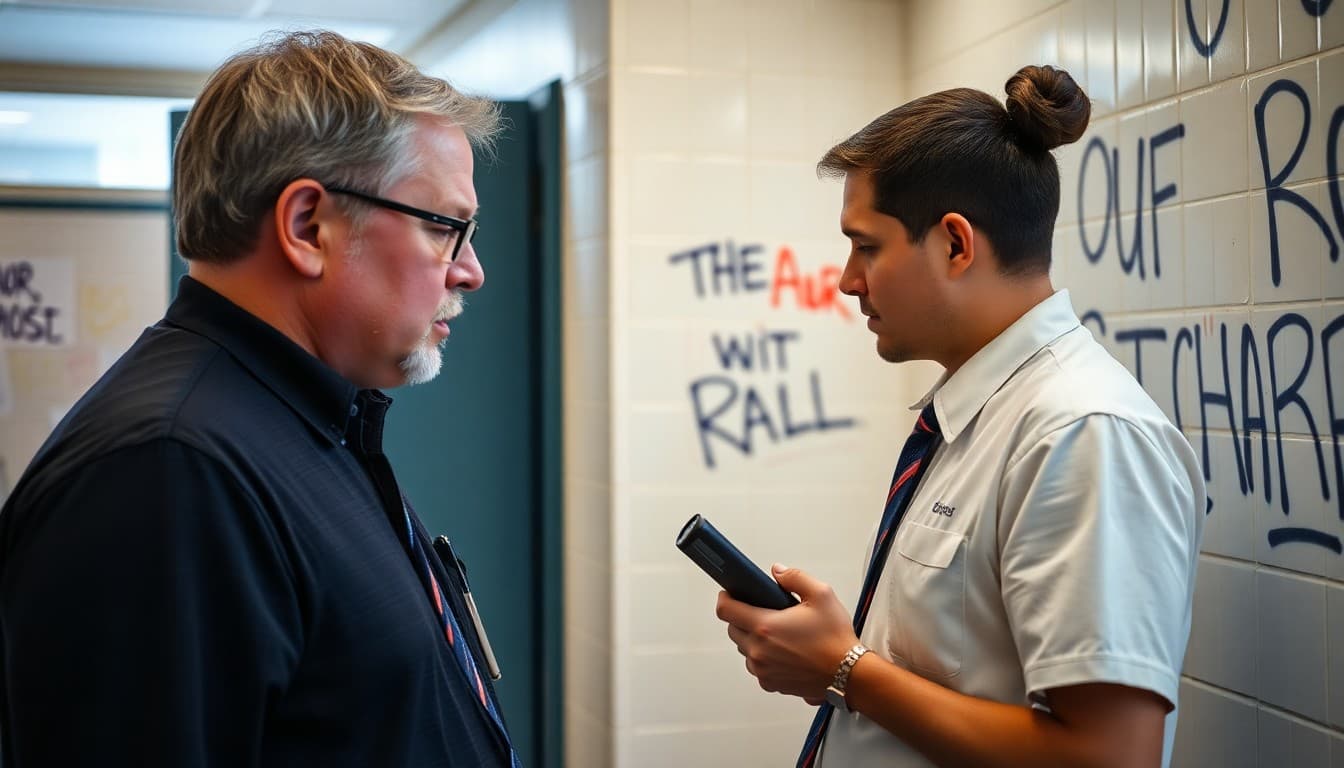
Threatening graffiti requires a fundamentally different response than ordinary vandalism. It triggers law enforcement involvement, threat assessment protocols, and heightened family anxiety. The communication has to be fast, specific about what the school is doing, and honest about the nature of the threat without amplifying it unnecessarily. This template covers both the initial alert and the follow-up newsletter.
Determine whether school continues or closes
Before drafting the newsletter, this decision must already be made. A school that stays open after receiving a credible threat of violence needs to explain why law enforcement and administration assessed the threat as non-credible or specific enough to be addressable through enhanced security. A school that closes needs to communicate the closure before the newsletter covers anything else. Do not write around this decision. State it in the first paragraph.
Initial alert (send immediately upon confirmation)
"This is [Principal Name] from [School Name]. I am writing to inform you of a serious matter that requires your immediate attention. Threatening graffiti was discovered at our school [today / this morning / last night]. Law enforcement is on site and the situation is being actively investigated. [School will proceed as normal with enhanced security / School is closed tomorrow until further notice.] More information will be sent within the next two hours. All students are safe. Please contact me at [number] if you have urgent questions."
Follow-up newsletter: describe what was found without quoting it
"Graffiti containing a threatening message was discovered in [location: a school restroom, on an exterior wall, in the hallway near the gym] at approximately [time]. The content included a threat referencing violence [on a specific date / against specific groups / without a specific date]. Law enforcement photographed the graffiti, secured the area, and it was removed [immediately / before students arrived]."
Describe the law enforcement and administration response
"Law enforcement conducted a full building sweep. Our threat assessment team, which includes the principal, school counselors, and a district safety officer, met this morning to review all available information. Based on their assessment, [the threat was determined to be non-specific / the situation is under active investigation / additional security measures are in place]. Law enforcement will have a visible presence at school tomorrow. We are cooperating fully with the investigation."

Name the security measures being implemented
"The following security measures will be in effect beginning tomorrow: All entrances will require ID verification for visitors. Administrator presence will be increased in hallways and common areas throughout the day. [Specific location] will be supervised at all times during the school day. We are reviewing building security camera footage. The non-emergency police line will have officers assigned to our building on [specific days]."
Offer support resources and anti-retaliation protection for reporters
"Students who have information about the source of this graffiti should report it immediately to law enforcement via [tip line] or to a school administrator. Student reporters are protected from retaliation. All reports will be investigated. Our school counselors are available today and tomorrow for any student who feels unsafe or anxious about this situation. Families may also contact [counselor name] at [email] to discuss their child's concerns."
Close with the next update time
"I will send another update by [time / end of day tomorrow] with information about the investigation's progress and any changes to security arrangements. If you have questions or information to share, please contact me directly at [email] or [phone]. Thank you for your trust in our school's ability to keep your students safe."
Get one newsletter idea every week.
Free. For teachers. No spam.
Frequently asked questions
When is graffiti considered threatening and requires immediate family communication?
Graffiti that contains a specific threat of violence, names specific individuals, references weapons, includes a date or time tied to a threatened action, or involves hate-based content targeting a racial, religious, or other group requires immediate family communication and law enforcement involvement. Property damage graffiti with no threatening content (tagging, obscenity without targeting) typically does not require an urgent family-wide communication. When in doubt about how to classify the content, consult with law enforcement and district administration before sending the community newsletter.
How quickly should a school communicate about threatening graffiti to families?
If the graffiti constitutes a credible threat, families should be notified before students are dismissed if the graffiti is discovered during the school day, or before school begins the next day if it is discovered after hours. A credible threat cannot wait for the next scheduled newsletter. Send an immediate notification through your emergency communication system, then follow up with a more detailed newsletter once the situation is assessed and an initial response is in place. Families who learn about a threat from their student before hearing from the school lose trust in the administration.
How do you communicate a threatening message without reproducing the threat?
Describe the general nature of the content without quoting it. 'Graffiti was discovered in [location] that included a threatening message referencing violence against students or staff. The content was photographed by law enforcement, removed immediately, and is being investigated.' That description gives families enough information to understand the nature of the situation without recreating the threatening content in the newsletter, which serves no purpose and increases anxiety.
What security measures should a school describe in the newsletter?
Name the specific measures being taken, not just general assurances. 'We have reviewed all building security cameras. Law enforcement has conducted a walk-through of the building and has provided specific safety recommendations that we are implementing. We have increased administrator presence in [locations]. We are working with law enforcement to identify the source of the message. Our threat assessment team has been activated.' Specific actions build more confidence than 'we are doing everything possible to keep your child safe.'
Can Daystage help schools communicate threatening graffiti incidents?
The initial emergency alert should go through your school's emergency notification system. Daystage is better suited for the follow-up newsletter after the immediate situation is assessed and families need the full picture: what happened, what the school did, the current security posture, and where to find support. That detailed follow-up benefits from a structured, professional format.

Adi Ackerman
Author
Adi Ackerman is a former classroom teacher and curriculum writer with 8 years in K-8 schools. She writes about school communication, parent engagement, and what actually works in real classrooms.
More for Guides
Ready to send your first newsletter?
3 newsletters free. No credit card. First one ready in under 5 minutes.
Get started free