

School Newsletter Anchor Content: The Sections Parents Always Read
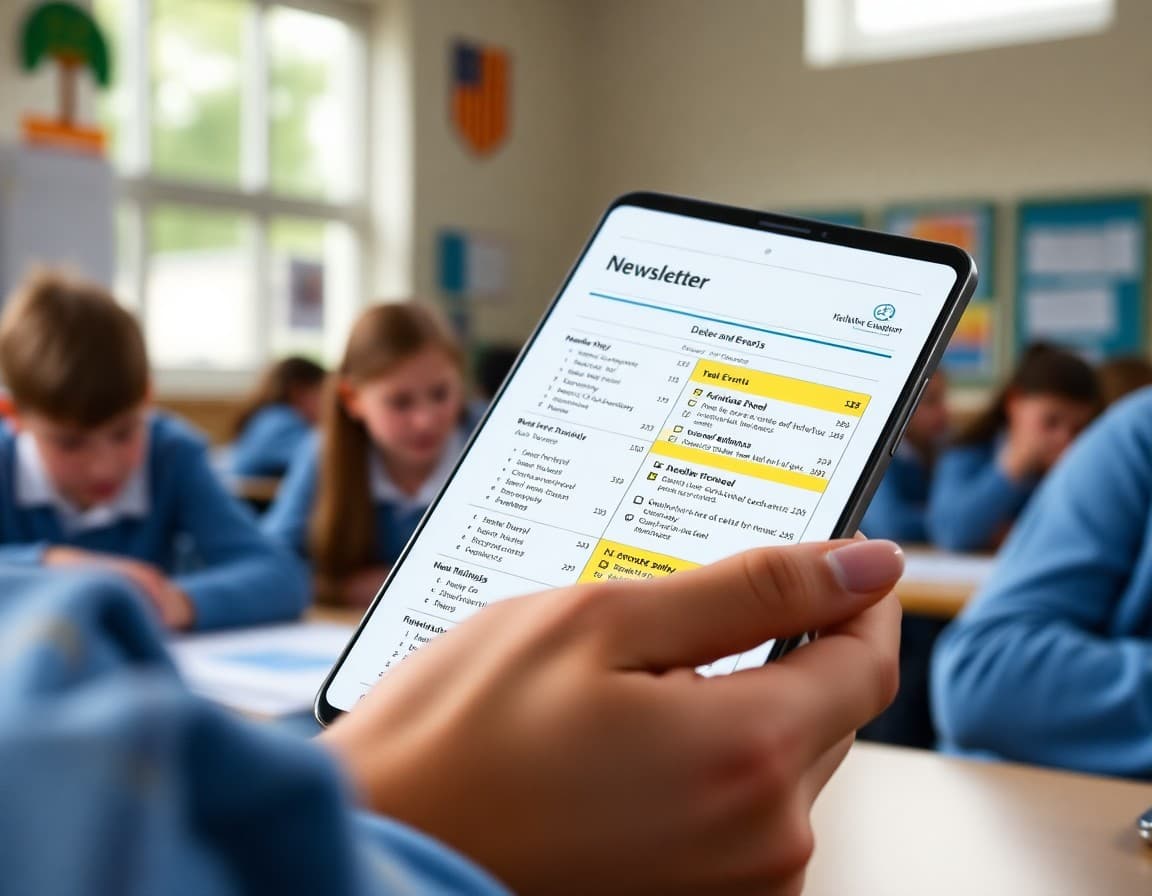
Families open school newsletters for a reason. Ask parents what they look for first and you will hear the same things: upcoming dates, what is for lunch, what the principal wants them to know. These are anchor sections: the content families reliably show up to read. When you build your newsletter around strong anchor sections, you create reading habits that make your entire communication program more effective.
Why Anchor Content Works
Reading habits form through repetition and reward. When a parent opens your newsletter and immediately finds the section they were looking for, they get the reward of feeling informed without any work. That experience reinforces the opening behavior. Over several months, families begin opening your newsletter automatically because they know what they will find. Newsletters without anchor content provide no such predictability. Every issue is unfamiliar, which means parents have to decide whether reading it is worth their time each month. Some months they will decide it is not.
The Dates and Deadlines Anchor
The single most consistently read section across all school newsletters is a clear, formatted list of upcoming dates. This section works because it has immediate practical value: families update their calendars, they remember to send back the permission slip, they know when school is closed. Format this section as a simple table or bulleted list with date, event name, and one short note (such as "send signed form by Thursday" or "early dismissal at noon"). Keep it to the next 30 days maximum. Parents are less likely to read a list of 15 items than a list of 7.
The Principal's Note as an Anchor
A principal's note works as anchor content when it has a consistent format and length. Parents should know before they start reading that this section will take about 90 seconds and will cover one specific topic related to the school community. When the note is a different length each month and covers different numbers of topics, parents cannot build a consistent expectation. A 150-word principal note with a clear topic and a specific student or community connection is more effective anchor content than a 400-word note that covers five different issues.
Student Spotlight: Specific and Personal
The student spotlight is a powerful anchor because it gives parents a reason to look forward to the newsletter. Every family wonders if their child might be featured. Even families whose children are not featured read with interest because spotlights give them a sense of the school community. The key is specificity. "Amara in 5th grade created a presentation about butterfly migration and delivered it to three different classrooms" gives parents a concrete image of school life. Generic praise gives them nothing to picture.
The Resource Corner: One Useful Link Every Month
A single useful link or resource each month serves as a low-pressure anchor. This section does not ask families to do anything. It offers something: a reading list from the school library, a math practice site that aligns with what students are learning this month, a guide to helping children manage test anxiety. Families who engage with this resource associate the newsletter with value rather than obligation. Over time, the resource section becomes one of the reasons they open the newsletter rather than one more thing they scroll past.
What Should Not Be Anchor Content
Not every recurring section earns anchor status. Newsletter sections that feel obligatory but deliver little specific value, such as general reminders about school policies that have not changed, boilerplate messages from the district that families have already seen, and lists of volunteer needs that are the same every month, do not build reading habits. They create the impression that the newsletter is a duty document rather than a useful one. Audit your current recurring sections and ask honestly: would parents notice if this section was missing? If the answer is no, it is not anchor content.
Template: Two-Month Comparison for Anchor Testing
Run this test over two consecutive months to identify your strongest anchor content:
Month 1: Include your standard sections. Note your open rate and any anecdotal comments from parents.
Month 2: Remove one recurring section you suspect is low-value. Add one new specific section, such as a "this month in numbers" stat block with three school metrics.
Month 3: Survey three to five parents informally: "What do you look for in the newsletter? What do you remember from last month?"
Use their answers to confirm which sections have genuine anchor status and which are filler you have been carrying out of habit.
Promoting Your Anchors to Build Awareness
At the start of each school year, tell parents what to expect in your newsletter. A short welcome email or back-to-school night slide that says "every newsletter includes upcoming dates, a student spotlight, and the principal's note" primes parents to look for those sections. This small act of promotion accelerates the habit-building that turns occasional readers into consistent ones. Families who know what to look for are more likely to open each newsletter than families who have to rediscover the newsletter's value every month.
Get one newsletter idea every week.
Free. For teachers. No spam.
Frequently asked questions
What is anchor content in a school newsletter?
Anchor content is the recurring section that families look for in every issue. It is the reason they open the newsletter even when they are busy. Common examples include the monthly calendar of key dates, the upcoming lunch menu, the student spotlight feature, and the principal's note. Anchor content does two things: it gives the newsletter predictable value so parents build a reading habit, and it ensures your most important standing information always has a home in the same place readers expect it.
How many anchor sections should a school newsletter have?
Two to four anchor sections is the right range. More than four and the newsletter becomes formulaic with no room for timely content. Fewer than two and the newsletter lacks the predictable value that builds consistent readership. The most effective approach is two strong anchors that never change, one or two flex sections that appear most months, and then variable content that is different each issue.
Should anchor content always appear in the same position in the newsletter?
Yes. Consistency of position is as important as consistency of content. If parents know the dates and deadlines section is always the third block in the newsletter, they can find it without reading everything above it. Changing the position of anchor content confuses readers and breaks the habit you have been building. Treat the position of your anchors as fixed as the content itself.
What makes a student spotlight section effective versus forgettable?
Effective student spotlights are specific and personal: one student's name, one concrete thing they did, one reason it matters to the school community. Forgettable spotlights are generic praise that could apply to anyone. 'Marcus in 4th grade built a fully functioning weather station for the science fair and explained his data to 60 other students and their families' is memorable. 'We are proud of all our students for working hard' is not anchor content.
How does Daystage help schools build consistent newsletter anchor sections?
Daystage's block-based newsletter builder lets you save your anchor sections as template blocks that carry over to every new newsletter. You fill in the specific content each month without rebuilding the structure from scratch. This makes anchor sections faster to produce and visually consistent across every issue, which reinforces the reading habit you are building with families.

Adi Ackerman
Author
Adi Ackerman is a former classroom teacher and curriculum writer with 8 years in K-8 schools. She writes about school communication, parent engagement, and what actually works in real classrooms.
Ready to send your first newsletter?
3 newsletters free. No credit card. First one ready in under 5 minutes.
Get started free