
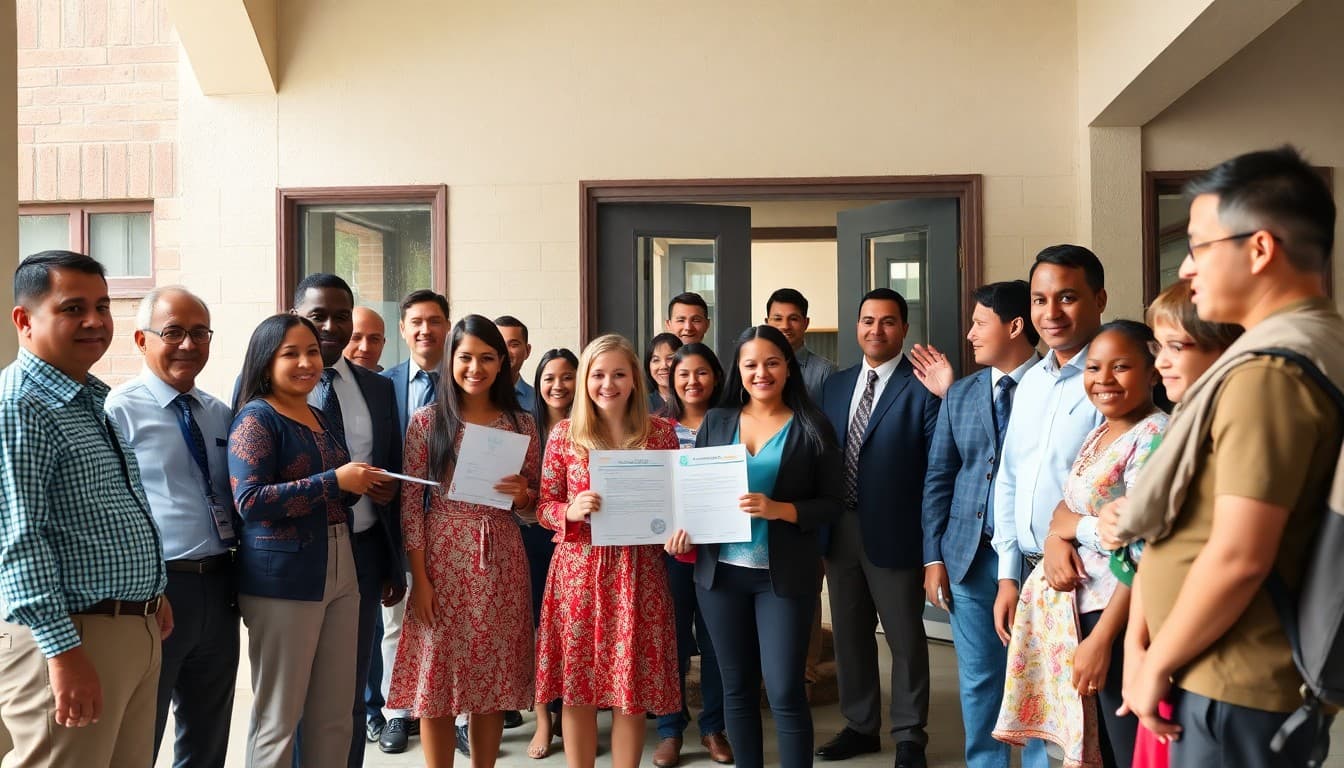
School Newsletter: Sharing Accreditation Results with Families

Accreditation visits are significant events that families hear about but rarely understand. A well-written newsletter after the results come back does something valuable: it gives families a genuine window into how their school was evaluated, what was found, and what it means for their child's education. Here is how to write one that informs rather than obscures.
Start by Explaining What Accreditation Is
Do not assume families know what accreditation means in practice. A brief explanation grounds the rest of the communication. Accreditation is a formal quality review conducted by an independent accrediting organization. A visiting team, typically composed of educators from other schools, reviews curriculum, teaching quality, student support services, leadership, and facilities against established standards. Schools that meet the standards are accredited for a period typically ranging from five to ten years.
One paragraph is enough context. Families who want to understand more deeply can always ask; the newsletter's job is to make the results accessible to a general audience.
State the Outcome Clearly and First
Lead with the result. The most important information is whether the school was accredited, for how long, and whether any conditions were attached. Example: "[School Name] has been fully accredited by [Organization Name] for a seven-year term. No conditions were placed on the accreditation. The visiting team commended the school in [X] areas and provided [Y] recommendations for continued improvement."
Families who only read the first paragraph of the newsletter should still leave knowing the essential outcome.
Share the Commendations Specifically
Commendations from the visiting team are things the school is doing particularly well. Share them in plain language with a brief explanation of why they matter. "The visiting team commended our school's approach to social-emotional learning, noting that students demonstrated strong ability to articulate and manage their own learning challenges" is more meaningful than "the team commended our SEL programming."
Commendations are good news. Let them be good news. Families who contributed to the school's culture through volunteerism, positive participation, and community building deserve to hear that their investment is producing visible results.
Frame Recommendations Constructively
Accreditation recommendations are areas where the school can improve. They are not failings or scandals. Frame them in terms of the school's improvement plan, not as problems found by critics. "The visiting team recommended strengthening our academic intervention systems for students who need additional support. We are already working on this; our [program name] is being expanded this spring with two additional sessions per week and new diagnostic tools for teachers."
One common mistake: listing recommendations without saying what the school will do about them. Families left with a list of problems and no plan will worry. Pair each recommendation with the school's specific response.
Template Excerpt for Accreditation Results Newsletter
Here is a structure to adapt:
"[School Name] Receives Full Accreditation for Seven Years: We are pleased to share that [School Name] has been granted full accreditation by [Organization] through [Year]. Accreditation is a rigorous review of whether a school meets professional standards for curriculum, staff development, student support, and leadership. This result reflects the work of our faculty, families, and students. Key Commendations: [Commendation 1 in plain language]. [Commendation 2]. Areas for Improvement: [Recommendation 1 with school's response]. [Recommendation 2 with school's response]. The full accreditation report is available at [link]. Questions? Please reach out to Principal [Name] at [email]."
Acknowledge the Community's Role
Accreditation visits typically include parent surveys and sometimes parent meetings as part of the evidence the visiting team reviews. If your school conducted a parent survey as part of the process, acknowledge it and share what the survey found in summary. Families who participated deserve to know that their input was part of the review. A brief acknowledgment of family participation signals that the school sees parents as partners in the process, not just recipients of its results.
Connect Results to School Improvement Plans
Most schools have ongoing School Improvement Plans or similar strategic planning documents. If the accreditation results connect to existing priorities in your school improvement plan, say so. This framing shows families that the school's self-assessment and the accrediting organization's assessment align, which builds confidence that the school's leadership understands its own situation accurately.
Get one newsletter idea every week.
Free. For teachers. No spam.
Frequently asked questions
What should a school newsletter include when sharing accreditation results?
Include a brief explanation of what accreditation means and why it matters, whether the school was accredited and for how long, a summary of the key commendations the visiting team noted, a summary of any areas for improvement the team identified, and what the school's plan is to address those areas. Families benefit from context, not just a conclusion.
How do you explain school accreditation to families who are unfamiliar with it?
Use plain language. Accreditation is a formal review process in which an independent team evaluates whether a school meets established quality standards for curriculum, staff qualifications, facilities, and student support. Being accredited means an outside organization has reviewed the school and determined it meets those standards. In the US, regional accrediting bodies like AdvancED, NEASC, WASC, and the National Association of Independent Schools conduct these reviews.
How do you share accreditation improvement recommendations without alarming parents?
Be direct and calm. Frame recommendations in terms of what the school is already planning to do, not as deficiencies that were uncovered. Most accreditation recommendations reflect areas where a strong school can become stronger, not fundamental failures. Providing one sentence of context about what an area for improvement means in practical terms helps families understand without over-interpreting.
Should schools share the full accreditation report with families?
Most accreditation organizations produce a lengthy technical report that is written for professional educators, not families. Sharing a summary in the newsletter and offering a link to the full report for families who want to read it is the right balance. Some accrediting bodies require the full report to be publicly available on the school website; check your accrediting organization's policy.
What newsletter platform helps schools communicate complex information like accreditation results clearly?
Daystage supports long-form newsletter sections with formatted headings, bullet lists, and embedded links. For complex communications like accreditation results where structure helps comprehension, a platform that handles formatted text well is more effective than a plain-text email. Families can scan the structured summary quickly and click through to the full report if they want it.

Adi Ackerman
Author
Adi Ackerman is a former classroom teacher and curriculum writer with 8 years in K-8 schools. She writes about school communication, parent engagement, and what actually works in real classrooms.
More for Guides
Ready to send your first newsletter?
3 newsletters free. No credit card. First one ready in under 5 minutes.
Get started free