
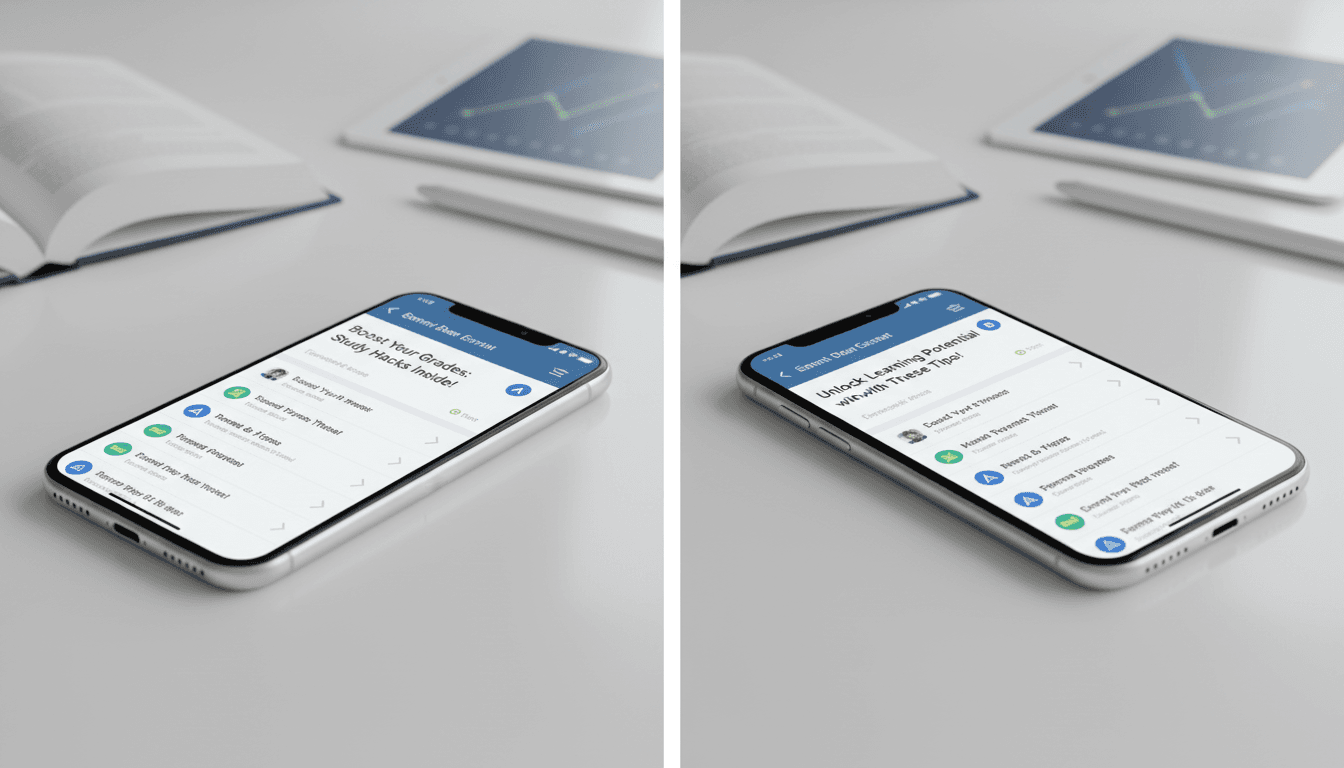
A/B Testing Your School Newsletter: What to Test and How to Read Results
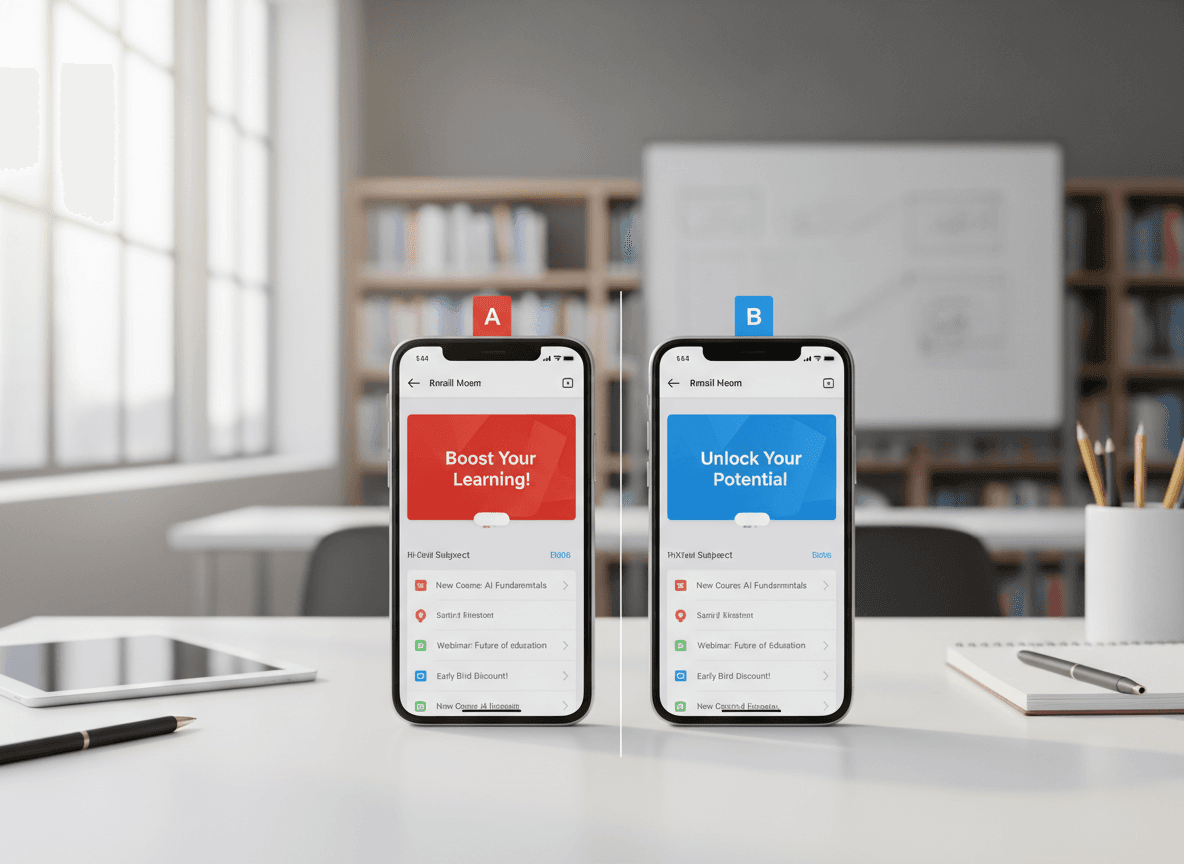
A/B testing sounds like something marketers with large budgets do to optimize e-commerce funnels. It is also something a classroom teacher can do with two subject line variations and one hundred parent emails. The principle is simple: send two versions of something, see which performs better, use that information to improve your next send.
For school newsletters, A/B testing is most useful for subject lines and send times. the two variables that most directly affect whether a parent opens the email at all. Here is how to run tests that are actually meaningful.
What is worth testing
Not everything needs a test. The highest-leverage variables for school newsletters are:
- Subject line format. Question vs. statement. Specific date vs. general timeframe. Teacher name included vs. omitted. These small changes can shift open rates by 10 to 15 percentage points.
- Send day and time. Sunday evening vs. Monday morning. Tuesday vs. Thursday. Most teachers pick a send time based on gut feeling. A/B testing over a few weeks gives you actual data.
- Email length. A short 200-word send vs. a longer 500-word version. Some parent audiences strongly prefer brevity. Others engage more with detailed content.
- Preview text. The 80 to 100 characters that appear next to the subject line in most email clients. Testing different preview texts alongside the same subject line shows you how much that second line of context matters to your audience.
Do not test content quality, tone, or structure in the same send. Changing too many variables at once makes it impossible to know what caused the difference in results.
The minimum list size for meaningful results
This is where school newsletters run into a real constraint. A/B testing requires a large enough list to produce statistically meaningful results. As a rough rule, you need at least 200 people per variant. 400 total. to draw conclusions with any confidence.
If you are a classroom teacher with 50 to 80 parent contacts, formal A/B testing will not give you reliable results. Instead, alternate between two approaches over several sends and look for a consistent pattern over time rather than a single decisive test.
If you are running school-wide or district-wide communications with lists of 500 or more, proper A/B testing is worth setting up systematically.
How to run a subject line test
Take your current subscriber list and divide it randomly in half. Send the same newsletter to both groups, changing only the subject line. Keep everything else identical: same send time, same content, same preview text.
Wait 24 hours before checking results. Open rates continue accumulating for the first day and then plateau for most parent audiences. Looking at results after two hours is too early to be meaningful.
The metric to watch is open rate. the percentage of recipients who opened the email. Click rate is a secondary metric, but for school newsletters with no links to click, open rate is usually the only signal available.
How to run a send time test
Split your list randomly. Send one group the newsletter at your current usual time. Send the other group at the alternative time you want to test. Use the same subject line for both.
Run this test for at least three consecutive sends before drawing conclusions. A single week is not enough. one week's results can be distorted by a holiday, a school event, or an unusual week in parents' schedules. Consistent patterns across three to five sends are meaningful.
Common findings for school newsletters: Sunday between 7pm and 9pm outperforms Monday morning for classroom newsletters, likely because parents are planning the week. Tuesday morning outperforms Friday for school-wide sends, likely because parents are engaged mid-week and distracted heading into weekends.
Reading the results without fooling yourself
A difference of one or two percentage points in open rate is almost certainly noise, not signal. especially with smaller lists. A consistent five to ten point difference across multiple sends is meaningful.
Resist the urge to declare a winner after one send. The question to ask is: if I ran this test ten more times, would I expect the same result? If yes, you have found something real. If you cannot answer confidently, run the test again.
Also watch for confounding events. If one version of your newsletter happened to go out the same week as a major school event, every metric from that week is distorted. Note external events when reviewing results.
Applying what you find
Once you have a clear winner, apply it and move on to the next variable. Testing is useful for building a small set of rules that improve your newsletter consistently. It is not useful as a permanent feature of your workflow. eventually you will know what works for your audience and testing frequency can drop significantly.
Keep a simple log: what you tested, what won, and by how much. After six months, you will have a useful reference for new staff or anyone taking over newsletter responsibilities at your school.
Get one newsletter idea every week.
Free. For teachers. No spam.
Frequently asked questions
When should a school start A/B testing their newsletter subject lines?
Start A/B testing after you have 6 months of consistent sending and a subscriber list of at least 200 parents. Testing with smaller lists produces results that are statistically unreliable. If your list is smaller, focus on writing better subject lines based on best practices rather than testing.
What elements of a school newsletter are worth testing?
Subject lines and send times produce the most measurable results because they directly affect open rate. Content format changes, like bullet lists versus paragraphs or photo placement, are worth testing once you have optimized subject lines and timing. Start with subject lines because the data is easier to read and the changes are quick to implement.
How do you run a subject line A/B test for a school newsletter?
Split your list into two equal groups and send the same newsletter with two different subject lines at the same time on the same day. Wait 48 hours before measuring results. The group with the higher open rate indicates which subject line approach your audience responds to. Run at least 3 to 4 tests before drawing conclusions.
What are common mistakes when interpreting A/B test results for school newsletters?
Drawing conclusions from a single test is the most common mistake. A one-time result could be caused by anything: the week's news, a holiday, weather, or random variation. Run the same type of test 3 to 4 times before deciding the result is real. Also avoid testing too many variables at once.
What is the best newsletter tool for teachers who want to run simple A/B tests on subject lines?
Daystage includes open rate tracking that lets you measure performance across sends and compare results manually. For formal split testing, the comparison is clearest when you segment your list into two equal groups using the subscriber management tools and send each group separately with one variable changed.

Adi Ackerman
Author
Adi Ackerman is a former classroom teacher and curriculum writer with 8 years in K-8 schools. She writes about school communication, parent engagement, and what actually works in real classrooms.
More for Guides
Ready to send your first newsletter?
3 newsletters free. No credit card. First one ready in under 5 minutes.
Get started free