
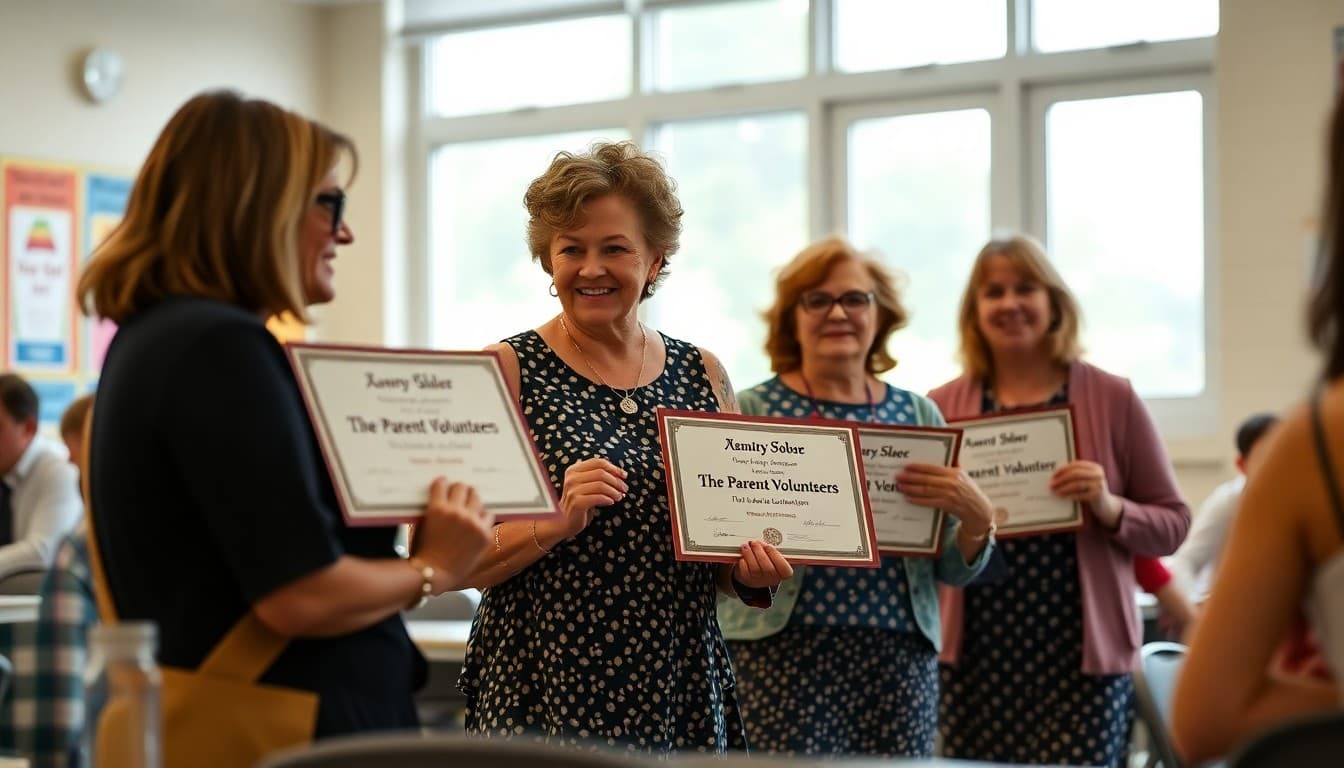
Volunteer Appreciation Newsletter: Thank You to Our Helpers
A school runs on its volunteers. Room parents who organize 47 classroom parties. Library helpers who process 1,200 book returns. Field trip chaperones who stand in the rain at outdoor education sites without complaint. These people deserve more than a forwarded email. A dedicated volunteer appreciation newsletter is the minimum they've earned.
Open by Quantifying the Contribution
Start with numbers. Numbers make appreciation concrete. "This year, 61 volunteers gave a combined total of more than 900 hours to our school. That's the equivalent of five full-time staff members for an entire month." That opening does two things: it tells volunteers they were part of something significant, and it tells the school community exactly how much volunteers contributed. Both messages matter.
Name the Types of Contributions
Walk through the different ways volunteers supported the school this year. Classroom support: reading groups, math centers, project help. Field trips: chaperones who made 14 field trips possible. Events: the families who organized the book fair, the spring gala, the holiday food drive, and the fifth grade farewell. Library: the parent volunteers who staffed the library two days a week. Athletics: team parents who managed rosters, coordinated transportation, and ran the snack table. Naming each type of contribution ensures that no category of volunteers feels invisible.
Include a Specific Impact Statement
Tell volunteers what their contributions made possible. "Because of volunteer support in our reading program this year, 24 students had twice-weekly small-group practice that teachers couldn't provide during the regular school day. Three of those students moved from below grade level to on grade level by May." That's an impact statement. It tells volunteers that their hours had real consequences for real children.
Use a Template Section for the Recognition Event
Here is language you can adapt for an appreciation luncheon or event:
"We are hosting a Volunteer Appreciation Luncheon on [date] at [time] in [location]. Lunch will be served from [time] to [time]. Certificates of appreciation will be presented to all registered volunteers. Please RSVP by [date] to [email or link]. This event is our small way of saying thank you for what has been an enormous gift to our school community."
Acknowledge the Invisible Contributions
Not all volunteering happens at school. Some parents respond to every survey. Some review draft materials at home. Some show up to every meeting and advocate publicly for the school. Some donate supplies without being asked. Acknowledge the wide definition of contribution. "Volunteering takes many forms. Thank you to everyone who has supported our school this year, whether your contribution was visible or behind the scenes."
Give Teachers a Chance to Contribute Specific Recognitions
Before finalizing the newsletter, ask teachers to submit the names or contributions of volunteers who made a meaningful difference in their classroom. Include a few of these specific examples. "Ms. Rivera thanks the Tran family for building the volcano display for the third grade science unit. Coach Santos recognizes the eight parents who staffed every home game this season." These specifics show volunteers that teachers noticed and that the school is paying attention.
Extend the Invitation for Next Year
End of year volunteer newsletters are the best time to seed next year's volunteer pool. "We are already thinking about next year. If you want to stay involved, watch for our volunteer sign-up at the start of the fall semester. Returning volunteers get first access to the positions they held this year." This gives returning volunteers a reason to come back and signals to new families that there is a real, organized volunteer program worth joining.
Close with a Personal Note from the Principal
The most effective closing in a volunteer appreciation newsletter is a direct, first-person note from the principal or school director. Not a generic institutional thank-you, but a specific, honest expression of gratitude. "There are days when this work feels impossible, and then a parent walks in and asks what they can do to help. Those moments remind me why I do this. Thank you." Brief, personal, and earned.
Get one newsletter idea every week.
Free. For teachers. No spam.
Frequently asked questions
Why does volunteer appreciation matter enough to deserve its own newsletter?
Volunteers keep schools running in ways that are often invisible to families and students. A dedicated appreciation newsletter signals that the school takes this contribution seriously rather than treating it as free labor. Volunteers who feel genuinely recognized return the following year. Those who volunteer without acknowledgment often don't. Research on volunteer retention consistently shows that personal, specific recognition is more effective than generic thank-you emails.
How do you recognize all volunteers fairly in an appreciation newsletter?
Group volunteers by type of contribution rather than trying to name every individual, which is logistically difficult and risks omitting someone. Recognize classroom volunteers, field trip chaperones, event organizers, library helpers, sports and club support, food bank and holiday drive organizers separately. If you do name individuals, be thorough and proofread the list three times. Missed names in an appreciation newsletter cause more damage than no names at all.
What makes a volunteer appreciation newsletter feel genuine rather than performative?
Specificity. 'Thank you to our volunteers' is generic. 'Thank you to the 34 families who gave a total of 847 hours this year, including 12 people who chaperoned every single field trip' is specific. Specific numbers, specific contributions, and specific impact make appreciation feel real. Generic appreciation feels like an obligation being discharged.
Should the volunteer appreciation newsletter include an invitation to a recognition event?
Yes, if your school holds one. Tell volunteers the date, time, location, and what to expect. If it's a luncheon, say so. If there will be certificates or small gifts, say so. Volunteers who know what they're being invited to are more likely to attend than those who receive a vague 'please join us' message.
How does Daystage make volunteer appreciation newsletters easier to send?
Daystage lets you send a volunteer appreciation newsletter to a specific list of volunteer contacts rather than the entire school community. This keeps the communication targeted and personal. You can also include a photo from a volunteer event, which makes the newsletter feel like a real celebration rather than a form letter. Many schools save their volunteer appreciation template in Daystage and update it each year.

Adi Ackerman
Author
Adi Ackerman is a former classroom teacher and curriculum writer with 8 years in K-8 schools. She writes about school communication, parent engagement, and what actually works in real classrooms.
More for End of Year
Ready to send your first newsletter?
3 newsletters free. No credit card. First one ready in under 5 minutes.
Get started free