
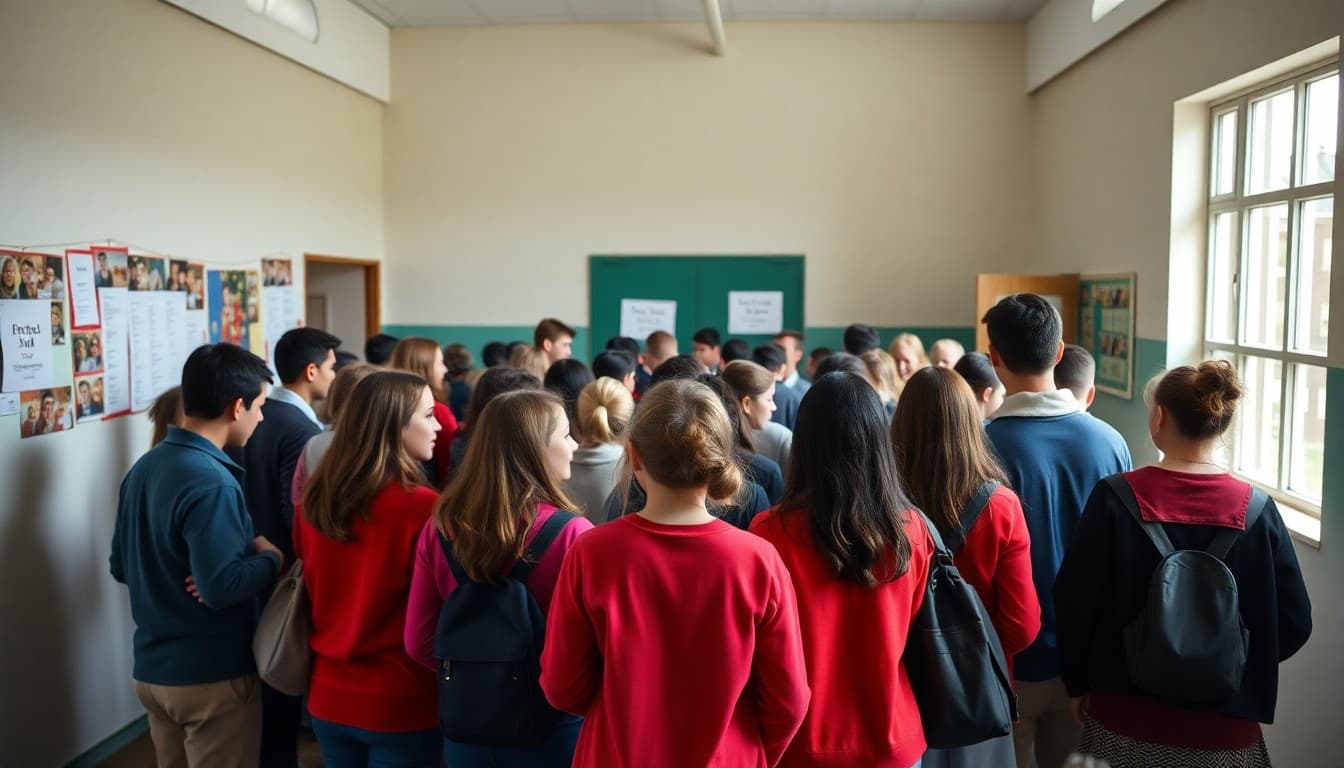
School Closing Newsletter: A Difficult Goodbye to Our Community
A school closing newsletter is among the most difficult communications a principal will ever write. Families are grieving. Staff are uncertain. The community is often angry. The newsletter has to be honest about the weight of the moment while still providing the practical information families need to make decisions. Both tasks are mandatory. Neither can be sacrificed for the other.
Open with Acknowledgment, Not Logistics
The first paragraph is not the place for enrollment deadlines. Open by acknowledging what is being lost. "Closing this school is one of the most painful decisions our district has faced in recent memory. This building has been the center of this neighborhood's educational life for 47 years. Families have grown up here. Teachers have spent their careers here. The loss is real, and we are not minimizing it." That's an opening that tells families the people communicating with them understand what this moment means.
Explain the Decision Briefly and Honestly
Give families the basic facts behind the closure. Not a detailed defense, but an honest explanation. "The decision was made by the school board on [date] following a two-year review of district enrollment projections and facility costs. The building requires significant structural repairs that the district does not have the budget to address." Two or three sentences. Families deserve to know why, even if they disagree with the rationale. Refusing to explain creates more distrust than a difficult truth.
Describe the Student Transition Plan Completely
This is the section families need most. Cover every practical question:
"Students currently enrolled at [School Name] will transition to [School(s) Name] for the [Year] school year. Enrollment transfers will be processed automatically by the district for all families who do not submit a school choice request by [date]. Families with students in special education programs will receive direct outreach from the district's special services office by [date]. Students' records, including academic history, IEPs, and health records, will be transferred automatically. You do not need to take any action to ensure record transfer, but you may request a copy at any time by contacting [name] at [contact]."
Address Staff Transition
Families care about what happens to the teachers and staff they've built relationships with. Be honest. "The district is committed to placing all current [School Name] staff in positions within the district for the coming year. Placement notifications will be sent to staff by [date]. If your child's teacher has accepted a position at the receiving school, we will communicate that when possible." Families who love their child's teacher will be reassured to know the teacher is being cared for in the transition.
Share the Farewell Events Being Planned
Name any closing ceremonies, community gatherings, or farewell events. Give dates, times, and how families can attend or contribute. "We will hold a Community Farewell Evening on [date] at [time] in the gymnasium. All families, alumni, and community members are invited. We are collecting written memories and photos for a school history archive and a commemorative book. Submit your memories at [link or address] by [date]." Give families a way to participate in honoring the school's legacy.
Explain What Happens to the Building and Property
Families typically want to know what will happen to the building. Will it be sold? Repurposed? Demolished? If a decision has been made, share it. If it hasn't, say the decision is pending and give a timeline for when more information will be available. Don't leave this question unanswered if you can avoid it. The fate of a school building is deeply meaningful to people who spent years inside it.
Create a Space for Community Grief
One of the things families need in a school closing newsletter is permission to grieve. A single paragraph that acknowledges grief as a normal response to this loss does meaningful work. "It is okay to feel sad, angry, and disoriented about this news. Many families and staff members are feeling all of these things. There is a community meeting scheduled on [date] where families can ask questions and share their feelings directly with district leadership. We encourage anyone who wants to attend to do so."
Close with What the School Built That Cannot Close
End with something that acknowledges continuity beyond the physical building. "The learning that happened here, the friendships, the milestones, the teachers who changed what children believed was possible for themselves, none of that closes with this building. This school built something in this neighborhood that will continue in the families and students who carry it forward. We are honored to have been part of it." That closing is honest and forward-looking without minimizing the loss. That's what a closing letter needs to be.
Get one newsletter idea every week.
Free. For teachers. No spam.
Frequently asked questions
What should a school closing newsletter include?
A school closing newsletter must cover: confirmation of the closing date and the decision-making process. The transition plan for students, including which schools they will attend and how enrollment works. Transition support available for staff, including district transfer opportunities. Any farewell events being planned. Records and enrollment transfer information. An honest reflection on what the school meant and what the community will carry forward.
How do you write a school closing newsletter when families are angry about the decision?
Acknowledge the anger directly and briefly, without being defensive. 'We know this news is devastating for many families, and we do not take the impact lightly.' Then move to the practical information families need. Avoid justifying the decision at length in the newsletter, which reads as defensive. If you want to explain the financial or structural reasons, offer a separate community meeting where families can ask questions directly.
When should a school closing newsletter be sent?
As soon as the decision is final and families have been informed through the appropriate official channels such as a school board vote or a direct meeting. Families should not learn about a school closing through a newsletter before they've received direct notification. The newsletter serves as the follow-up communication that provides practical transition information after the initial announcement.
What transition information must the closing newsletter cover?
Where students will be enrolled next year and how the enrollment transfer will work. Deadlines for enrollment decisions if families have a choice of receiving schools. How and when student records will be transferred. Who to contact with transition questions. What happens to the school's library, equipment, and any student-specific items. Whether families need to do anything actively or if transfers happen automatically.
Can Daystage help schools send a closing newsletter quickly and professionally?
Yes. When a school closing is announced, speed and tone both matter. Daystage lets administrators create a professional, well-formatted newsletter quickly without the back-and-forth of design approvals. Getting the right information to families in a clear, readable format within 24 to 48 hours of an announcement is significantly easier with a tool like Daystage than with plain email or a web-based form tool.

Adi Ackerman
Author
Adi Ackerman is a former classroom teacher and curriculum writer with 8 years in K-8 schools. She writes about school communication, parent engagement, and what actually works in real classrooms.
More for End of Year
Ready to send your first newsletter?
3 newsletters free. No credit card. First one ready in under 5 minutes.
Get started free