
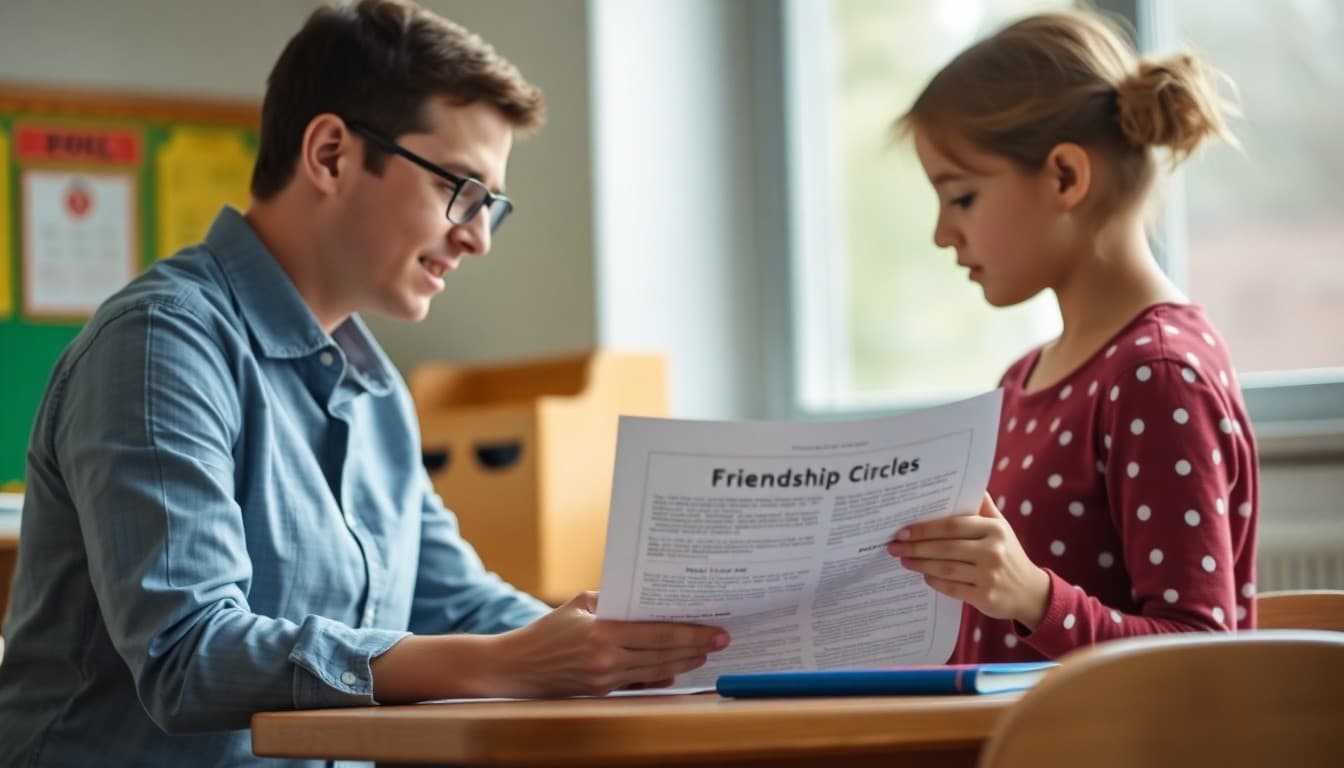
Friendship Circle Newsletter for Elementary School Families

When friendship circles and peer inclusion programs comes up in your classroom, parents notice. They ask about it at pickup, they mention it in emails, and some of them lose sleep wondering if their child is on track. Your newsletter is the best tool you have for answering those questions before they become anxiety. A clear, specific update about friendship circles and peer inclusion programs does more to build parent trust than any back-to-school night presentation.
What to Write About Friendship Circles And Peer Inclusion Programs
The most common mistake teachers make is being too vague. Writing that you are "working on friendship circles and peer inclusion programs" tells families almost nothing. A better approach: describe one specific skill students are developing, name one thing they saw or heard their child do this week, and give one concrete action families can take at home. Three sentences, specific enough to act on.
How Often to Communicate
For friendship circles and peer inclusion programs, weekly updates tend to work better than monthly summaries. By the time a monthly newsletter arrives, whatever happened three weeks ago is already old news and sometimes already a problem. A short weekly mention, even just two or three sentences, keeps families current and prevents the anxiety that builds when parents feel out of the loop.
Using Language Families Understand
Plain language is not about dumbing things down. It is about choosing the most direct word when you have a choice. For friendship circles and peer inclusion programs, that means replacing educational jargon with concrete descriptions. Instead of "enhancing metacognitive awareness," try "your child is learning to notice when they do not understand something and ask for help." Most families are happy to engage with school content. They just need it in language they recognize.
Getting Ahead of Common Parent Questions
Anticipating parent questions about friendship circles and peer inclusion programs saves you time and prevents unnecessary back-and-forth. Before you send your newsletter, think about the most likely concern a parent might have after reading it. Then answer it in the newsletter. If you are introducing a new approach to friendship circles and peer inclusion programs, explain why. If results will vary across students, say so. Proactive communication stops most questions before they become emails.
Connecting School and Home Around This Topic
The goal of any communication about friendship circles and peer inclusion programs is not to inform parents for its own sake. It is to connect what is happening at school with what families can reinforce at home. Give families something specific to do: a question to ask at dinner, an activity to try on the weekend, a book to look for at the library. The families who feel most connected to your classroom are the ones who can see a clear line between your teaching and their child's daily life.
A Newsletter Format That Works for Friendship Circles And Peer Inclusion Programs
A format that works for communicating about friendship circles and peer inclusion programs: open with one sentence naming what you are doing and why it matters right now, follow with the specific skill or activity students are working on, add one action families can take at home this week, and close with any relevant upcoming dates or deadlines. This format takes about five minutes to fill in each week and gives families everything they need without overwhelming them.
Keeping It Consistent All Year
Daystage makes it easy to keep your friendship circles and peer inclusion programs communication consistent without adding time to your week. Build a newsletter template once, update the relevant section each week, and send it to your class list in a few minutes. When parents know they can count on a weekly update, they stop sending individual emails asking for the same information. That is time back for both of you.
Get one newsletter idea every week.
Free. For teachers. No spam.
Frequently asked questions
How do I explain friendship circles and peer inclusion programs to elementary parents who are not familiar with it?
Start with what it is, why it matters, and what their child will be able to do by the end of the unit or program. Avoid educational jargon. If a term is unavoidable, define it immediately in the same sentence. A two-sentence plain-language explanation followed by one concrete example is enough for most families to understand and feel informed.
How often should I send updates about friendship circles and peer inclusion programs to elementary families?
For active units or programs, weekly is the right frequency. For ongoing skills or routines, a brief mention every week or two is enough. The goal is not to overwhelm families with information. It is to keep them consistently aware so they can support their child at home without waiting for a conference or a problem to surface.
What do elementary families most want to know about friendship circles and peer inclusion programs?
They want to know if their child is on track, what they should be doing at home to help, and when to be concerned. Answer those three questions clearly and you will cover most of what families need. Avoid vague language about progress. Specific milestones and concrete home activities are what parents can actually use.
How do I handle parent questions about friendship circles and peer inclusion programs after I send the newsletter?
Most good newsletter communication prevents questions rather than generating them. If you are getting consistent follow-up questions about friendship circles and peer inclusion programs, that is a signal to go deeper in the next newsletter. Address the most common question directly, add a FAQ section to that week's update, or share a resource link where parents can learn more. Repeated questions from different families mean the same information gap exists across your parent community.
What tool helps elementary teachers communicate efficiently about friendship circles and peer inclusion programs and other classroom topics?
Daystage is built for exactly this kind of ongoing parent communication. Elementary teachers can create a weekly newsletter template that covers consistent sections, update the friendship circles and peer inclusion programs section when it is relevant, and send to the whole class in minutes. Keeping communication organized and accessible in one place saves time and keeps every family in the loop.

Adi Ackerman
Author
Adi Ackerman is a former classroom teacher and curriculum writer with 8 years in K-8 schools. She writes about school communication, parent engagement, and what actually works in real classrooms.
More for Elementary
Ready to send your first newsletter?
3 newsletters free. No credit card. First one ready in under 5 minutes.
Get started free