
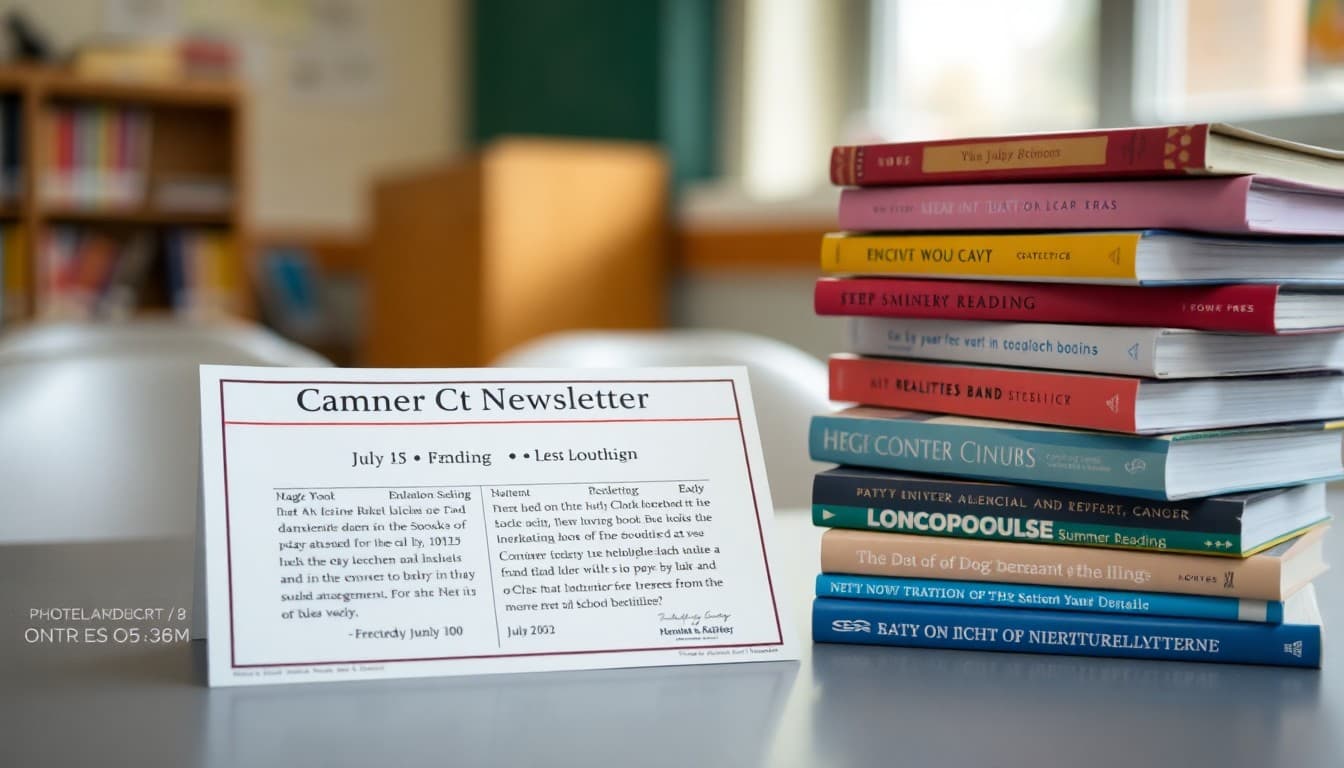
July School Librarian Newsletter: What to Communicate This Month
Most school librarians stop sending newsletters once summer begins. That is a missed opportunity. July is exactly when summer reading motivation starts to dip, and a single mid-summer message from the school librarian can be the nudge a family needs to get back to the book pile. You do not need much, just the right topics.
Check In on Summer Reading Progress
If your school runs a summer reading program with a log or tracker, July is when participation starts to slip. A brief check-in note acknowledges students who are on track and encourages those who fell behind to restart. Framing matters: "You still have six weeks, which is plenty of time to hit your goal" works better than a reminder that they are behind schedule.
Share Mid-Summer Book Picks
The best July newsletter feature is a short, specific reading list. Organize recommendations by grade band, not by genre or theme. Something like "For rising third graders: Diary of a Wimpy Kid: The Long Haul" is actionable in a way that "great middle-grade reads" is not. Include books available at most public library branches to avoid frustration with holds.
Point Families to Free Reading Resources
July is a good time to remind families about free digital reading options: the public library's Libby app for ebooks and audiobooks, Epic for younger readers, and any school-licensed reading platforms that students can access over summer. One sentence per resource with a direct link is all you need.
A Template for Your July Check-In
Here is a simple July newsletter opening that works for any elementary library:
"Hello from the library! We are halfway through summer, and I wanted to check in on how your reading is going. If you have hit your summer reading goal already, congratulations. If you are just getting started, here is some good news: six weeks is plenty of time. Here are a few books and free resources to help."
Follow this with your specific picks and resource links.
Preview What Is Coming in the Fall Library
Families with rising first graders or transfer students appreciate a short note about what library time looks like in the fall. Two sentences covering when classes visit the library and how the checkout system works reduces first-week questions and builds anticipation for the program.
Highlight One Interesting Reading Fact
A single surprising fact gives the newsletter a shareable, conversation-starting quality. For example: children who read 20 minutes a day over summer are exposed to 1.8 million words, while children who read 1 minute a day encounter only 8,000 words. Numbers like that make the case for summer reading better than any exhortation.
Invite Families to Share What They Are Reading
A simple call to action, like asking families to reply with the title their child is reading right now, creates engagement and gives you material for a fall newsletter feature. It also signals that the library is a two-way conversation, not just a source of logistics and reminders.
Keep It Short and Send It Early in the Month
Send your July newsletter in the first week of July. By the third week, families are often on vacation or in the end-of-summer wind-down, and open rates drop. An early-July send hits while families still have most of the summer ahead of them and are more likely to act on reading recommendations.
Get one newsletter idea every week.
Free. For teachers. No spam.
Frequently asked questions
Should school librarians send a newsletter in July?
Yes, if your library runs a summer program or if you want to maintain family engagement over break. A July newsletter does not need to be long. Two or three short sections covering summer reading progress, a mid-summer book recommendation, and a preview of fall library plans is enough to keep the library visible and families connected.
What topics work for a July school librarian newsletter?
Summer reading program check-ins, mid-summer book recommendations by grade, back-to-school library preparation notes, and any summer programming happening at the public library all work well. If your school library is closed, you can still send a newsletter that points families to public library resources and reading challenges.
How do I keep the July newsletter from feeling irrelevant when school is out?
Focus on what families can do right now, not what they missed. A reading challenge progress nudge, a list of free audiobook resources, or a preview of what students can look forward to in the fall library gives the newsletter a forward-looking, useful feel rather than a check-the-box administrative tone.
What is a good length for a July school library newsletter?
Even shorter than the school-year newsletter: 200 to 300 words is ideal. Families are in summer mode and less likely to read long emails. A brief check-in with two or three actionable items respects their time and keeps the library on their radar without demanding too much attention.
What tool do school librarians use to send summer newsletters?
Daystage works year-round, so librarians can schedule and send newsletters even during summer break. You can draft the July newsletter in June and set it to send automatically in mid-July, keeping communication consistent without requiring you to be at your desk when school is out.

Adi Ackerman
Author
Adi Ackerman is a former classroom teacher and curriculum writer with 8 years in K-8 schools. She writes about school communication, parent engagement, and what actually works in real classrooms.
More for Elementary
Ready to send your first newsletter?
3 newsletters free. No credit card. First one ready in under 5 minutes.
Get started free