
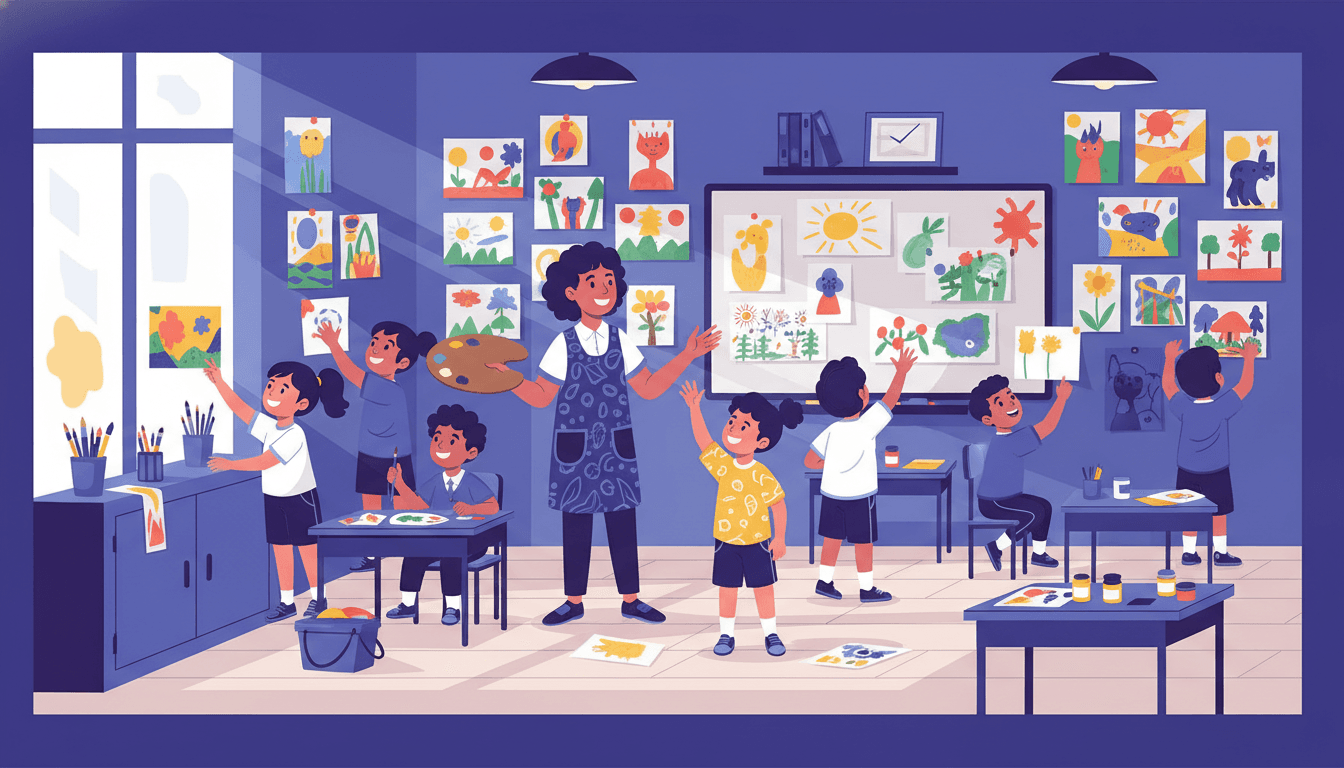
Social Skills Development Newsletter from Elementary Teacher

The social skills your students are learning in your classroom are some of the most important lessons of their entire elementary experience. They are also the hardest to communicate to families, because they do not show up on a report card and they do not come home on a worksheet. A social skills newsletter makes that invisible learning visible.
Why social skills newsletters matter more than parents expect
Most families receive academic updates regularly. Reading levels, math benchmarks, writing samples. Social and emotional development gets far less parent-facing communication, which means families often only hear about social issues when something has gone wrong.
A proactive social skills newsletter changes that pattern. Families who learn about conflict resolution strategies before their child has a conflict at school have context to work with. They know the language you use, the steps you teach, and the values you are building. When a hard moment happens, they can support your approach instead of accidentally working against it.
What to cover at each grade band
Social development looks different across the K-5 span. Your newsletter content should match the developmental stage of your students.
Kindergarten and first grade: these students are learning foundational skills. Taking turns, asking instead of grabbing, understanding that other people have feelings that may differ from their own. Describe what it looks like when these skills are practiced well. "We have been practicing asking 'can I play with you?' before joining a game at recess. The students who use this phrase are learning that asking feels better than just walking in and hoping for the best."
Second and third grade: friendship becomes more complex. Exclusion starts to emerge as a social behavior. Students are learning to disagree without abandoning the friendship, to notice when they have hurt someone's feelings, and to repair relationships after conflict. A newsletter that names these dynamics helps families recognize them at home too.
Fourth and fifth grade: social hierarchies are forming. Students are navigating peer pressure, learning to stand up for themselves, and figuring out when to involve an adult versus handling something themselves. These are the hardest social skills to teach and the ones families most want to understand.
Specific language to use in social skills newsletters
Share the exact vocabulary and phrases you use in the classroom. If you teach students to say "I feel..." rather than "you made me feel...", tell families. If you have a class signal for "I need a minute," describe it. Shared language between school and home is one of the most powerful tools in social-emotional development.
Some phrases that transfer well from classroom to home:
- "I feel frustrated when..." instead of "you always..."
- "Can I have a turn when you are done?" instead of grabbing or waiting and stewing
- "I need some space right now" as a way to exit a conflict without escalating
- "That was my fault. I am sorry." as a practice in direct accountability
Connecting school practice to home situations
The best social skills newsletters give families something to try. Not a lesson plan. A question they can ask their child that opens a real conversation.
"Ask your child: what do you do when someone is leaving you out? What have you tried? What worked?" That question, asked in a calm moment at the dinner table, does more to reinforce classroom learning than any additional instruction. Families are the most important social skills teachers in a child's life. Your newsletter is reminding them of that.
Celebrating social growth as a class
End your social skills newsletters on a visible win. Something specific that happened in the classroom that showed growth. "This week, two students who had been arguing over the same book at reading time came up with a solution on their own. They decided to take turns reading it aloud to each other. That is exactly the kind of problem-solving we are building."
That story costs you nothing to share and tells families everything about the kind of classroom you are running.
Get one newsletter idea every week.
Free. For teachers. No spam.
Frequently asked questions
Why should elementary teachers send a social skills newsletter?
Social skills do not develop automatically. They are taught, practiced, and reinforced. When families understand what skills their child is working on at school, they can reinforce the same language and habits at home. A social skills newsletter creates a bridge between classroom practice and daily life.
What social skills are appropriate to highlight in K-5 newsletters?
For K-2, focus on taking turns, asking to join a game, and using words instead of actions when upset. For grades 3-5, cover reading social cues, disagreeing respectfully, and knowing when a situation needs adult help versus peer resolution. Name the skill, describe what it looks like, and explain why it matters.
How do you write about social development without embarrassing specific students?
Always frame social skills newsletters around the class as a whole. Describe skills the entire grade is working on at this developmental stage. Avoid language that implies any one child is struggling. 'Third graders are working on...' covers the topic without putting any family on alert.
What tone works best for elementary social skills newsletters?
Warm, developmental, and optimistic. These newsletters land best when they feel like updates from a trusted partner, not reports on what is going wrong. Lead with what students are doing well, then describe what you are building toward. Families who feel respected are more likely to engage with the content.
Can Daystage help teachers send recurring social skills updates throughout the year?
Daystage makes it easy to build a social-emotional learning newsletter cadence into your regular communication schedule. You can create a standing template for social skills updates that reuses your format while swapping in the current skill focus each time you send.

Adi Ackerman
Author
Adi Ackerman is a former classroom teacher and curriculum writer with 8 years in K-8 schools. She writes about school communication, parent engagement, and what actually works in real classrooms.
More for Elementary
Ready to send your first newsletter?
3 newsletters free. No credit card. First one ready in under 5 minutes.
Get started free