

Elementary School Parent Newsletter: Parent Teacher Conference Prep Tips
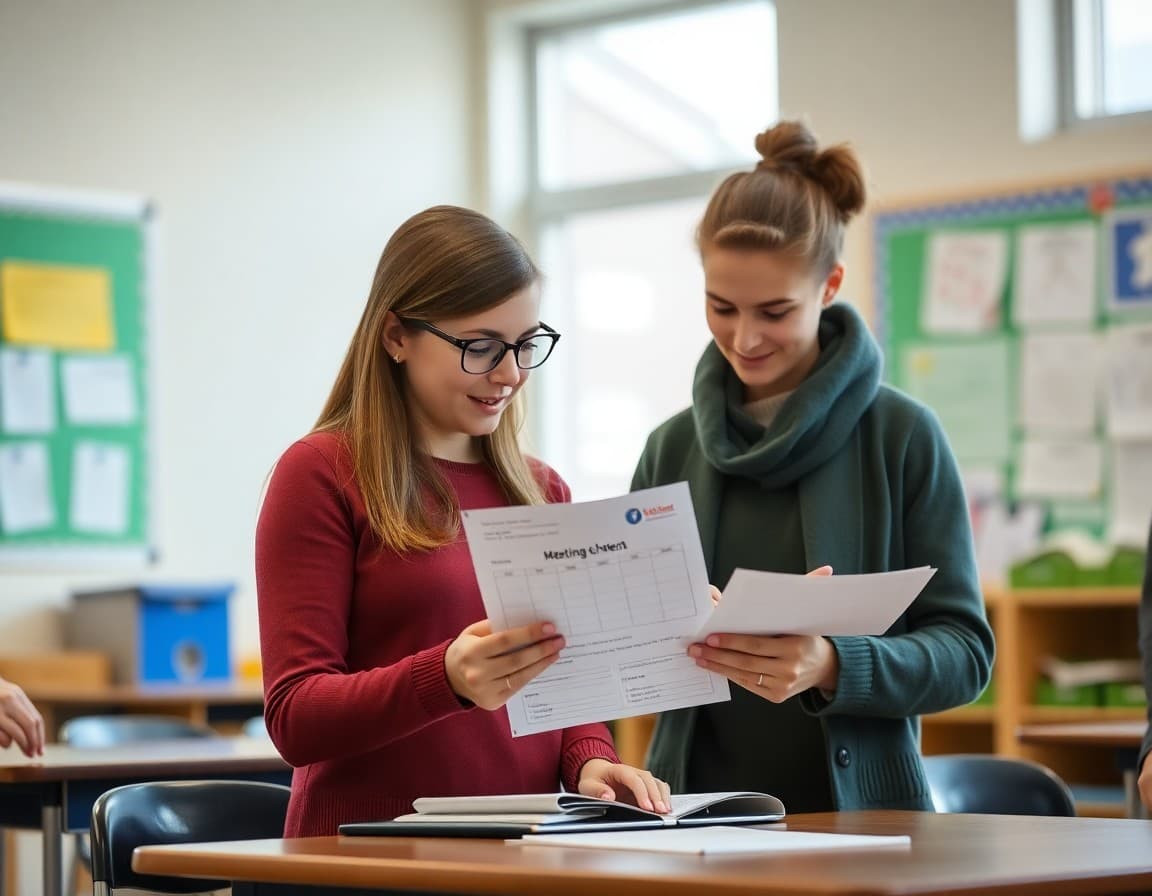
Parent teacher conferences are one of the most important family engagement events of the school year, and they are consistently underutilized because most families arrive without knowing what to ask or what to expect. A well-written conference prep newsletter changes that. Families who arrive with questions written down, who know what the teacher will share and in what format, and who understand the follow-up process have conferences that are twice as productive. Here is how to write the newsletter that makes that possible.
Send the Newsletter One Week Before Conferences
Timing matters. A conference prep newsletter sent the day before is too late for families to prepare questions or arrange childcare if needed. A newsletter sent two weeks before gets lost in the general school communication flow. One week out is the sweet spot: close enough that the conference is top of mind, far enough that families can prepare. Include the full conference schedule, the time allotment per family, how to reschedule if needed, and a brief description of what you will cover.
Tell Families Exactly What You Will Share
One of the main sources of conference anxiety for families is not knowing what the teacher is going to say. A newsletter that previews the conference structure removes that anxiety. "At our conference, I will share your child's current reading and math levels compared to the grade-level benchmark, one area where they are thriving, one area we are working on together, and one specific thing you can do at home to support their growth. We will also have five minutes for your questions." That transparent preview changes the emotional register of the conference from anxious to collaborative.
Provide Questions Families Can Bring
Most families walk into conferences without written questions and then leave wishing they had asked something. A newsletter that includes a list of suggested questions, along with space to write their own, solves this problem before it happens. Good suggested questions include: Is my child where they need to be at this point in the year? What does a typical day look like for my child? What is my child's social experience in the classroom? What one thing can we do at home that would make the biggest difference right now? Families who bring questions leave with answers, and that is when conferences feel useful.
A Template Conference Prep Newsletter Section
Here is a template for a conference prep newsletter:
"Parent-teacher conferences are coming up [DATE RANGE]. Your conference is scheduled for [DATE AND TIME, or instructions to check the schedule]. Conferences are [X] minutes. I will cover: [BRIEF LIST OF WHAT YOU WILL SHARE]. Please bring any questions you want answered. A few questions that often lead to the most useful conversations: What is my child's reading level right now? Where is my child working to grow? What can we do at home? If you need to reschedule, please [CONTACT METHOD] by [DEADLINE]. If you need a language interpreter, please let me know by [DATE] and I will arrange one."
Address Language and Cultural Access Directly
Families who speak a language other than English, or who are from cultures where the parent-school conference format is unfamiliar, may feel particularly anxious or unprepared for conferences. Your newsletter should explicitly invite these families to request an interpreter and should explain that interpretation services are available and free. Acknowledging that the conference format may feel unfamiliar, and that you want every family to feel welcome and able to ask their questions, removes a barrier that otherwise keeps multilingual families less engaged in conferences than their English-speaking peers.
Set Expectations About Conference Length and Format
Elementary parent teacher conferences are typically 15 to 20 minutes. Many families arrive not knowing this and then feel rushed or confused when the conference ends. Stating the time allotment explicitly in your newsletter, and explaining that you will manage the time to cover the most important points and leave room for their questions, sets accurate expectations. "We have 15 minutes together, which is enough time to cover the things that matter most. I will make sure we leave 5 minutes for your questions." That clarity prevents the awkward conference ending where a family is still talking when the next family is at the door.
Explain What Happens After the Conference
Many families leave conferences with action items and no clear follow-up plan. A newsletter that explains what happens after the conference, how you will communicate progress on the areas you discussed, when the next progress report will arrive, and how to reach you if questions arise after the conference, closes the loop that most conference communication leaves open. "After our conference, I will send a brief follow-up note summarizing what we discussed and next steps. If new questions come up after our conversation, the best way to reach me is [CONTACT]."
Follow Up After Conferences with a Brief Summary
One of the highest-value things a teacher can do after conferences is send a brief follow-up note to each family summarizing the key points discussed and the agreed-upon action items. This does not need to be long; three sentences covering what was discussed, what the family committed to try at home, and what you committed to monitor is sufficient. Families who receive this kind of follow-up feel genuinely heard and are more likely to implement the action items. Daystage makes it practical to send these individualized follow-up notes quickly after conference week.
Get one newsletter idea every week.
Free. For teachers. No spam.
Frequently asked questions
What should a parent teacher conference prep newsletter include?
An effective conference prep newsletter should explain the conference format and time allotment, help families identify and write down their most important questions before arriving, describe what the teacher will share and in what format, address what to do if the family needs a translator, explain the follow-up process after the conference, and invite families to bring any work samples or concerns they want to discuss. Families who arrive prepared have better conferences.
How should elementary teachers prepare families for difficult conference conversations?
If you anticipate sharing difficult information at a conference, a pre-conference newsletter or individual note that frames the conversation as collaborative and solution-focused helps families arrive less defensively. Saying 'we will talk about areas where your child is working to grow alongside their strengths' sets a different tone than an unexpected difficult conversation for which families are completely unprepared. Transparency about the format reduces the anxiety that makes hard conversations harder.
What questions should parents ask at elementary school parent teacher conferences?
The most productive parent questions at elementary conferences are: What is my child's strongest academic area right now? Where is my child working to grow? What does a typical day look like for my child socially? What one thing can we do at home to support the biggest area of growth? Is my child where they need to be at this point in the year? These questions generate specific, actionable answers rather than general reassurances.
How long should elementary parent teacher conferences be and what can be covered?
Most elementary parent teacher conferences are 15 to 20 minutes. In that time, a teacher can typically cover academic performance highlights, one or two areas of growth focus, a social and behavioral snapshot, and one specific family action item. Trying to cover too much turns conferences into information overloads that families leave confused. A clear structure with a dedicated time for parent questions ensures the most important information is exchanged efficiently.
What tool do elementary teachers use to send conference prep newsletters to families?
Daystage is used by K-5 teachers to send polished conference preparation newsletters quickly and professionally. Teachers can include the conference schedule, a list of suggested questions, logistical details, and a brief explanation of the conference format in one clean newsletter sent directly to family emails a week before conferences begin. It reduces the back-and-forth about conference logistics and ensures all families arrive prepared.

Adi Ackerman
Author
Adi Ackerman is a former classroom teacher and curriculum writer with 8 years in K-8 schools. She writes about school communication, parent engagement, and what actually works in real classrooms.
More for Elementary
Ready to send your first newsletter?
3 newsletters free. No credit card. First one ready in under 5 minutes.
Get started free