
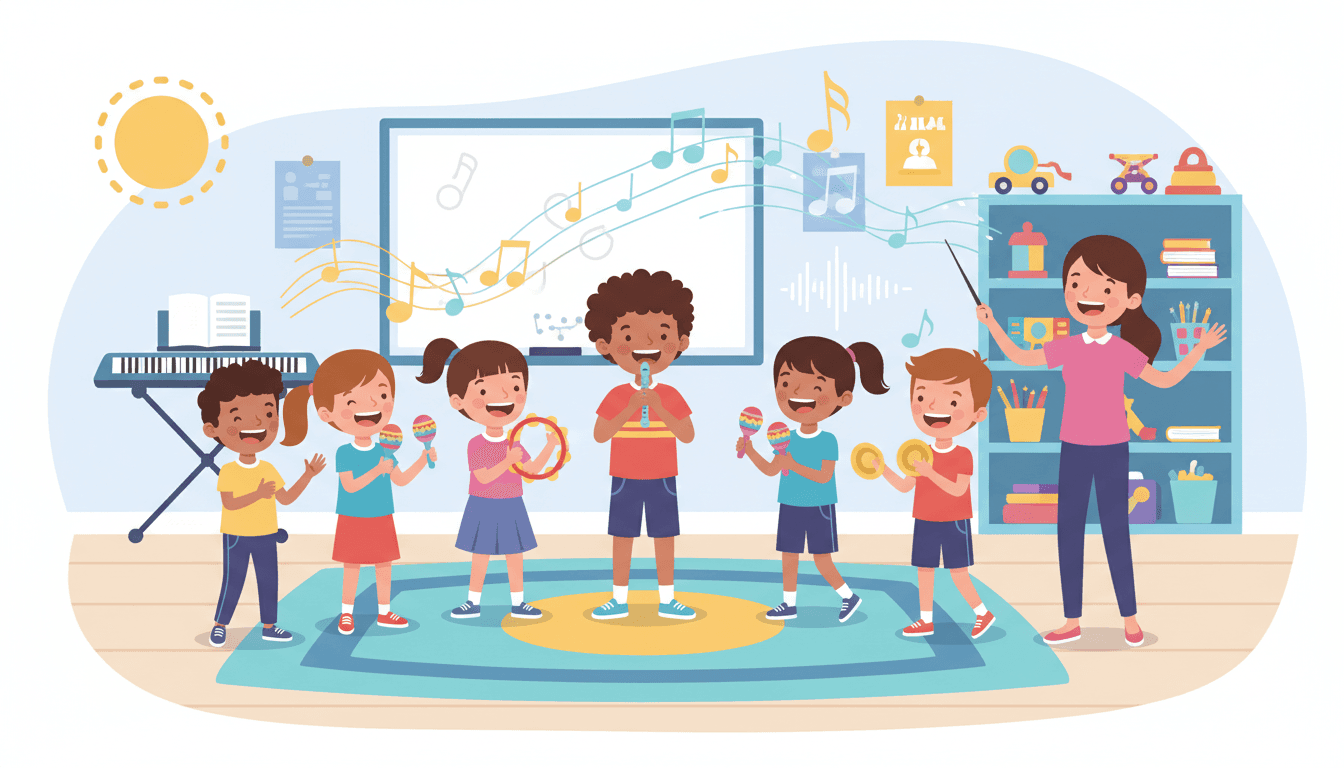
Elementary Music Newsletter: Keeping Families Connected to the Music Program
Music class happens once or twice a week for most elementary students, and families often have no idea what is happening in it. They hear their child singing a song, maybe humming a rhythm. They do not know what skills are being developed, what the music program goals are, or how the class connects to the broader school day.
A newsletter fixes that. Here is what to put in an elementary music newsletter that families will actually read.
What students are learning, not just what they are playing
Music education is skill-based learning. Students develop pitch recognition, rhythmic accuracy, ear training, music literacy, and performance skills. Most families do not know this is what happens in music class. They think it is mostly singing songs and playing simple instruments for fun.
Use the newsletter to describe the skill behind the activity. "This week students practiced identifying whether a melody moves up, down, or stays the same. We sang the phrase and then students drew contour lines showing the shape of the melody. This ear training skill is foundational for sight-reading and for learning to play any instrument." That is three sentences. It completely changes how families understand what happened during that forty-minute class.
What your child is singing, and why they know it
Families love hearing about the repertoire. What songs are students learning? Where does the music come from? Is it classical, folk, popular, culturally specific? When families know the repertoire, they can participate in it at home.
Share the title and one sentence of context for the main piece students are learning. "We are learning a traditional West African call-and-response song called 'Che Che Koolay.' Students are practicing the call-and-response form, which is one of the oldest structures in music. You can find a recording online and sing along with your child." That invitation to participate at home builds music into family life.
Concert and performance logistics
Music teachers have a major advantage over classroom teachers when it comes to family engagement: performances. Concerts and recitals are events that families genuinely look forward to. Use the newsletter to build anticipation well before the event.
Share concert dates as soon as they are confirmed. Follow up in subsequent newsletters with what students are preparing, how rehearsals are going, and what families should expect to see and hear. Families who receive three or four newsletters building toward a performance arrive more engaged than families who receive a one-week notice.
Instrument introduction and music literacy updates
If your grade-level students are being introduced to instruments, the newsletter is where you explain what families can expect. Which instruments? How many sessions? What does beginner practice look and sound like? Families who understand the developmental process of instrument learning are more patient and supportive at home.
When students begin reading music notation, explain what they are learning and why it matters. "Students are learning to read rhythm notation this month, starting with whole notes and quarter notes. Music notation is a language, and learning to read it means students can eventually learn any piece of music without relying entirely on imitation or memory."
Music and academic connections
Music education research consistently shows connections to math, language development, and executive function. Families who understand these connections value the music program more and advocate for it more strongly.
Include these connections in the newsletter once or twice a year. Keep it specific, not vague. "The rhythmic pattern work we do in music class directly mirrors the pattern recognition skills used in early math. When students identify a repeating rhythm pattern, they are using the same cognitive process as identifying a number pattern. The same precision and attention to detail apply."
Home listening recommendations
A music newsletter has a natural extension activity that classroom newsletters rarely do: listening. Including one listening recommendation per newsletter, with a brief note about what to notice, extends musical learning into the home effortlessly.
"This week, listen to a few minutes of Vivaldi's 'Spring' from the Four Seasons. Ask your child what season it sounds like and why. We have been talking about how composers use tempo, dynamics, and instrument choices to create mood and imagery." One listening prompt. Five minutes. Families can do this on the drive to school.
Keeping music newsletters sustainable
Music teachers work with every student in the school and often have packed schedules. The newsletter needs to be something that can be produced in twenty minutes, not two hours. A consistent structure with four short sections, clear headers, and a predictable format makes that possible.
Daystage gives music teachers a tool that handles the formatting and sending so the time goes toward content. Set up the template once. Fill it in each issue. Send. Families receive a professional newsletter that reflects the quality of your program.
What music newsletters do for the program
Music programs that communicate well with families tend to have stronger parent support, higher student retention in optional music activities, and more family attendance at performances. None of that happens by accident. It happens because families feel connected to the program and understand what their child is building there.
A newsletter is the most consistent and scalable way to build that connection. It is worth the habit.
Get one newsletter idea every week.
Free. For teachers. No spam.
Frequently asked questions
When should elementary music teachers send newsletters to families?
Send a newsletter at the start of each new unit and before every concert or performance, with a follow-up after major events. Building anticipation over three or four newsletters before a concert produces far better family attendance than a one-week notice.
What should an elementary music newsletter include for families?
Describe the specific skill behind this week's activity, share the title and a sentence of context for the main piece students are learning, provide concert logistics well in advance, and include one listening recommendation families can use at home in five minutes.
How long should an elementary music teacher newsletter be?
Four short sections with clear headers, totaling 300 to 400 words, is the right length for a specialist teacher's newsletter. Music teachers work with every student in the building, so the newsletter needs to be something that can be written in twenty minutes, not two hours.
What are common mistakes elementary music teachers make when communicating with families?
Describing what students are doing without naming the skill is the most common mistake. 'We are learning a West African call-and-response song' tells families almost nothing. Add two sentences about what musical structure they are practicing and why it matters, and the update becomes genuinely useful.
What tool helps elementary music teachers send professional newsletters efficiently?
Daystage gives music teachers a tool that handles formatting and sending so the time goes toward content. Set up the template once, fill it in each issue, and families receive a professional newsletter that reflects the quality of your program.

Adi Ackerman
Author
Adi Ackerman is a former classroom teacher and curriculum writer with 8 years in K-8 schools. She writes about school communication, parent engagement, and what actually works in real classrooms.
More for Elementary
Ready to send your first newsletter?
3 newsletters free. No credit card. First one ready in under 5 minutes.
Get started free