
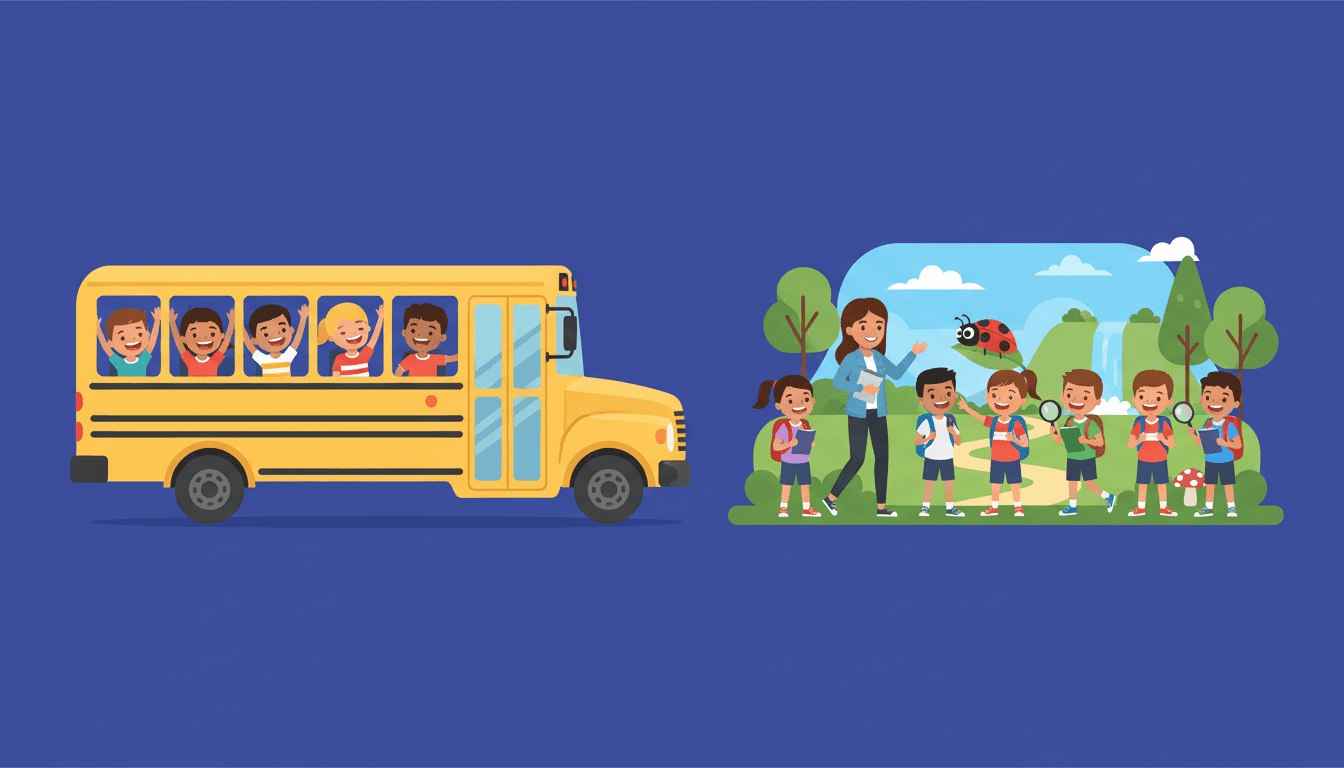
Elementary Field Trip Newsletter: What to Tell Families Before Every Trip

Field trips are some of the most memorable learning experiences of elementary school. Students talk about them for weeks. Families look forward to hearing about them. But the communication around field trips, when it exists at all, is often a bare-minimum permission slip that tells families nothing beyond the date and the cost.
A field trip newsletter does something the permission slip cannot. It prepares families for the experience, explains why the trip matters, and gives students context that makes the learning richer. Here is how to write one.
Send the field trip newsletter two to three weeks in advance
Permission slips typically go home two weeks before a trip. The newsletter should go home at the same time or slightly earlier. Families who have already read about the trip in the newsletter are more likely to return the permission slip promptly. They also have more time to ask questions and prepare.
Last-minute field trip communication leads to last-minute problems: missing permission slips, forgotten packed lunches, parents who show up to chaperone without a background check on file. Two to three weeks of lead time prevents most of these.
Explain the educational purpose of the trip
This is the section that most field trip communications leave out entirely. Families who only know the logistics, where they are going and what time to be back, do not understand the educational context. They cannot help their child get the most out of the experience before, during, or after.
Explain the connection to what students are studying. "We are visiting the science museum's Earth and Space exhibit because we are in the middle of our solar system unit. Students will see scale models of the planets and participate in a live planetarium show. The goal is to make the distances and sizes we have been discussing in class feel real. Reading that Jupiter is 1,300 times larger than Earth is one thing. Standing in front of a scale model is different."
That explanation gives families something to talk about before the trip, during the drive home, and in the days that follow.
What to say about logistics
Cover the logistics clearly and specifically. Do not assume families will read the permission slip carefully. Repeat the key details in the newsletter:
- Date and departure time
- Return time and any variability (traffic can affect this)
- What students should bring: packed lunch, weather-appropriate clothing, comfortable shoes
- What students should not bring: electronics, money, toys
- Permission slip and payment deadline
- Chaperone information if applicable
Bullet points work better than paragraphs for logistics. Families scan for action items. Give them a scannable list.
How families can help students get ready
Students who arrive at a field trip with some context get more out of the experience than students who arrive cold. Tell families what they can do in the days before the trip to help their child prepare.
This does not need to be elaborate. "If you want to help your child get excited before the trip, look up a photo of Jupiter's Great Red Spot together. Ask them what they think it is. We have talked about it in class and they will know the answer. That kind of preview makes the planetarium show significantly more engaging."
A reflection prompt for after the trip
Field trip newsletters that include one reflection question for the car ride or dinner table after the trip give families a natural way to extend the learning. "On the drive home, ask your child: what was the most surprising thing you saw or learned today? That question opens up better conversation than 'how was it?'"
That one sentence costs nothing and significantly increases the chance that the field trip becomes a real learning conversation at home.
After the trip: the follow-up newsletter
Send a brief follow-up newsletter within a week of the trip. Share a photo or two if you have them. Describe one moment that captured what the trip was really about. Connect what students saw back to the classroom unit.
"The highlight of our museum visit was watching a student realize, while standing in front of the scale model, that all eight planets fit inside Jupiter. That was the moment the unit made sense for her in a new way. Several students said the same thing on the bus ride back. That is exactly what field trips are for."
A follow-up newsletter closes the loop and signals to families that the trip was a planned learning experience, not just an outing.
Building field trip newsletters efficiently
Field trip newsletters follow a consistent pattern: educational context, logistics, family prep, reflection prompt. Once you have written this format once, subsequent field trip newsletters take fifteen to twenty minutes. The structure is already there. You fill in the trip-specific details.
Daystage makes it easy to reuse and adapt templates like this. Your classroom branding is already set. Open a new newsletter, work through the sections, send. The permission slip handles the formal consent. The newsletter handles the relationship.
Get one newsletter idea every week.
Free. For teachers. No spam.
Frequently asked questions
When should elementary teachers send a field trip newsletter to families?
Send the field trip newsletter two to three weeks before the trip, at the same time as the permission slip. Families who already understand the trip are more likely to return the permission slip promptly and less likely to cause last-minute logistical problems.
What should an elementary field trip newsletter include for families?
Cover the educational purpose of the trip and its connection to the current classroom unit, specific logistics in bullet-point format, how families can help students prepare in the days before, and one reflection question for the car ride home. The permission slip handles consent. The newsletter handles the relationship.
Should elementary teachers send a newsletter after a field trip?
Yes. Send a brief follow-up within one week of the trip. Share a photo or two, describe one moment that captured what the trip was really about, and connect what students saw back to the classroom unit. A follow-up newsletter signals to families that the trip was a planned learning experience, not just an outing.
What are common mistakes elementary teachers make when communicating about field trips?
Sending only the permission slip with no educational context is the most common mistake. Families who only know the date and cost cannot help their child prepare, ask good questions afterward, or understand why the trip mattered academically.
How does Daystage help elementary teachers build and reuse field trip newsletter templates?
Daystage makes it easy to reuse and adapt a field trip template. Your classroom branding is already set, so you open a newsletter, work through the sections with trip-specific details, and send. After writing the format once, subsequent field trip newsletters take fifteen to twenty minutes.

Adi Ackerman
Author
Adi Ackerman is a former classroom teacher and curriculum writer with 8 years in K-8 schools. She writes about school communication, parent engagement, and what actually works in real classrooms.
More for Elementary
Ready to send your first newsletter?
3 newsletters free. No credit card. First one ready in under 5 minutes.
Get started free