

How School Boards Can Use Newsletters to Communicate With the Community
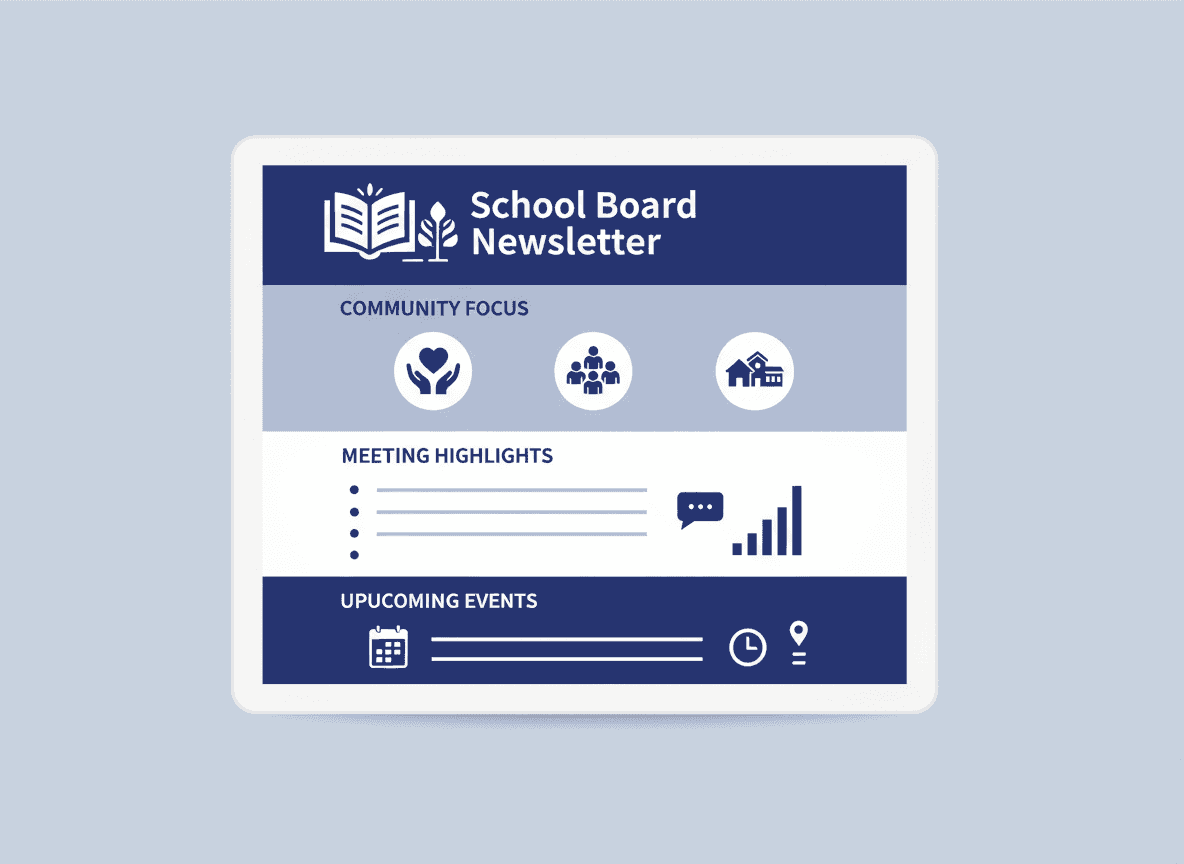
School boards hold enormous authority over the direction of public education. They approve budgets, hire and evaluate superintendents, set policies that govern everything from curriculum to employment, and ultimately set the conditions under which students learn.
Most community members have almost no idea what their school board does, how decisions are made, or how to engage with the board outside of a formal public comment period. That information gap is not good for anyone, including the board members who were elected to represent those communities.
A school board newsletter changes that dynamic. It is a direct line from elected officials to the community they serve.
Why school boards should communicate directly
The superintendent communicates on behalf of the administration. The district newsletter covers the operational activities of the district. Neither of these is a substitute for board communication, which serves a different purpose: explaining governance, building transparency around decisions, and maintaining the democratic accountability relationship between elected officials and the public.
When the board does not communicate independently, community members must rely on local news coverage of board meetings, which is selective and often focuses on conflict, and social media, which is often inaccurate. Neither gives the community an accurate picture of how the board is functioning or why decisions were made.
Board newsletter versus district newsletter
The board newsletter is distinct from the district newsletter in voice, content, and purpose. The district newsletter is produced by district staff and covers operational and programmatic content. The board newsletter is produced by or with significant input from board members and covers governance content.
In practice, many districts combine these into one communication, with a board section inside the district newsletter. That works if the board section is genuinely from the board and not just a repackaging of administrative content.
The test is simple: does the newsletter include information about board deliberations, the reasoning behind votes, and board member perspectives that would not appear anywhere else? If yes, it is serving the board communication function. If it is only reporting decisions the superintendent already announced, it is not.
What the board newsletter should include
School board newsletters should focus on content only the board can provide:
- What the board voted on at recent meetings and why. Not just the outcome, but the reasoning. "The board approved the revised student conduct policy 5-2. Board members who voted yes expressed support for the restorative practices approach. Board members who voted no raised concerns about implementation timelines. The full discussion is in the meeting recording linked below." This is transparent governance communication.
- What topics are coming before the board in upcoming meetings. Agenda previews are one of the most useful things a board newsletter can provide. Families and community members who know what the board will be discussing can attend, submit comments, and engage before decisions are made rather than after.
- How to engage with the board. How does public comment work? How can families submit written comments? How do they contact individual board members? This information should appear regularly, not just when there is a controversial topic on the agenda.
- The board's priorities for the year. What is the board focused on? What goals has the board set for the superintendent? Where is the board investing its oversight attention?
- Policy updates. When the board adopts new or revised policies, a brief explanation of what changed and why belongs in the newsletter. Board policies affect students and families, and they deserve to understand them in plain language.
Handling split votes and dissent
Board newsletters often avoid reporting split votes or board member disagreements. The instinct is understandable: public dissent can seem like dysfunction. But this instinct leads to newsletters that communicate nothing about how the board actually works.
Board members disagree on significant issues. That is appropriate and healthy. Reporting those disagreements accurately, along with the reasoning on each side, does not embarrass the board. It demonstrates that decisions are being made through deliberation, not rubber-stamping.
The rule for reporting dissent: be factual, be proportionate, and include the reasoning behind both positions. The goal is to give community members the information they need to evaluate the board's work, not to adjudicate who was right.
Individual board member voices
Some boards produce newsletters that include brief statements from individual board members alongside a shared board summary. This format acknowledges that board members represent different community perspectives and can communicate directly with the constituents who elected them.
If board members contribute individual statements, set clear guidelines: length limits, topic restrictions (no campaigning, no personal attacks on other board members or district staff), and a requirement for content that serves the community rather than the individual member's political interests.
Frequency and format
Monthly works well for most board newsletters. At minimum, publish a summary after each board meeting, which for most districts means monthly.
For format: the board newsletter should be professional and accessible, not bureaucratic. A meeting recap should read like a thoughtful summary, not like board minutes. Use plain language. Define any acronyms. Keep each agenda item summary to two or three sentences unless a topic warrants more.
Include a link to the full meeting recording and minutes for community members who want more detail. The newsletter is the entry point, not the complete record.
Election year communication considerations
Board newsletters require particular care during election years. Board newsletter infrastructure should not be used as a campaign platform for incumbents seeking re-election. The newsletter should continue to cover governance and decisions, not electoral information or candidate positioning.
If the board newsletter includes a section about board member bios or backgrounds, review it before election season and ensure it is consistent for all members, incumbents and newly elected alike.
Using Daystage for board communication
A professional, consistently formatted board newsletter signals that the board takes its communication responsibilities seriously. Daystage provides the kind of structured newsletter format that makes board communications look organized and credible.
If the board newsletter is being produced by district staff on behalf of the board, Daystage makes that collaboration efficient. Draft content can be prepared by communications staff, reviewed and edited by board members, and sent from the district's professional newsletter platform.
The school board is accountable to the public. Regular, transparent newsletters are one of the most direct ways to fulfill that accountability between elections.
Get one newsletter idea every week.
Free. For teachers. No spam.
Frequently asked questions
When should school boards send community newsletters?
Publish a summary after each board meeting, which for most districts means monthly. Also publish agenda previews one week before each meeting so community members can attend, submit comments, and engage before decisions are made rather than after. During election years, review timing carefully to ensure board newsletter infrastructure is not used as a campaign platform.
What should a school board newsletter include?
Focus on content only the board can provide: what the board voted on with the reasoning behind each significant decision, split vote explanations including the perspectives on both sides, upcoming meeting agenda topics with context for why they matter, how to participate in public comment or contact board members directly, and policy updates in plain language that explain what changed and why.
How should school boards communicate governance decisions to the full district community?
The test for whether a board newsletter is doing its job is specific: does it include information about board deliberations and member reasoning that would not appear anywhere else? If it only recaps decisions the superintendent already announced, it is not serving the board communication function. Report dissent accurately with reasoning on both sides rather than smoothing it over.
What are common challenges in school board communication?
Most school boards communicate their work only through formal public meeting records, which selective local news coverage and social media then distort. Without a direct board communication, community members cannot distinguish between board decisions and administrative decisions, do not understand how the board actually functions, and engage only when there is a controversy rather than as consistent participants in governance.
How does Daystage support school board newsletter communications?
A professional, consistently formatted board newsletter signals that the board takes its communication responsibilities seriously. Daystage provides the kind of structured newsletter format that makes board communications look organized and credible, and it supports collaboration between communications staff who draft content and board members who review and approve it before sending.

Adi Ackerman
Author
Adi Ackerman is a former classroom teacher and curriculum writer with 8 years in K-8 schools. She writes about school communication, parent engagement, and what actually works in real classrooms.
More for District
Ready to send your first newsletter?
3 newsletters free. No credit card. First one ready in under 5 minutes.
Get started free