

The Superintendent Newsletter: How District Leaders Can Communicate Directly With Families
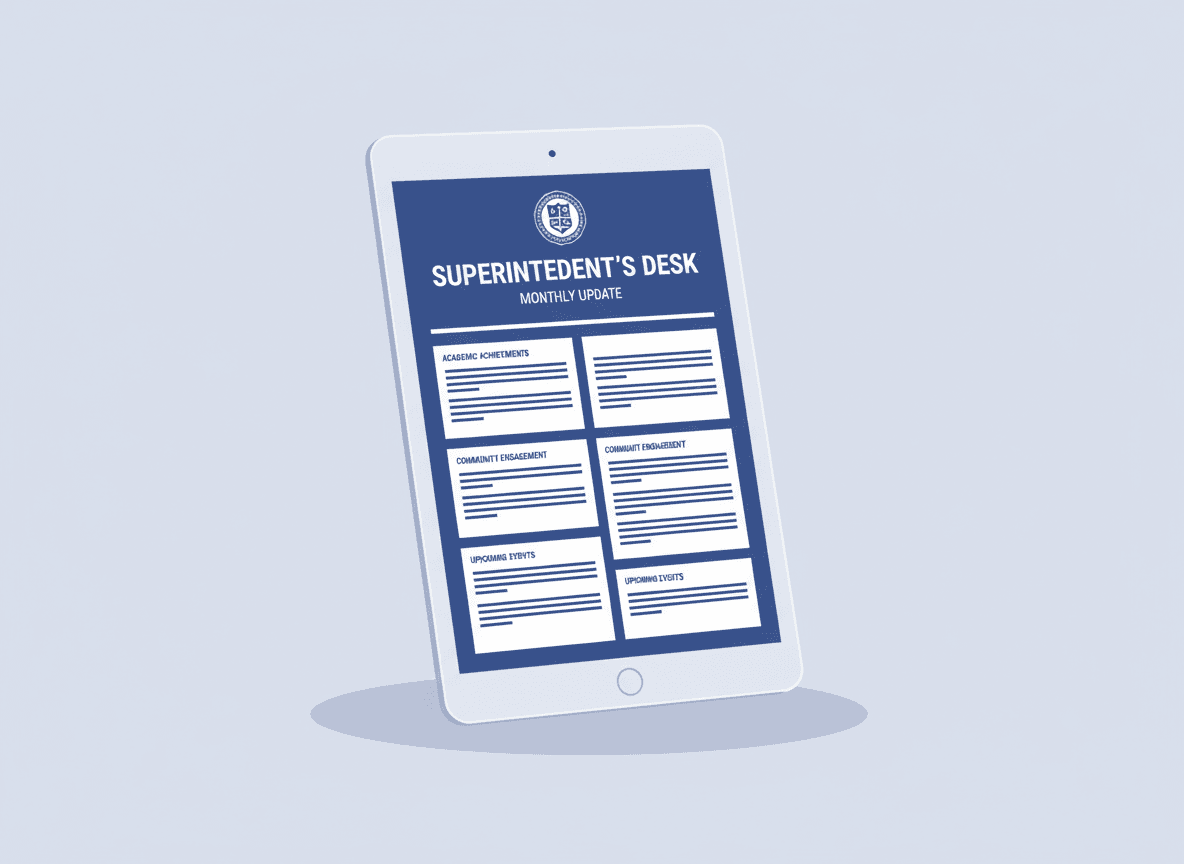
The superintendent is the most visible leader in the school district. Yet most superintendents communicate with families only when something goes wrong: a crisis, a controversy, a budget cut. The rest of the year, families hear nothing directly from the person responsible for running their children's schools.
That silence has a cost. When families do not hear from district leadership during normal times, they fill the gap with whatever they hear from neighbors, social media, and local news. None of those sources are as accurate or as well-intentioned as a direct message from the superintendent.
A consistent superintendent newsletter changes that dynamic. It gives the district's top leader a direct line to families that does not require a crisis to activate.
Why superintendents avoid direct family communication
Most superintendents are not avoiding family communication because they do not care. They avoid it because it feels high-risk. Every word from the superintendent is a district statement. A poorly worded paragraph can generate a school board complaint, a local news story, or a social media pile-on.
This risk aversion is understandable. It is also self-defeating. When the superintendent only communicates during crises, every communication from the superintendent signals that something is wrong. Families become conditioned to feel anxious when they see the superintendent's name in their inbox.
A regular, proactive newsletter breaks that conditioning. After a few months of monthly newsletters with ordinary content about district priorities and good news from schools, families stop treating superintendent communication as a warning signal.
What to include in the superintendent newsletter
The superintendent newsletter is not the district newsletter with the superintendent's name on it. It is a personal communication from the district's top leader. That distinction should be visible in the content and the tone.
Content that works well in superintendent newsletters:
- What the superintendent is currently focused on. Not a policy summary. A personal statement about what issue is taking most of their attention right now, and why. "I spent most of this week in conversations about our literacy scores and what we are doing differently next year" is more useful than "The district remains committed to literacy excellence."
- A decision that was recently made and why. Families appreciate being brought into the reasoning behind district decisions. A superintendent who explains the thinking behind a budget allocation or a curriculum change builds more trust than one who simply announces outcomes.
- Something from a school visit. When the superintendent visited schools, what did they see? A specific classroom, a specific student project, a specific teacher who did something noteworthy. This grounds the newsletter in real observation rather than abstract administration.
- What is coming in the next month. One or two things families should be aware of that are on the district's agenda. Board meeting topics, community input sessions, program announcements.
What to leave out
Superintendent newsletters fail when they become:
- A list of district accomplishments that reads like a press release
- A legal summary of policy changes
- A collection of thank-yous so generic they feel like filler
- A recap of things that happened without any forward-looking content
If a family reads the superintendent newsletter and feels like they read a press release, the newsletter has failed. The goal is for families to feel like they heard directly from a person who leads their school system with intention and thoughtfulness.
Tone and voice
Superintendent newsletters should sound like the superintendent. Not like the communications office. Not like a legal brief. Not like a consultant's report.
This means the superintendent should write at least the core message in their own words. The communications team can edit, format, and polish. But the first draft should come from the superintendent, or at minimum from a conversation with the superintendent about what they actually want to say.
Readers can tell when a newsletter was written by committee. The hedged language, the passive constructions, the complete absence of any personal opinion or observation. It reads exactly like what it is: content that has been reviewed so many times that all the personality has been smoothed out.
The superintendent newsletter should read like a confident, thoughtful person talking to their community. Not like a legally reviewed public document.
How often to send
Monthly is the right frequency for most superintendent newsletters. More than monthly starts to feel like spam. Less than monthly breaks the habit.
Send on the same day each month. The first Monday of the month, the first Thursday. Families will start to expect it. Some will set up filters for it. That predictability is a feature, not a limitation.
In addition to the regular monthly newsletter, the superintendent should also send direct messages during significant events: start of school, end of school, and any time a major district decision requires personal explanation. These additional messages should feel like additions to the regular pattern, not replacements for it.
Format considerations
Keep the superintendent newsletter shorter than the general district newsletter. Four to six paragraphs is the right length. It should feel like a personal letter, not a comprehensive district update.
Include the superintendent's name and photo at the top. Families who can picture the person writing to them are more likely to feel like the communication is genuine rather than bureaucratic.
Close with a direct email address or a way for families to send questions or feedback. Superintendents who invite dialogue are perceived as more accessible and trustworthy than those who broadcast without opening a channel back.
Building the superintendent newsletter into the district communication plan
The superintendent newsletter should be treated as a separate communication type from the general district newsletter. They serve different purposes and should have different owners, different approval processes, and different sending schedules.
Tools like Daystage make it easy to create a dedicated template for the superintendent newsletter that looks distinct from the general district communications but maintains consistent district branding. The subscriber list can be the same as the general district list, or the superintendent newsletter can go to a broader list that includes community members who do not receive the operational district newsletter.
The superintendent who communicates consistently with families earns credibility before they need it. When a difficult decision or a budget challenge or an accountability result requires a community conversation, the families receiving that message already trust the person sending it.
Get one newsletter idea every week.
Free. For teachers. No spam.
Frequently asked questions
When should school superintendents send newsletters to families?
Monthly is the right frequency for most superintendent newsletters. Send on the same day each month so families build the habit of expecting it. In addition to the regular monthly newsletter, send direct messages for significant events like the start of school, end of school, and any major district decision that requires personal explanation from leadership.
What should a superintendent newsletter include?
Include what the superintendent is actually focused on this week in personal terms, a recent decision and the reasoning behind it, something specific observed during school visits, and one or two things coming up that families should know about. Keep it to four to six paragraphs. The newsletter should read like a confident, thoughtful person talking to their community, not like a legally reviewed public document.
How should a superintendent communicate directly with a district community across multiple schools?
The superintendent newsletter covers the district perspective that no one else can provide: leadership reasoning, strategic priorities, and the view from across all schools. Include a photo and direct email address at the top. Families who can picture the person writing to them and know they can respond are more likely to feel the communication is genuine rather than bureaucratic.
What are common challenges in superintendent-level communication?
Most superintendents avoid proactive communication because of perceived risk, which leads to newsletters that only appear during crises. This conditions families to feel anxious when they see the superintendent's name in their inbox. The other consistent failure is newsletters that read like press releases because too many people reviewed them out of all personality, leaving families with content that communicates nothing personal.
How does Daystage support a superintendent newsletter program?
Tools like Daystage make it easy to create a dedicated template for the superintendent newsletter that looks distinct from general district communications but maintains consistent branding. The superintendent newsletter can go to a broader list that includes community members who do not receive the operational district newsletter, expanding the superintendent's direct reach beyond enrolled families.

Adi Ackerman
Author
Adi Ackerman is a former classroom teacher and curriculum writer with 8 years in K-8 schools. She writes about school communication, parent engagement, and what actually works in real classrooms.
More for District
Ready to send your first newsletter?
3 newsletters free. No credit card. First one ready in under 5 minutes.
Get started free