
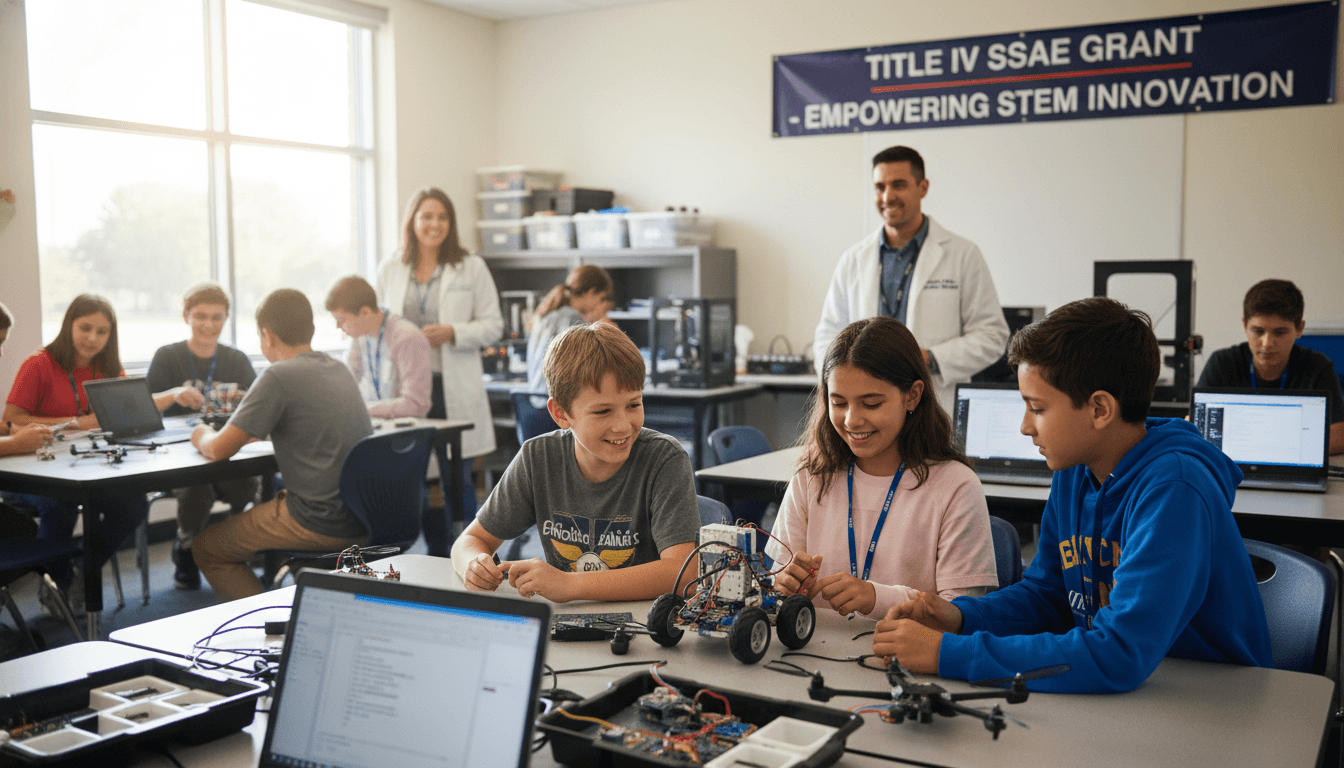
District Newsletter for Title IV Safe Schools: Communicating SSAE Grant Use, STEM, Wellness, and Safe Schools Programs

Title IV, Part A of the Every Student Succeeds Act provides every eligible school district with a Student Support and Academic Enrichment grant designed to give students access to a well-rounded education, to support safe and healthy schools, and to improve the use of educational technology. Unlike more prescriptive federal programs, Title IV gives districts genuine flexibility in how they deploy funds across these three priority areas. That flexibility is a feature, but it also means that families rarely know what Title IV funds or what their child's school is doing with it.
A well-designed Title IV district newsletter changes that. This guide covers how to communicate the three priority areas to families, how to explain STEM and enrichment programs clearly, how to describe school safety and wellness investments, and how to connect the grant's needs assessment process to the choices the district made.
What Title IV is and how the district uses it
Start the Title IV newsletter by explaining the grant in accessible terms. Title IV provides the district with a flexible annual allocation that can be used across three buckets: programs that give students access to a well-rounded education, programs that support safe and healthy schools, and improvements to educational technology. The district must spend at least 20 percent in each of the first two buckets, with the remainder at its discretion.
Include the district's total Title IV allocation for the current year and the approximate distribution across the three priority areas. Families who understand that a federal grant is funding the robotics program at the middle school, the school counseling staff, and the new classroom technology at the elementary schools have a fundamentally different relationship to those resources than families who assume the district is simply spending money it had lying around.
The needs assessment: how the district chose its programs
ESSA requires districts receiving $30,000 or more in Title IV funds to conduct a needs assessment before allocating the grant. This assessment examines the extent to which students have access to enriching coursework, the physical safety and mental wellness of the school environment, and the quality of technology infrastructure and instruction across the district. Share the key findings of that assessment in the newsletter.
Connecting the needs assessment to specific program choices gives families confidence that the district is deploying federal resources thoughtfully. "Our needs assessment found that fewer than 30 percent of middle school students had access to computer science instruction. We used Title IV funds to hire a coding instructor shared across our three middle schools" is a far more compelling communication than a list of grant expenditures without context.
STEM, arts, and enrichment programs: well-rounded education in practice
The well-rounded education component of Title IV funds programs that significantly expand what students have access to beyond core academic instruction. Describe each program funded in this category, which schools it operates in, which students it serves, and what the participation process looks like for families who want their child involved.
Programs that might be funded here include robotics and coding instruction at the elementary and middle school level, dual enrollment partnerships with community colleges for high school students, arts integration programs that use visual arts or music as vehicles for academic content, civics and service learning opportunities, career exploration programs, and after-school enrichment activities. Many of these programs have waiting lists or require family sign-up, and the Title IV newsletter is the right place to explain how to access them.
School mental health and wellness programs
The safe and healthy schools component of Title IV is where districts invest in mental health services, counseling, crisis intervention, and the social-emotional programs that directly affect school climate. Describe these investments specifically: the school counselors whose positions are funded or supplemented through Title IV, the mental health consultant who provides weekly services at each elementary school, the crisis response team training that all staff received this year, the student wellness app that families can access for home support tools.
Mental health and wellness programs are among the most under-communicated investments districts make. Families often do not know these services exist until they are in crisis. A newsletter that describes the mental health supports available at their child's school, how to access them, and how to request a referral removes a significant barrier for families who might otherwise wait too long to seek support.
Drug and violence prevention, bullying prevention, and safe schools
Title IV funds support a range of programs designed to prevent the conditions that compromise school safety and student well-being. Describe the prevention education programs the district uses: evidence-based drug and alcohol prevention curricula, bullying prevention programs, restorative practices training for staff, or peer mediation programs. Explain how these programs are implemented, which grade levels they serve, and what outcomes the district is tracking.
Families who know that their child's school has implemented a specific bullying prevention program with defined protocols and trained staff are more likely to report bullying incidents and to expect meaningful follow-through. Making the prevention infrastructure visible through the newsletter converts passive family awareness into active family partnership.
Technology investments: what Title IV is paying for in classrooms
The effective use of technology component of Title IV funds can cover device procurement, infrastructure upgrades, instructional software, and professional development for teachers on integrating technology into instruction. Describe the technology investments the district made with Title IV funds this year. Which schools received new devices? What software did teachers receive training on? What cybersecurity improvements were made to protect student data?
Technology investments funded by Title IV are often visible to families in their child's daily experience. The newsletter that connects what families see at home (their child using a specific device or app from school) to the federal investment that made it possible builds a more complete picture of the federal role in their child's education.
How families can engage with Title IV programs
Close the Title IV newsletter by describing specific ways families can engage with the programs it funds. Which enrichment programs have open enrollment and how does a family register? Which wellness services are available on request and who is the contact? How can families provide feedback on how the district should prioritize future Title IV investments?
Title IV is designed to serve students, but it works best when families are active partners in the programs it supports. A newsletter that ends with a clear invitation to participate closes the information loop and opens the door to the family engagement that makes federal program investments genuinely effective.
Get one newsletter idea every week.
Free. For teachers. No spam.
Frequently asked questions
What is Title IV and what programs does it fund?
Title IV, Part A of the Every Student Succeeds Act provides formula grants to districts through the Student Support and Academic Enrichment program, commonly called SSAE. Districts must spend their Title IV allocation across three priority areas: providing students with a well-rounded education (which includes STEM, the arts, civics, and other enrichment programs), supporting safe and healthy schools (which includes mental health services, drug and violence prevention, and physical activity programs), and improving the use of technology in education. The allocation is flexible within those three buckets, giving districts significant discretion in how they deploy the funds.
What should a Title IV newsletter communicate about school safety programs?
The safe and healthy schools component of Title IV funds a wide range of programs: school mental health services, counseling and crisis intervention, drug and alcohol prevention education, bullying prevention programs, restorative practices, and physical wellness initiatives. The district newsletter should describe which programs are funded through Title IV, what they provide, who they serve, and how families can connect their child to services. Families often do not know that mental health supports or prevention programs exist in their child's school until a crisis prompts them to ask.
How should districts communicate about Title IV-funded STEM and enrichment programs?
The well-rounded education component of Title IV funds programs that many families associate with enrichment rather than federal investment: robotics clubs, coding instruction, arts integration programs, dual enrollment opportunities, career and technical education, and service learning. The district newsletter should name these programs, explain that they are funded through Title IV, describe what students gain from them, and explain how all students can access them. Families who know that enrichment programs exist but do not know how their child can participate will not see the programs as serving their family.
What does the needs assessment requirement mean for Title IV communication?
ESSA requires districts receiving more than $30,000 in Title IV funds to conduct a needs assessment to guide their spending decisions across the three priority areas. The results of that needs assessment determine where the district focuses its Title IV investment. Sharing the key findings of the needs assessment in a family newsletter gives the community context for why the district is funding the specific programs it chose. It also opens the door for community input on whether the assessment accurately reflects the needs families see in their schools.
How does Daystage help districts communicate Title IV programs to families?
Daystage lets districts send Title IV program newsletters to all families across the district with program descriptions, participation information, and links to registration for enrichment activities and wellness services. Districts use Daystage to communicate the annual needs assessment results, the grant allocation decisions, and the outcomes of Title IV-funded programs in a format that reaches families on any device. Because Title IV spans three distinct program areas, Daystage's newsletter format lets districts organize the information clearly without burying families in technical grant language.

Adi Ackerman
Author
Adi Ackerman is a former classroom teacher and curriculum writer with 8 years in K-8 schools. She writes about school communication, parent engagement, and what actually works in real classrooms.
More for District
District Newsletter for Title I: How to Communicate Your Program, Funding Use, and Parent Involvement Rights
District · 7 min read
District Newsletter for Title III ELL: Communicating ELL Program Funding, Services, and Parent Rights
District · 7 min read
Communicating Your District Wellness Policy to Families
District · 5 min read
Ready to send your first newsletter?
3 newsletters free. No credit card. First one ready in under 5 minutes.
Get started free