
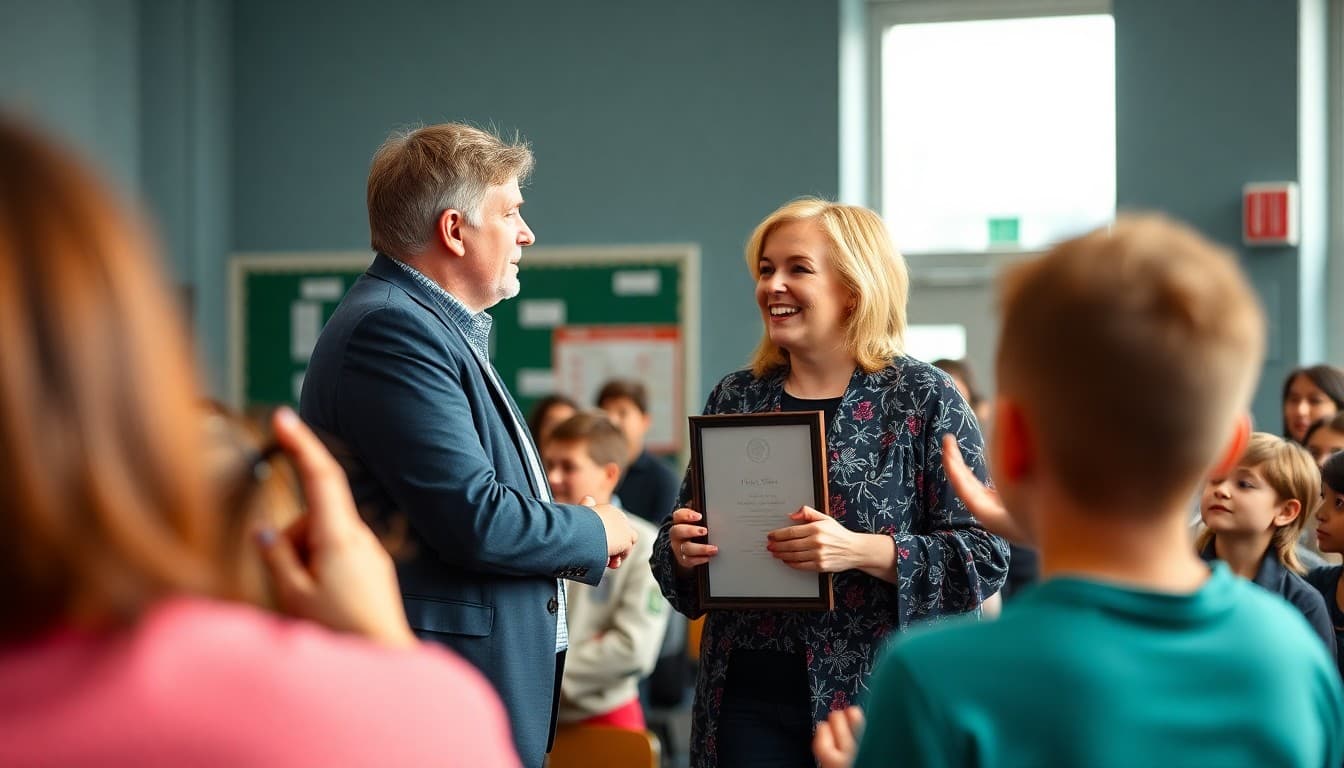
District Newsletter: Honoring Our Teachers of the Year
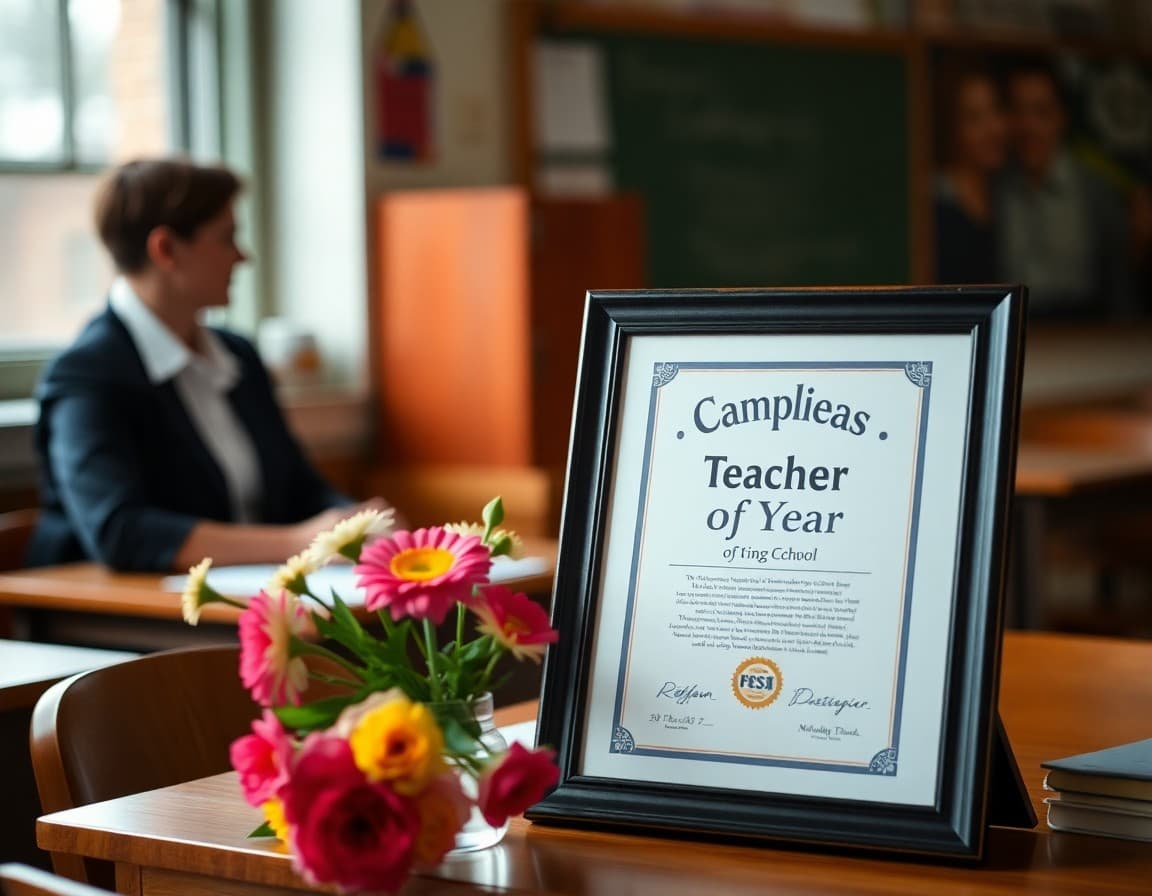
Teacher recognition is more than a feel-good tradition. Done well, it communicates to families what the district values, gives teachers a moment of visibility they rarely get, and signals to prospective educators that this is a district that sees and celebrates its people. A thoughtful recognition newsletter does all of that in one send.
Start With the Person, Not the Title
The phrase "teacher of the year" is a framework. What fills it is the story of a specific person doing specific work. Open each recognition with the teacher's name, school, and a single sentence that captures who they are in the classroom. Not "an outstanding educator who goes above and beyond" but "the chemistry teacher at Lincoln High who turned a failing unit test into a redesigned lab experiment that 94% of her students passed on the second attempt."
Include the Why Behind the Selection
Families and staff want to understand what the honoree did that earned this recognition. Share the criteria used to select teachers of the year, and then connect the honoree directly to those criteria. If one criterion is "impact on student learning," show the evidence. If another is "contribution to school culture," describe a specific example. This makes the recognition feel earned rather than rotational.
Use the Teacher's Own Words
A quote from the honoree is the most human part of any recognition newsletter. Ask the teacher one question: "What do you want students to leave your classroom knowing or feeling?" or "What has teaching taught you this year?" Their answer, even two or three sentences, shifts the newsletter from a district announcement to a window into a real person's work.
A Template Recognition Profile
Here is an example of a strong recognition profile for a district newsletter:
"Maria Chen, fifth-grade teacher at Eastview Elementary, was selected as this year's elementary Teacher of the Year. Over the past three years, her students have consistently outperformed district averages in math reasoning assessments. This year she launched a peer-tutoring program that paired her students with third graders, and teacher observations showed both groups improved. 'Teaching is the only job where the best way to learn something is to turn around and teach it to someone else,' she says. 'I just build that into everything we do.'"
Recognize All Levels
If your district has elementary, middle, and high school honorees, give each one equal treatment and a dedicated section. Readers notice when recognition feels tiered. A high school teacher profile that runs three paragraphs alongside a two-sentence elementary mention sends an unintended message about which roles the district values.
Acknowledge the Nominators
Teacher of the year programs depend on colleagues, principals, and families who take time to submit nominations. A brief acknowledgment of that process reinforces the community nature of the recognition. "This year we received 143 nominations from families, students, and colleagues. We are grateful to everyone who took the time to share a story about a teacher who made a difference."
Connect to Recruitment and Retention
A recognition newsletter is also a recruitment and retention communication, even if that is not its primary purpose. Teachers who see their colleagues publicly celebrated are more likely to feel valued. Prospective educators reading about the district see evidence that their work would be recognized. One sentence near the close about the district's commitment to supporting its teachers is enough to make that connection without turning a recognition piece into a job posting.
Close With a Path to Celebrate
Give readers a way to participate. If there is a recognition ceremony, share the date and invite families. If the district is sharing recognition on social media, mention it and invite families to share their own appreciation. Turning a newsletter into an invitation extends the celebration beyond the inbox.
Get one newsletter idea every week.
Free. For teachers. No spam.
Frequently asked questions
When should a district send a teacher recognition newsletter?
May is the natural anchor point since it includes Teacher Appreciation Week, but sending a dedicated recognition newsletter at any point in the school year is valuable. Some districts send recognition newsletters quarterly to keep appreciation visible year-round rather than concentrating it in one week. The key is being specific about the honorees and their impact.
What should a teacher of the year profile include in a district newsletter?
Include the teacher's name, school, subject or grade level, and a short description of what makes their work distinctive. A quote from the teacher, a colleague, or a student adds depth. Avoid generic superlatives like 'outstanding educator' without backing them up with a specific example of their work or impact.
How do you make a teacher recognition newsletter feel genuine rather than formulaic?
Use specific details. Name the class unit that changed how students saw a subject, describe the mentor relationship with a new teacher, or share the moment a parent noticed something different in their child. Generic praise reads as perfunctory. Specific stories read as earned. Even one or two concrete details transform a recognition piece.
Should teacher recognition newsletters include photos?
Yes, whenever possible with appropriate consent. A photo of the honoree in their classroom or with students makes the recognition feel personal and real. Photos also increase newsletter open rates and engagement. Make sure you have photo release consent before publishing images of minors, and confirm with the teacher that they are comfortable with the photo being shared.
What communication tool do districts use to send teacher recognition newsletters?
Daystage makes it easy to build recognition newsletters with photos, teacher profiles, and personal quotes. District teams can send a single newsletter to all school communities at once, making the recognition visible across the entire district in one send.

Adi Ackerman
Author
Adi Ackerman is a former classroom teacher and curriculum writer with 8 years in K-8 schools. She writes about school communication, parent engagement, and what actually works in real classrooms.
More for District
Ready to send your first newsletter?
3 newsletters free. No credit card. First one ready in under 5 minutes.
Get started free