

How to Communicate the District Strategic Plan to Families Through Newsletters
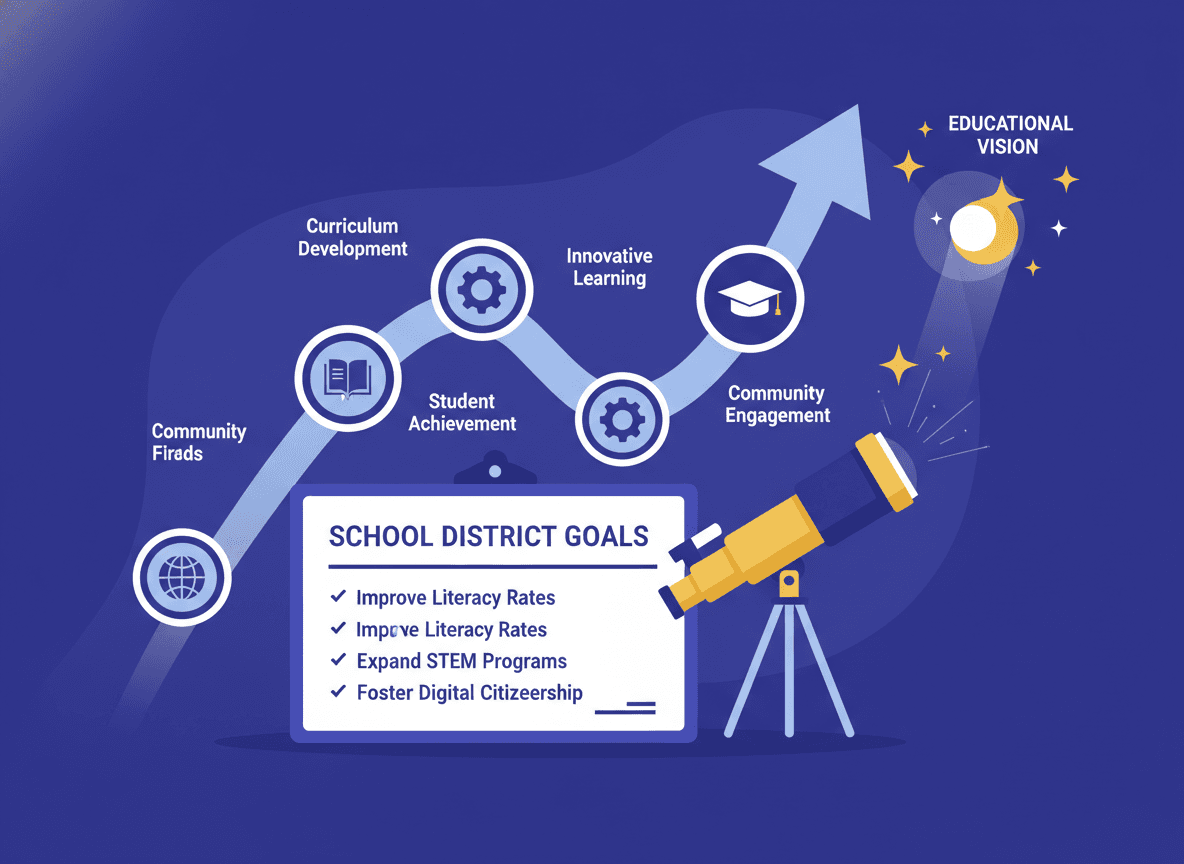
Most school districts have a strategic plan. Boards approve it. Consultants develop it. Administrators present it. And then it sits in a binder, referenced occasionally in board meetings and mostly ignored by everyone else.
This happens because districts treat strategic plan communication as a one-time event rather than an ongoing practice. The plan gets launched with a community meeting and a press release, and then communication about it stops. Families never develop a mental model of what the plan actually says, so they cannot connect what they see happening in their schools to the district's stated goals.
The newsletter is the most practical way to change that.
Why strategic plan communication matters
A strategic plan that families can articulate is a powerful community asset. When parents know that the district's three priorities are literacy, mental health, and college and career readiness, they interpret news through that lens. A new reading program makes sense as part of a district priority. A counselor hire makes sense as investment in the mental health goal. Without that frame, every decision looks isolated and arbitrary.
Families who understand the strategic plan are also better equipped to hold the district accountable. They know what the district said it would do. They can ask whether progress is being made. That accountability is healthy for the district, even when it is uncomfortable.
Translating strategic plan language into plain language
Strategic plans are written for a specific audience: board members, state education agencies, and administrators. They use language like "systemic equity-centered instructional practices" and "continuous improvement cycles grounded in data-driven decision-making."
That language is not appropriate for family newsletters. Translate every strategic plan element into plain language before putting it in the newsletter.
"Systemic equity-centered instructional practices" becomes "making sure every student gets teaching that meets them where they are, regardless of their background."
"Continuous improvement cycles grounded in data-driven decision-making" becomes "using student performance data to figure out what is working in our classrooms and what needs to change."
This translation is not dumbing down the content. It is respecting the audience. Families have expertise in their children's experiences. They do not have expertise in educational administration language. Write for the audience you have.
Building strategic plan communication into the newsletter calendar
Strategic plan communication works best when it is spread across the school year rather than concentrated in one update. A practical approach:
- September: Strategic plan overview. At the start of the school year, remind families what the district's strategic priorities are and what the plan period covers. Keep this to a brief summary, not a comprehensive review.
- November: First goal update. One newsletter focused on progress toward one strategic goal. What has been done this fall? What results are early indicators pointing to? What is still ahead?
- February: Second goal update. A second strategic goal, same structure. Mid-year is a natural check-in point for many of these initiatives.
- April: Third goal update or broader mid-year review. Depending on how many goals the plan has, this could be another single-goal update or a combined mid-year progress review.
- June: End-of-year strategic plan summary. How did the year go against each goal? What is the plan for next year? What did the district learn?
This cadence gives families five touchpoints with the strategic plan across a school year. By year two, families develop a real understanding of what the district is working toward and how it is measuring progress.
How to report progress honestly
Strategic plan progress updates fail when they read like cheerleading. "We are making great progress toward all of our goals" tells families nothing. It signals that the district is not being honest about complexity.
Honest strategic plan updates report both progress and challenges:
- What metrics are you tracking for each goal?
- Where is data showing improvement?
- Where is data showing you have more work to do?
- What are you learning about what works and what does not?
- Has anything changed about the goal or the approach based on what you have learned?
Districts that acknowledge challenges in strategic plan updates are not signaling failure. They are signaling maturity. Families and community members understand that complex goals take time and involve setbacks. What they cannot accept is the pretense that everything is always working.
Connecting strategic plan goals to visible school experiences
The most effective strategic plan newsletter content connects abstract goals to concrete examples families can picture.
If the strategic plan includes a goal about increasing student engagement, do not just report the engagement survey score. Tell a story: "At Riverside Middle School, every student now participates in at least one interest-based elective each semester, which is a change from two years ago when scheduling limitations meant some students had no elective options. Survey data shows engagement increased by 14 points district-wide."
The number matters. The story that gives the number meaning matters more.
Connecting the strategic plan to the budget
One of the most powerful things a district can do in strategic plan communication is connect goals to budget decisions. "We invested $1.2 million in additional literacy coaches this year as part of our strategic goal to improve reading proficiency by third grade" tells families that the strategic plan is not just a document. It is what drives real decisions about money.
This connection builds confidence that the strategic plan is more than an exercise in goal-setting. It is the framework the district actually uses to make decisions.
Tools for consistent strategic plan communication
Consistent strategic plan communication requires a reliable newsletter infrastructure. When each issue needs to maintain the same professional appearance and reach the same subscriber list, tools like Daystage make that consistency achievable without significant administrative overhead.
The strategic plan is the district's commitment to its community. Communicating progress against it is how the district shows that commitment is real, not just aspirational.
Get one newsletter idea every week.
Free. For teachers. No spam.
Frequently asked questions
When should school districts communicate about their strategic plan in the newsletter?
Build a five-touchpoint calendar across the school year: a strategic plan overview in September, a first goal update in November, a second goal update in February, a third goal or mid-year review in April, and an end-of-year summary in June. By year two of this cadence, families develop a real understanding of what the district is working toward and how progress is measured.
What should a district strategic plan newsletter include?
Translate every strategic plan element into plain language before putting it in the newsletter, then report specific metrics, both what is improving and what is not. Connect abstract goals to concrete school-level examples families can picture. When reporting progress, pair data with a story: the number matters, but the story that gives the number meaning matters more.
How should districts communicate strategic plan progress honestly to a multi-school community?
Report both gains and persistent challenges using specific data. Strategic plan updates that read as cheerleading tell families nothing and signal that the district is not being honest about complexity. Acknowledging that a goal is behind schedule or that an approach is not working builds more community trust than quarterly updates that are uniformly positive.
What are common challenges in district-level strategic plan communication?
Most districts treat strategic plan communication as a one-time launch event. After the initial community meeting and press release, communication stops and families never develop a mental model of what the plan actually says. Without ongoing communication, families cannot connect what they see happening in their schools to district goals, and every decision looks isolated and arbitrary.
How does Daystage support consistent strategic plan communication?
Consistent strategic plan communication requires a reliable newsletter infrastructure. Tools like Daystage make it achievable to maintain the same professional appearance and reach the same subscriber list across five touchpoints a year without significant administrative overhead, which is the difference between a strategic plan that compounds in community awareness and one that sits unread in a binder.

Adi Ackerman
Author
Adi Ackerman is a former classroom teacher and curriculum writer with 8 years in K-8 schools. She writes about school communication, parent engagement, and what actually works in real classrooms.
More for District
Ready to send your first newsletter?
3 newsletters free. No credit card. First one ready in under 5 minutes.
Get started free