

Open Enrollment Communication: What School Districts Should Send and When
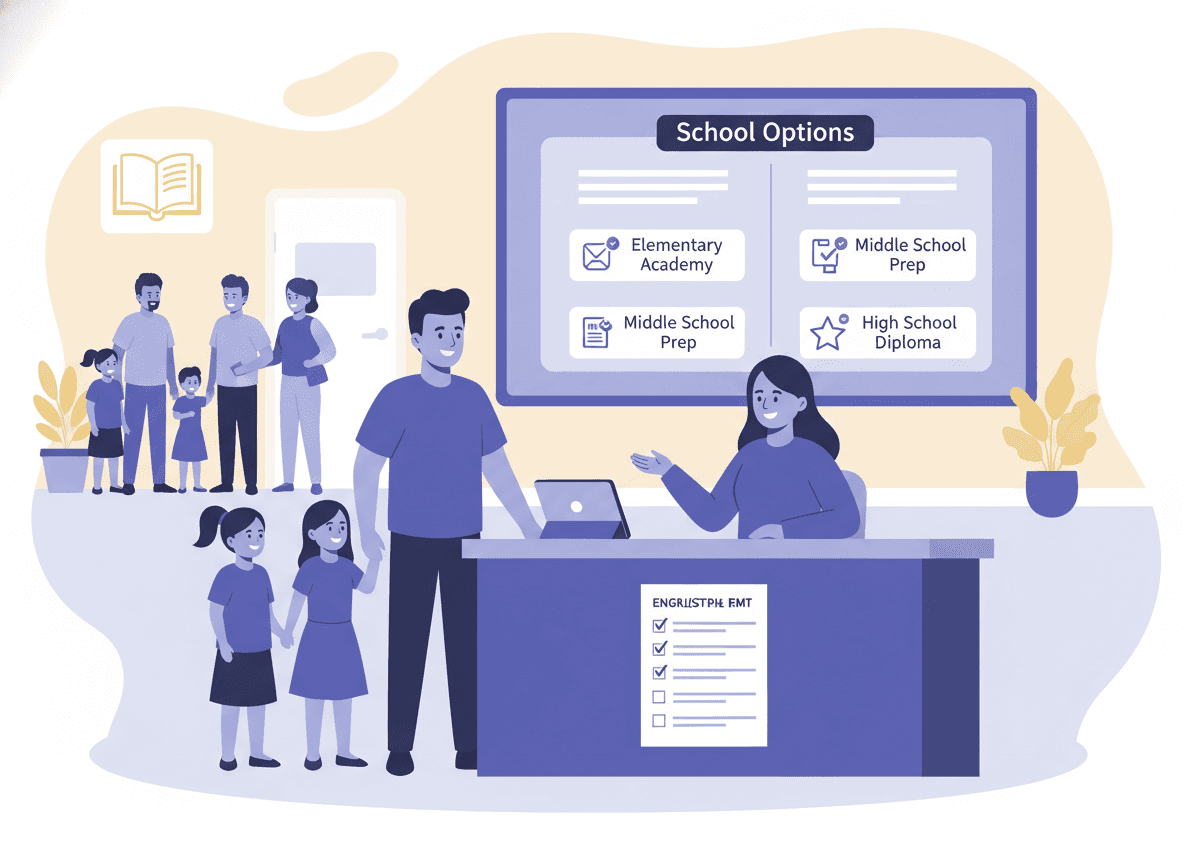
Open enrollment and school choice are among the most consequential decisions families in public education make. They also remain among the least understood aspects of how public schools work. Many families do not know that open enrollment options exist. Many who know it exists do not know how to access it, who qualifies, or what happens when they apply.
That information gap has real consequences. Families who could benefit from school choice options never use them. Districts that have invested in specialty programs, magnet schools, or dual-language campuses see lower-than-expected enrollment because communication failed to reach the families those programs were designed to serve.
Open enrollment versus general enrollment: what is the difference
In district communications, it helps to be clear about the distinction between general enrollment and open enrollment.
General enrollment is how families register their children for the school they are assigned to based on their home address. This is the default process most families use.
Open enrollment, sometimes called school choice or intra-district transfer, allows families to request a school other than their assigned school. The rules vary by state and district: some districts allow unrestricted choice within capacity limits, some require families to meet specific criteria, and some only permit transfers for specific programs like magnets or dual-language.
These two processes often have different timelines and different application procedures. Communicating them separately reduces confusion significantly.
When to start open enrollment communication
Open enrollment communication should begin no later than eight weeks before the application deadline. Many districts that struggle with underenrollment in specialty programs trace the problem to communication that starts too late.
Families making school choice decisions for their children are often conducting research across multiple sources: visiting school websites, talking to other parents, attending school information nights. They need time to gather that information and reach a decision. A communication that arrives two weeks before the deadline does not give them that time.
What the open enrollment newsletter should explain
Open enrollment newsletters consistently fail when they assume families already understand the basics. Build every open enrollment communication from the ground up, assuming the reader is encountering this information for the first time.
Cover:
- What open enrollment is and who can use it. Can any family in the district apply? Are there eligibility requirements? Does it apply to all grade levels?
- What schools or programs are available through open enrollment. Name them specifically. Magnet schools, dual-language programs, STEM academies, arts schools. Include a brief description of what makes each option distinctive.
- The application process. Step by step. What form to complete, how to submit it, what supporting documents are required.
- The timeline. Application window, lottery date if applicable, notification date, acceptance deadline.
- What happens if more families apply than there are spots. How does the lottery work? Are there priority categories? How does the waitlist function?
- Transportation information. Does the district provide transportation to schools outside the assigned attendance area? Under what conditions?
- The consequences of a transfer request. If a family accepts a spot at a school outside their attendance area, can they return to their assigned school? Under what conditions?
A communication sequence for open enrollment season
A five-touch sequence works well for open enrollment communication:
- Eight weeks before deadline: Awareness message. Open enrollment is coming. Here is a brief overview of what it is and the full timeline. Mark your calendar.
- Six weeks before deadline: Program profiles. Detailed descriptions of each school or program available through open enrollment. What students and families can expect at each option.
- Four weeks before deadline: Application how-to. Step-by-step guide to completing the application. Documents required. Common mistakes to avoid.
- Two weeks before deadline: Reminder and FAQ. Deadline reminder and answers to the questions the enrollment office has been receiving most frequently.
- One week or one day before deadline: Final deadline reminder. Short. Just the deadline, the link or location, and what to do if a family needs help.
Reaching families who might not see the newsletter
Open enrollment communication faces a particular challenge: the families who would benefit most from school choice options are often the hardest to reach through standard newsletter channels. Families with less stable housing, families with limited English proficiency, and families who are new to the district may not have consistent email access or may not yet be on the district newsletter list.
Supplement the newsletter with targeted outreach for open enrollment: text alerts to families who prefer SMS communication, translated materials for the district's non-English-speaking families, community events at schools or community centers where enrollment staff can answer questions in person.
The newsletter reaches families who are already plugged into district communications. Open enrollment equity requires going beyond the newsletter to reach those who are not.
After open enrollment closes: what to send
Once open enrollment closes, communicate promptly about what comes next:
- When will families be notified of lottery results?
- What is the waitlist process?
- What is the deadline to accept or decline an offered placement?
- Who to contact with questions during the waiting period?
After results are communicated, a brief newsletter acknowledging what happened district-wide is useful context for the community: "The district received 847 open enrollment applications for the coming school year, an increase of 12 percent from last year. Specialty programs received the highest application volumes. 94 percent of applicants were placed in one of their top two choices."
Daystage for open enrollment communications
A five-touch enrollment communication sequence across several weeks is exactly the kind of workflow that benefits from a structured newsletter platform. Daystage allows the district to draft the entire sequence in advance, schedule each message, and track which messages families actually open and engage with.
Open enrollment data is important for program planning. When the program profile newsletter has a high click rate on the dual-language program but low clicks on the STEM academy, that is useful information for the district's enrollment and program development teams.
Good open enrollment communication is a public service. It ensures that the district's investment in educational options reaches the families those options were designed to serve.
Get one newsletter idea every week.
Free. For teachers. No spam.
Frequently asked questions
When should school districts start open enrollment communications?
Start no later than eight weeks before the application deadline. Families making school choice decisions for their children need time to research options, visit schools, talk to other parents, and reach a decision. A communication that arrives two weeks before the deadline does not give them that time and results in underenrollment in programs the district invested in.
What should a district open enrollment newsletter include?
Cover what most families do not know: the definition and eligibility rules for open enrollment versus general enrollment, the specific schools and programs available with brief descriptions of what makes each distinctive, the step-by-step application process, the full timeline from application to lottery to notification, how the waitlist works, and whether the district provides transportation to out-of-attendance-area placements.
How should districts manage open enrollment communication to reach underserved families?
Supplement the newsletter sequence with text alerts for families who prefer SMS, translated materials for non-English-speaking communities, and in-person enrollment events at schools and community centers. The families who would benefit most from school choice options are often the hardest to reach through standard newsletter channels, and equity in open enrollment requires going beyond the email list.
What are common challenges in district-level open enrollment communication?
Many districts trace underenrollment in specialty programs to communication that starts too late and assumes families already understand the process. Most first-time open enrollment families do not know what school choice means, who qualifies, or what the lottery process involves. Burying deadlines in paragraph text and using system-specific acronyms are consistent problems that drive missed applications.
How does Daystage help districts manage a multi-touch open enrollment communication sequence?
A five-touch enrollment communication sequence across several weeks is exactly the kind of workflow that benefits from a structured newsletter platform. Daystage allows the district to draft the entire sequence in advance, schedule each message, and track which communications families actually open and click, which is useful data for program planning and next year's enrollment strategy.

Adi Ackerman
Author
Adi Ackerman is a former classroom teacher and curriculum writer with 8 years in K-8 schools. She writes about school communication, parent engagement, and what actually works in real classrooms.
More for District
Ready to send your first newsletter?
3 newsletters free. No credit card. First one ready in under 5 minutes.
Get started free