
District Newsletter: Family Resource Center Services
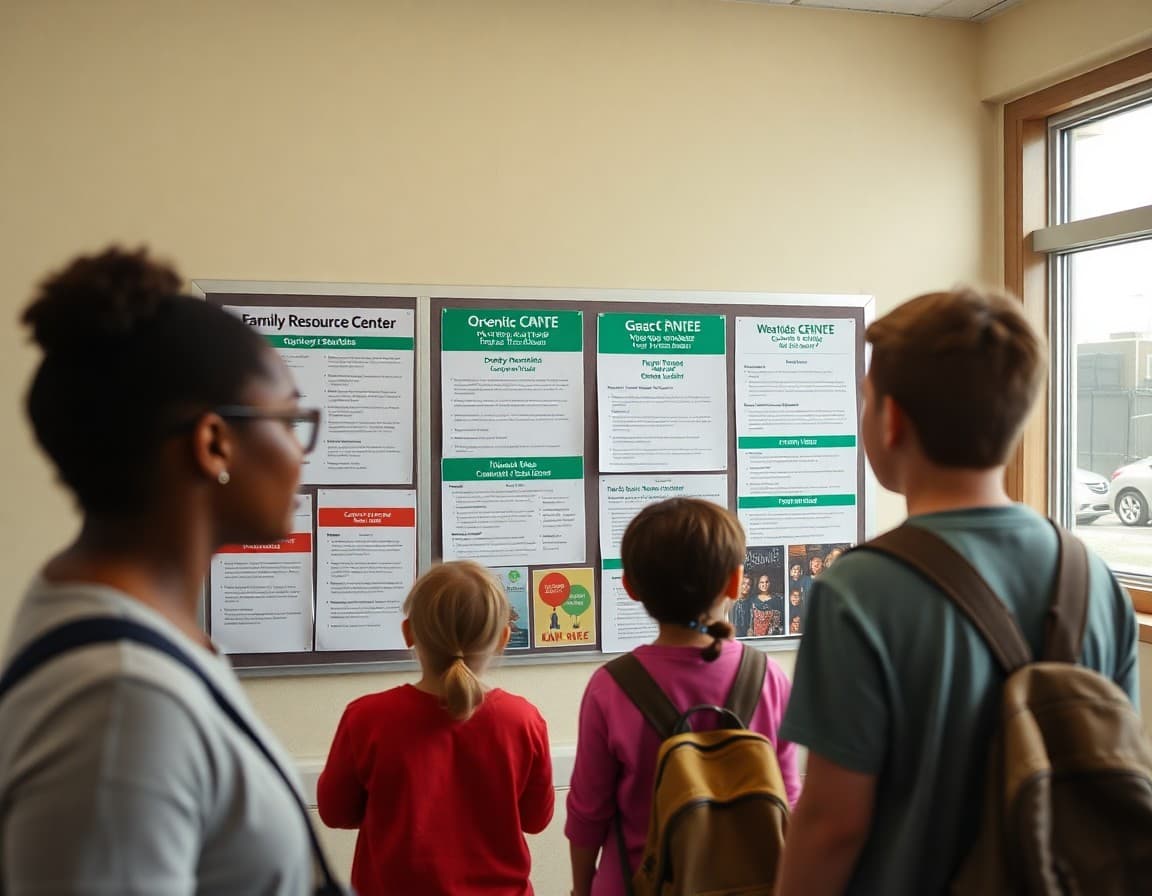
A family resource center is one of the most direct ways a district demonstrates that it sees families as partners in education, not just as recipients of report cards and test scores. When families know what the center offers and how to access it, the center can deliver on its purpose. When they do not know, it sits empty.
Introduce the Center and Its Purpose
Open by describing what the family resource center is and why the district operates one. The center exists because learning does not happen in isolation from the rest of a child's life. When families have access to support, information, and community connections, students come to school more ready to learn. The center's purpose is to reduce the barriers that stand between families and the support that makes that possible.
List Services Specifically
Be specific. A newsletter that says "we offer support services for families" tells families nothing actionable. List every service the center provides: food assistance referrals, clothing closet access, interpretation and translation, parenting workshops, adult education and ESL programs, mental health referrals, employment assistance, back-to-school supply distribution, and any seasonal programs. Families who see their specific need reflected in the list are far more likely to visit.
Make Access Information Unmissable
The most important practical information in this newsletter is how to get there and how to access services. Include the center's location (building address and which school it is co-located with, if applicable), hours, whether walk-ins are welcome, what the process is for scheduling an appointment, phone number, and email. For families with transportation barriers, note bus routes. For families with childcare challenges, note whether childcare is available during center hours or specific programs.
Describe Upcoming Programs and Events
Give families a reason to visit in the near term. Include the next two or three workshops or events at the center with dates, times, and brief descriptions. ESL or GED classes, a financial literacy workshop, a parenting skills series, or a back-to-school resource fair all create specific, time-bound invitations that turn passive awareness into action.
A Sample Services Overview
"The District Family Resource Center is open Monday through Thursday, 8 am to 5 pm, and Friday 8 am to noon. Walk-ins welcome for most services. Current offerings include: basic needs referrals (food, clothing, housing), interpretation services in 14 languages, adult ESL classes on Tuesdays and Thursdays at 6 pm, monthly parenting workshops (next date: February 18, topic: reading together at home), immigration resource referrals, and employment assistance. Call 555-000-2345 or stop by the main building at [address]."
Name the Staff
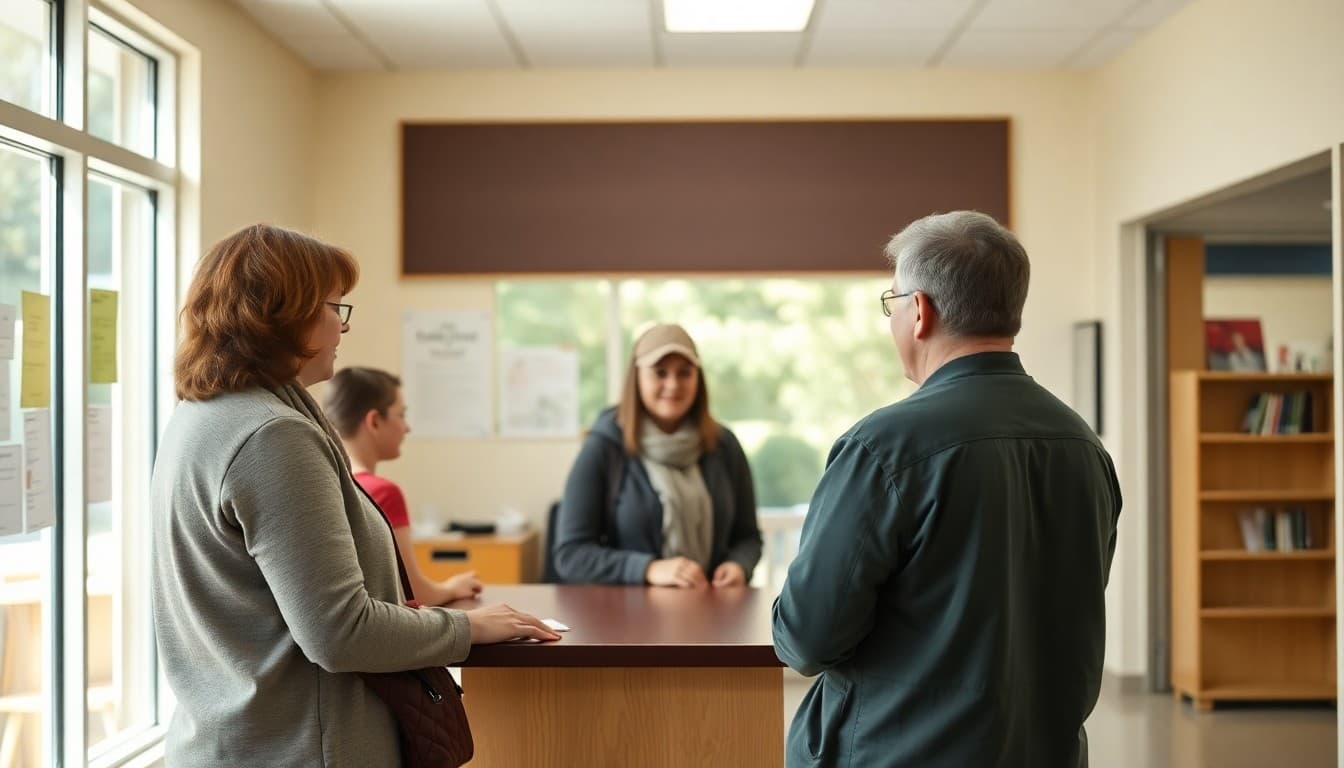
Putting a name and face to the family resource center removes an access barrier. Many families are reluctant to walk into an unfamiliar place where they do not know anyone. A brief introduction to the center coordinator, with their name and a sentence about their role, humanizes the space. If possible, include a photo. Knowing who they will meet lowers the threshold for a first visit.
Describe Language Access
Family resource centers serve multilingual communities. Explicitly state which languages staff speak and what interpretation services are available. If community health workers or family liaisons serve specific language communities, name the languages they serve. Families who speak languages other than English often stay away from institutional services because they fear language will be a barrier. A direct statement that it is not changes that calculation.
Invite Families to Help Others
Close with an ask: share this newsletter with a neighbor or family member who might benefit. The families who most need a family resource center are the least likely to receive a district email newsletter. When current families become informal connectors for the center, the center's reach extends into the community in ways the district cannot replicate on its own.
Get one newsletter idea every week.
Free. For teachers. No spam.
Frequently asked questions
What services does a district family resource center typically offer?
Family resource centers vary by district, but common services include referrals to community social services, food and clothing assistance, translation and interpretation support, parenting classes and workshops, adult education and ESL programs, employment assistance, mental health referrals, and childcare resources. Some centers are co-located with community health partners who provide on-site services. Your newsletter should list all services available at your specific center.
How do you communicate family resource center services without stigma?
Frame the center as a resource for all families, not just those in crisis. Many families access the center for workshops, parent education, or community connections rather than emergency services. When the communication leads with the full range of services rather than only emergency support, it reduces the barrier of needing to self-identify as someone who needs help and increases the likelihood that families who could benefit will actually visit.
How do you reach families who are most likely to need family resource center services?
Partner with school counselors, attendance teams, and front-office staff to personally connect families to the center when needs are identified. Ask teachers and coaches to mention the center in their own communications. Include information in back-to-school packets and at school events. Communities with high concentrations of families experiencing economic hardship benefit from neighborhood-level outreach through community organizations and faith communities as well.
What should a family resource center newsletter include to drive visits?
Include the center's hours, location, and whether drop-in visits are welcome or if appointments are required. Name a specific staff contact. Share an upcoming event or workshop with a date and registration link. Remove as many barriers as possible: parking information, bus routes, childcare availability during events, and language support available.
How can Daystage help communicate family resource center information?
Daystage lets district teams build newsletters that reach families across all schools at once. The family resource center newsletter can be sent through each school's newsletter feed so it feels locally relevant while delivering consistent district information.

Adi Ackerman
Author
Adi Ackerman is a former classroom teacher and curriculum writer with 8 years in K-8 schools. She writes about school communication, parent engagement, and what actually works in real classrooms.
More for District
Ready to send your first newsletter?
3 newsletters free. No credit card. First one ready in under 5 minutes.
Get started free