

District Newsletter: Our Annual Accountability Report to Families
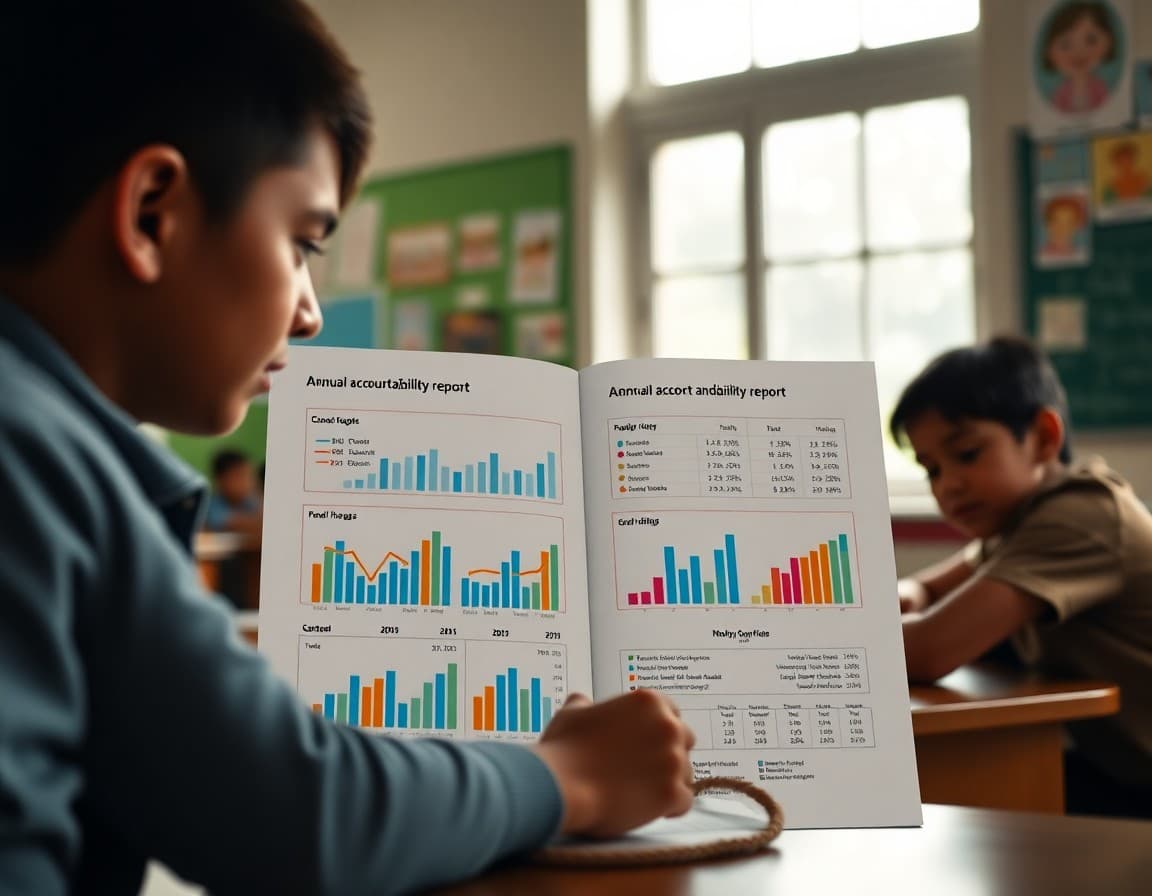
Every year, state and federal accountability systems produce data about how schools and districts are performing. The numbers are public, but they are rarely presented in a way that is accessible to most families. A newsletter that translates accountability data into plain language does more for community trust than any positive press release can.
What the Report Covers
Our annual accountability report includes student performance data from state assessments in English language arts and math, attendance and chronic absenteeism rates, graduation rates for high schools, and the academic progress of specific student groups. State law requires us to publish this data and share it with families. We want to go beyond publishing it and actually explain what it means.
What Our Overall Rating Means
Our district received a [rating] designation from the state this year. That designation reflects [brief explanation of what the rating is based on in your state's accountability system]. A [rating] means [plain-language explanation]. For context, [comparison to prior year or state average if helpful]. Our rating has improved from [prior rating] to [current rating] over the past [timeframe], which reflects [what drove the change].
Assessment Results
In English language arts, [percentage]% of students in grades 3-8 met or exceeded grade-level proficiency standards this year. In math, that number was [percentage]%. Both figures represent [improvement, decline, or stability] compared to last year. [Specific note about a grade level or subject area that showed notable movement.] We track these numbers because they tell us whether students are building the foundational skills they need for the grades ahead.
Attendance and Absenteeism Data
Chronic absenteeism, defined as missing 10% or more of the school year, affects [percentage]% of our students this year. That rate is [comparison to state average and prior year]. We are addressing chronic absence through [specific programs or initiatives]. Attendance matters because the research is clear: students who miss significant school time fall behind in skills that are hard to recover even with intervention.
Subgroup Performance
Accountability reports break data down by student group because aggregate numbers can hide important patterns. Our data shows persistent gaps in math proficiency for [specific subgroup]. This is not new information to us. We have [specific program name] in place to address it, and we will report on progress in our mid-year update.
A Sample Accountability Newsletter Excerpt
"Our accountability report is now public. Here is what the data shows: reading proficiency is up three points districtwide. Math is flat. Chronic absenteeism declined but remains above our goal. We are not satisfied with where we are. Here is what we are doing about it and what the data says about the direction we are headed."
Where to Find the Full Report
The full annual accountability report is available at [URL]. It includes school-by-school data, additional subgroup breakdowns, and the full explanation of how our state rating is calculated. Daystage includes a direct link in this newsletter so you can access it in one tap. If you have questions after reviewing the data, contact [name and title] at [email or phone].
Get one newsletter idea every week.
Free. For teachers. No spam.
Frequently asked questions
What is included in a district accountability report?
A district accountability report typically includes student assessment results by grade level and subgroup, graduation rates, chronic absenteeism data, English learner reclassification rates, and a state-assigned rating or designation. Federal requirements under ESSA mandate that schools and districts produce annual report cards that include this data. The newsletter's job is to translate the report into plain language, not to duplicate it.
How do you communicate a poor accountability rating honestly?
Name the rating clearly and immediately pivot to what it means specifically and what the district is doing about it. Avoid minimizing the rating or burying it in positive context. Families who later feel they were misled will be far more skeptical of future communications. Honest, specific accountability communication is what earns long-term trust.
How should districts explain subgroup performance gaps to families?
Be specific about which student groups are showing gaps, what the gaps look like in the data, and what targeted programs are in place to address them. Frame this as a commitment to every student rather than a failure narrative. Families of students in underserved subgroups especially appreciate being told directly that their children's outcomes are being tracked and addressed.
How long should the newsletter version of an accountability report be?
The newsletter should be 400 to 600 words, not a reproduction of the full report. Summarize three to five key findings, link to the full report, and close with a clear statement about priorities for the coming year. Most families will not read a full accountability document. A clear summary with a path to more detail serves both audiences.
How does Daystage help communicate accountability data?
Daystage lets districts build a formatted newsletter that presents data clearly with embedded links to the full report. You can send it to all district families at once, track who opened it, and follow up with families who did not receive it.

Adi Ackerman
Author
Adi Ackerman is a former classroom teacher and curriculum writer with 8 years in K-8 schools. She writes about school communication, parent engagement, and what actually works in real classrooms.
More for District
Ready to send your first newsletter?
3 newsletters free. No credit card. First one ready in under 5 minutes.
Get started free