
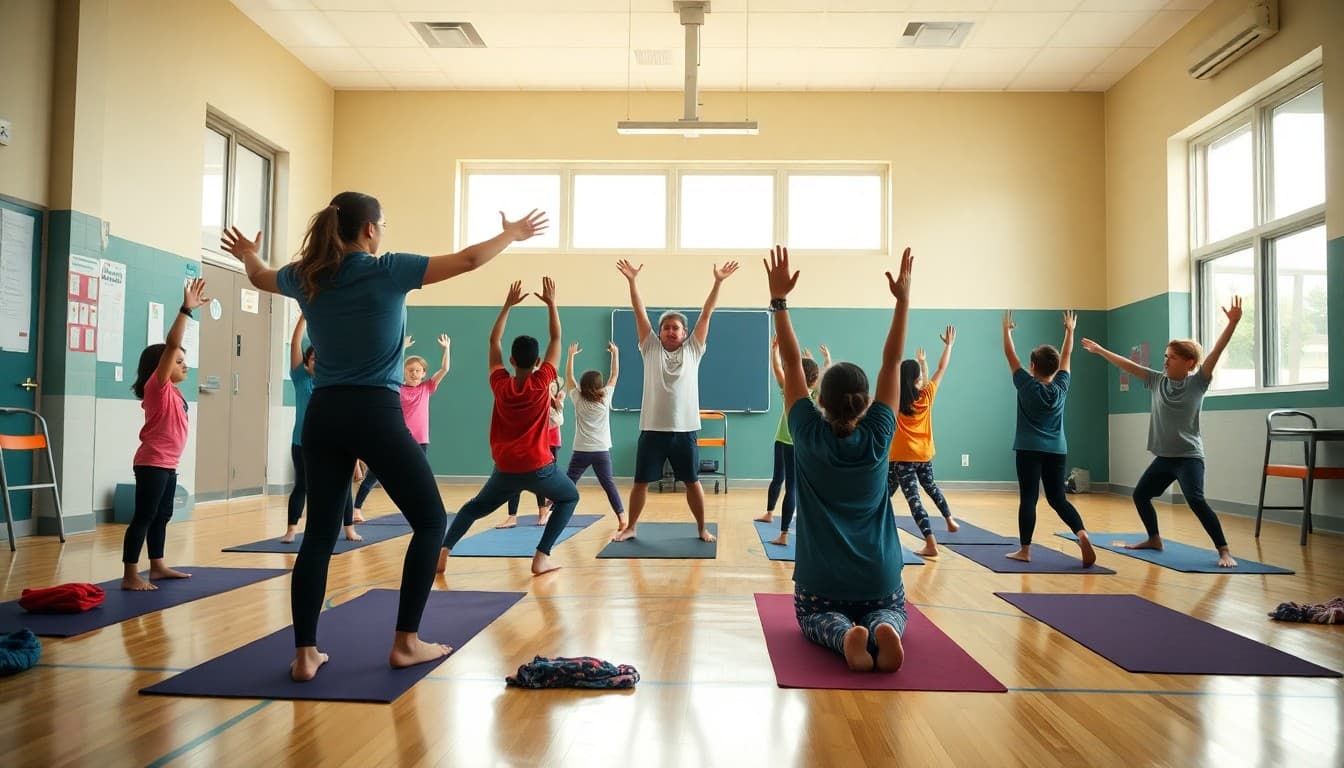
School Yoga Newsletter: Wellness and Movement for Students

School yoga programs occupy a complicated communication space for administrators. The physical and academic benefits are well documented. The cultural and religious concerns are real and deserve genuine engagement. A newsletter that presents the program honestly, addresses concerns directly, and gives families the opt-out process clearly is the only version that builds lasting community support.
Describe the program specifically before the benefits
Before you discuss why yoga is good for students, tell families exactly what happens in a session: "Our yoga program runs twice per week in physical education for all K-5 students. Sessions are 20 minutes and taught by certified yoga instructor Ms. Rivera. Students learn physical postures, breathing techniques, and movement sequences. Sessions focus on physical fitness, flexibility, and breath control."
That specific description is the foundation for everything else. Families who know what their student is actually doing are less likely to raise concerns based on assumptions.
Address the religious concern directly and early
Do not wait for complaints. Address the concern in the first newsletter: "Some families have asked whether school yoga involves religious content. Our program focuses entirely on physical postures, breathing, and movement. We do not include Sanskrit terms, spiritual instruction, chanting, meditation, or any content from religious traditions. The poses have English names. The practice is physical education."
State the opt-out process clearly: "Families who prefer their student not participate may contact the front office by September 15. We will arrange an alternative physical education activity during yoga sessions."
Share the research on school yoga outcomes
The research on school yoga is strong enough to cite specifically: "A 2017 study in the Journal of Developmental and Behavioral Pediatrics found that elementary students in a school yoga program showed significantly lower anxiety and better emotional regulation than control groups. A 2018 review in the British Journal of Sports Medicine found improved flexibility, balance, and muscular strength. Both sets of benefits are relevant to what we are trying to build here."
Name the specific poses students are learning
Naming the poses families might hear their student mention at home prevents confusion and enables family reinforcement:
- Mountain pose: standing tall, building posture awareness
- Tree pose: single-leg balance, building focus and coordination
- Warrior series: strength and confidence building
- Child's pose: rest and calming
- Cat-cow: spinal mobility and breath coordination
Families who recognize these names feel less excluded from their student's experience.
Give families a home practice
"If your student comes home wanting to show you what they learned, encourage it. Most school yoga poses require no equipment and can be done in a living room. A five-minute family stretch before bed using the poses your student knows reinforces the physical benefits and creates a shared experience around wellness."
Template: yoga program introduction newsletter
"Jefferson Elementary is launching a yoga and movement program this fall for all K-5 students. Sessions are twice per week, 20 minutes, taught by certified instructor Ms. Rivera. Students will learn physical postures, breathing techniques, and body awareness. This is a physical education activity with no religious or spiritual content. Research shows school yoga programs improve flexibility, reduce anxiety, and build focus. Families who prefer their student not participate should contact the office by September 15 to arrange an alternative. We look forward to students bringing mountain pose home by October."
Follow up with student observations mid-program
A mid-year check-in newsletter that shares student observations about the program is the most persuasive follow-up communication possible. "Third-grader Nathan said 'I do tree pose in the morning now because it helps me wake up.' Fifth-grader Ava said 'I did the breathing thing before my math test and I was way less nervous.' These are the outcomes we hoped for." Real student voices are more convincing than any data point.
Get one newsletter idea every week.
Free. For teachers. No spam.
Frequently asked questions
What should a school yoga newsletter include?
Describe the yoga program: how often, who teaches it, what students do in a session. Explain the physical and academic benefits with specific research references. Address religious and cultural concerns proactively. Describe the opt-out process for families who do not want their student participating. Give families simple yoga poses they can try at home to reinforce the practice. Be honest about the program's limitations.
How do you address religious concerns about yoga in a school newsletter?
Be direct: 'The yoga program at our school focuses entirely on physical postures, breathing techniques, and movement. We do not include Sanskrit language, religious instruction, meditation practices, or any spiritual content. Yoga as taught in our program is a physical wellness activity comparable to stretching or exercise. Families who prefer their student not participate should contact [name] by [date] to arrange an alternative physical activity.'
What physical and academic benefits should the yoga newsletter mention?
Research shows that school yoga programs improve flexibility, balance, and proprioception, which supports fine motor development. Studies also show reduced anxiety, improved focus and attention, and better emotional regulation in students who practice yoga regularly. For elementary students, the physical education benefits are primary. For middle and high school students, the stress management benefits are particularly relevant around testing periods.
What simple yoga poses can families do with their children at home?
Mountain pose (standing tall with feet hip-width apart, arms at sides) builds posture awareness. Tree pose (balancing on one foot with the other pressed against the inner calf) builds focus and balance. Child's pose (kneeling, arms extended on the floor, forehead resting on the mat) is a calming rest position. Warrior I builds strength and confidence. All four are appropriate for children of any age and require no equipment.
How does Daystage support physical wellness program communication?
Daystage lets you send a program introduction newsletter at the start of the year with the full yoga curriculum overview, monthly updates showing what poses and breathing techniques students learned, and an end-of-year recap with student observations about how the program affected them. Consistent communication builds family confidence in the program throughout the year.

Adi Ackerman
Author
Adi Ackerman is a former classroom teacher and curriculum writer with 8 years in K-8 schools. She writes about school communication, parent engagement, and what actually works in real classrooms.
More for School Culture
Ready to send your first newsletter?
3 newsletters free. No credit card. First one ready in under 5 minutes.
Get started free