

School Vision Newsletter: Where We Are Going Together
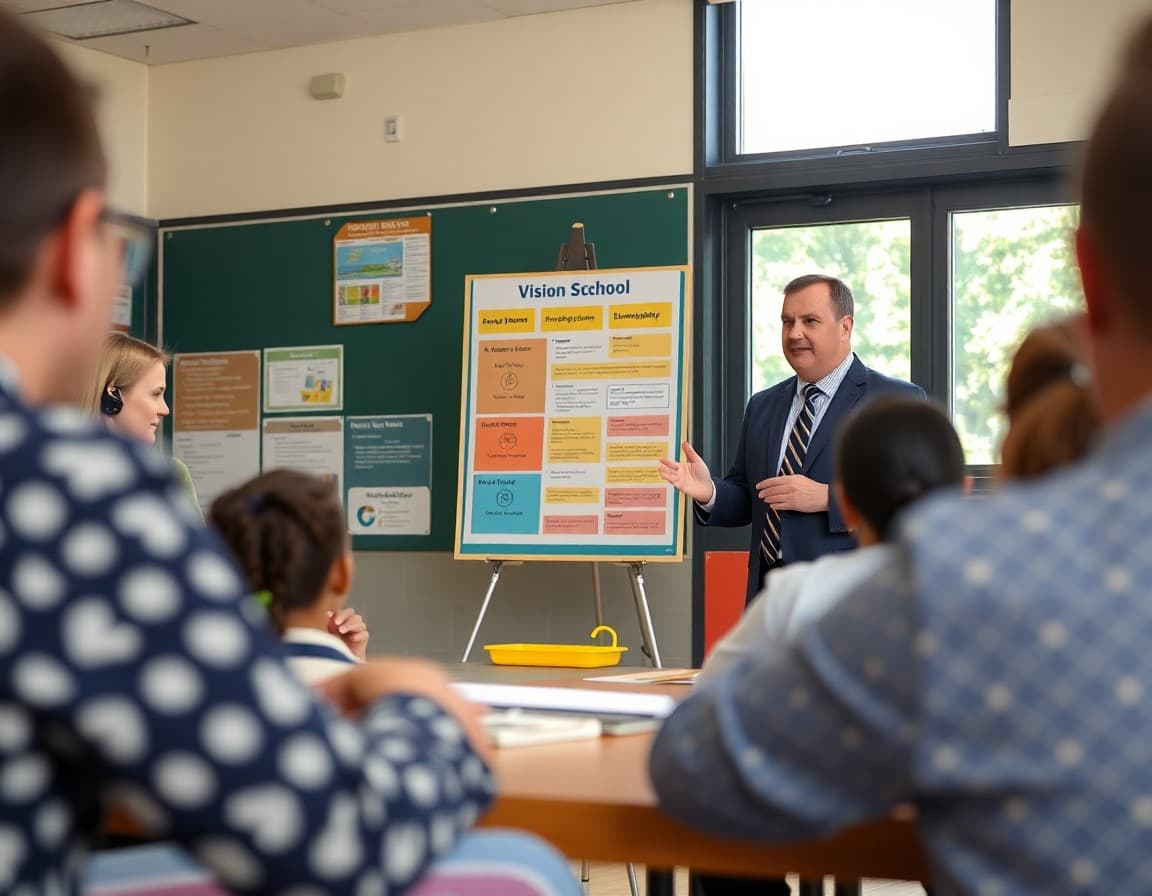
A school vision is a statement about what the school is trying to become, not just what it is. Communicating that vision to families is not a public relations exercise. It is an invitation into a direction that will affect their children's daily experience. Families who understand where the school is headed are more likely to support the changes that come with getting there.
State the vision, then explain the reasoning
Most school vision statements are abstract: "a community of learners prepared for an evolving world." The newsletter that connects that language to actual decisions and actual evidence is the one that families trust.
"Our vision is to graduate students who are adaptable, ethical, and genuinely prepared for whatever comes after school. Here is why we believe that vision matters right now: graduates who can think critically and collaborate across differences are more successful in college and in careers than graduates who simply score well on standardized tests. That belief drives how we design our curriculum."
Connect the vision to this year's priorities
A vision newsletter that stays purely abstract gives families no way to evaluate whether the school is moving toward it. Connect the long-term vision to what is happening this year:
- What new program or initiative this year aligns with the vision?
- What is the school continuing or deepening from last year?
- What are you measuring to know whether the vision is being realized?
A vision with no measurable near-term steps is a wish. A vision connected to specific current action is a direction families can trust.
Acknowledge what is not yet achieved
Honesty about gaps builds more trust than performative optimism. "We are not yet where we want to be on [specific goal]. Here is what we have learned, what we are changing, and what families can expect to see this year as we move forward."
A school that can acknowledge a gap and explain its plan to address it demonstrates the kind of organizational honesty that aligns with the growth mindset it is presumably teaching students.
Describe the planning process behind the vision
Families are more invested in a vision they had a hand in shaping. If the vision emerged from a strategic planning process that included family surveys, community forums, or school improvement committee input, say so: "This vision reflects feedback from 340 families who participated in our spring survey, six community forums, and input from our school improvement team over the past 18 months."
That sentence changes how families receive the vision. It is not imposed from above. It emerged from the community.
Template: vision newsletter opening
"Lincoln Elementary's vision is to become a school where every child feels genuinely known, challenged, and capable. This year, that vision drives three concrete priorities: expanding our social-emotional learning program to every grade level, deepening teacher-student advisory relationships, and building family literacy support into our afternoon programming. Here is what each of those looks like in practice this year."
Invite families into the vision
A vision newsletter that ends with a question invites families into the school's direction rather than just informing them of it: "We want to hear from you. Are there areas where our vision does not match what you see in your child's daily experience? Where are we living up to what we have described? Your observations help us improve."
A reply-to email or a brief survey link attached to the newsletter turns the communication from broadcast to dialogue, which is itself an expression of the collaborative vision most schools claim to hold.
Get one newsletter idea every week.
Free. For teachers. No spam.
Frequently asked questions
What is the difference between a school mission newsletter and a vision newsletter?
The mission newsletter explains what the school does and why it exists today. The vision newsletter explains where the school is going and what it is working toward. A vision newsletter communicates aspirations, multi-year goals, planned changes, and the reasoning behind the school's direction. It is forward-looking where the mission newsletter is grounding.
When should a school send a vision newsletter?
Vision newsletters are most effective at the start of a school year, after a strategic planning process, when launching a significant new program or initiative, or when there is community concern about the school's direction. A vision newsletter preempts rumors and speculation by giving families the school's actual direction from the school itself.
How do you communicate a school vision without overpromising?
Frame the vision as aspiration combined with current progress. 'We aim to be a school where every student graduates ready for their next step, whatever that step is' is more honest than 'every student will be college and career ready by 2026.' Pair aspirational language with specific, near-term commitments: 'This year, that means expanding our career exploration program to every 8th-grade student.'
How do you handle families who disagree with the school's vision?
Acknowledge that the vision reflects choices, and choices involve tradeoffs. 'We have prioritized depth over breadth in our curriculum because we believe students learn more from exploring fewer topics deeply than covering many superficially. We know some families want a different approach, and we welcome that conversation.' Families who feel heard are less likely to become adversarial than families who feel dismissed.
How does Daystage support school vision communication with families?
Daystage makes it easy to send a vision newsletter that looks intentional and reflects the school's brand. You can include images, pull quotes, and structured sections that make complex goals readable for busy families. A well-designed vision newsletter in Daystage communicates organizational capacity along with the content itself.

Adi Ackerman
Author
Adi Ackerman is a former classroom teacher and curriculum writer with 8 years in K-8 schools. She writes about school communication, parent engagement, and what actually works in real classrooms.
More for School Culture
Ready to send your first newsletter?
3 newsletters free. No credit card. First one ready in under 5 minutes.
Get started free