
Restorative Justice in Schools: Explaining the Approach to Parents in Your Newsletter

Restorative justice is one of the most misunderstood approaches in education today. Families who have not seen it in action often assume it means students face no consequences, or that the school is prioritizing the student who caused harm over the student who was harmed. Neither is true, but the misunderstanding is predictable when families have not been given a clear explanation.
Your newsletter is where you get ahead of that misunderstanding. Here is how to explain restorative practices in a way that families can actually understand and trust.
Start with What It Is Not
The fastest way to address the most common misconception is to name it directly. Families who are skeptical of restorative practices usually believe it means students who cause harm face no consequences. Address this first.
"Restorative practices do not mean students who harm others face no consequences. They mean that consequences are designed to repair harm rather than just punish it. A student who vandalized a classroom still cleans it. A student who excluded a peer still has a structured conversation with that peer and with an adult. The goal is to make right what was made wrong."
This framing respects the concern without being defensive about it. It moves the conversation forward.
Explain the Circle Process
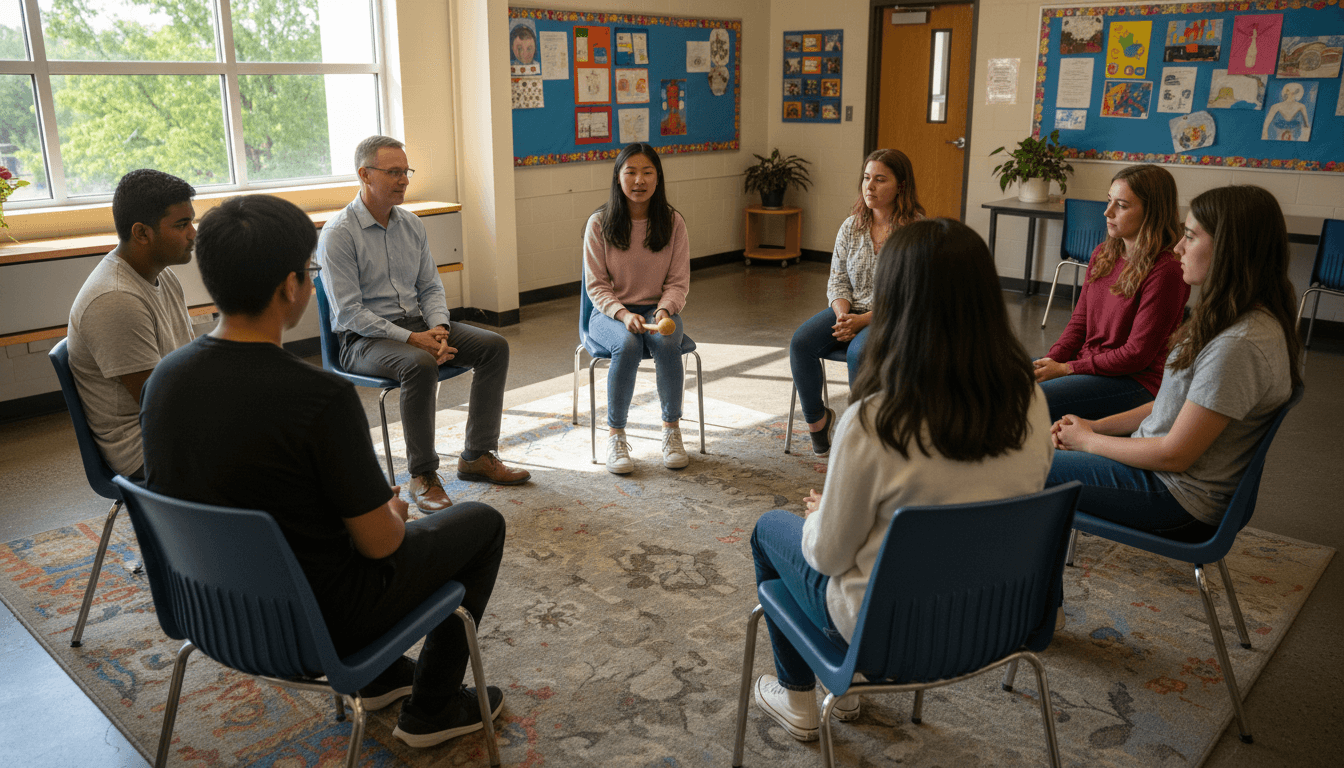
Restorative circles are the most visible practice in most programs, and also the most unfamiliar to families. Describe what a circle is, who is in it, and what it accomplishes.
"A restorative circle brings together the student who caused harm, the student who was harmed, a trained adult facilitator, and sometimes family members. Each person answers specific questions: What happened? Who was affected and how? What needs to happen to make it right? The circle is structured, not a free-form conversation. It ends with a specific agreement about next steps."
When families understand the structure, it stops sounding like students sitting around talking with no outcome.
Describe How It Works Alongside Traditional Consequences
Many schools use restorative practices alongside, not instead of, traditional discipline. If that is true at your school, say so clearly.
"Restorative practices are one part of how we respond to behavior. Serious incidents that violate our code of conduct, including fighting, threats, and substance use, still receive the consequences required by district policy. Restorative processes may happen in addition to those consequences, to address the harm caused and to help students return to the community effectively."
Address the Concern of Students Who Were Harmed
Families of students who were harmed are often the most skeptical of restorative approaches. They want to know that their child's experience matters and that the process is not primarily about rehabilitating the student who caused harm.
Make this explicit: "In restorative processes, the student who was harmed always has a choice about whether to participate. No student is required to sit in a circle with a student who hurt them. If a student declines, the restorative process continues with the student who caused harm without them. The harmed student's wellbeing and safety come first."
Show the Evidence
Restorative practices have a meaningful research base. Sharing one or two specific data points is more persuasive than asserting that the approach works.
"Schools that implement restorative practices with fidelity typically see significant reductions in suspensions and office referrals over two to three years. More importantly, repeat incidents between the same students drop when the root harm has been addressed rather than just punished."
If your school has its own data, even one year of data on referral rates or suspension days, use it. Local data is always more persuasive than national studies for families who are skeptical.
Invite Questions Directly
Restorative practices generate questions. A newsletter that explains the approach but does not open a door for families to ask more creates frustration. Name a specific person and contact method.
"If you have questions about how our restorative practices program works or about a specific situation involving your child, contact [name] at [contact]. We would rather answer your questions directly than have you piece together an understanding from secondhand sources."
Get one newsletter idea every week.
Free. For teachers. No spam.
Frequently asked questions
When should schools communicate restorative justice practices to families?
Before any incident requires families to engage with the process, not after. Explaining what restorative practices are, what they are not, and how they work alongside traditional consequences gives families a framework before they are emotionally invested in a specific outcome.
What should a restorative justice newsletter include?
A clear statement of what restorative practices do not mean, a description of how the circle process works with the specific questions used and the structure of an agreement, an explanation of how restorative processes sit alongside rather than replace traditional consequences, and explicit reassurance that harmed students choose whether to participate.
How can schools explain restorative practices through newsletters?
Start with the misconception families are most likely to hold and address it directly in the first paragraph. Describe the circle process in procedural terms so families understand the structure. Share local data on suspension reductions or repeat-incident rates if available, because specific school-level outcomes are more persuasive than national research.
What are common mistakes in school restorative justice communication?
Describing the philosophy without explaining the actual process. Ignoring the concern of families whose children were harmed rather than addressing it directly. And waiting until a high-profile discipline situation to explain the approach, which means families read about restorative practices for the first time while already upset about a specific outcome.
How does Daystage support school newsletter communication about discipline approaches?
Daystage helps schools build newsletters that include proactive communication about systems like restorative practices before those systems are needed, which is the most effective time to reach families with information that might otherwise feel defensive when shared reactively.

Adi Ackerman
Author
Adi Ackerman is a former classroom teacher and curriculum writer with 8 years in K-8 schools. She writes about school communication, parent engagement, and what actually works in real classrooms.
More for School Culture
Ready to send your first newsletter?
3 newsletters free. No credit card. First one ready in under 5 minutes.
Get started free