
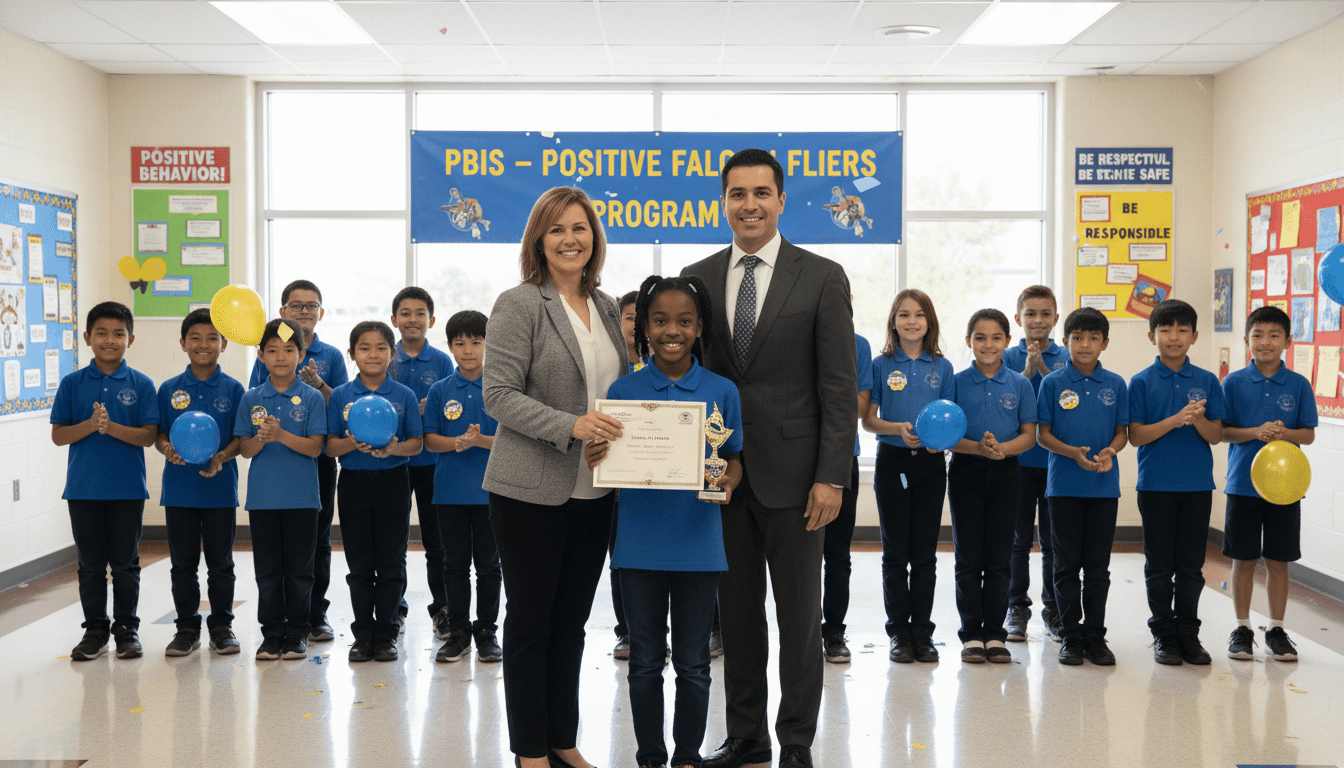
Positive Behavior Support Newsletter: Communicating PBIS to Parents

PBIS, Positive Behavioral Interventions and Supports, is one of the most widely implemented behavior frameworks in American schools. It is also one of the most poorly communicated. Families regularly receive a PBIS matrix at the start of the year and nothing after that, until their child either earns a reward or receives a consequence. Your newsletter can close that gap and make PBIS a genuinely shared system between school and home.
Explain the Three-Tier Model in Plain Language
The language of PBIS, Tier 1, Tier 2, Tier 3, means nothing to most families. But the concept is easy to explain and important for families to understand, because it determines how the school responds to their child's behavior.
"All students at our school receive Tier 1 support, which means they are taught the expected behaviors in every school setting and recognized when they demonstrate them. Students who need more support than Tier 1 provides receive Tier 2 support, which includes small group check-ins, structured feedback, and additional skill-building. A small number of students whose needs are not met by Tier 2 receive individualized Tier 3 support. At no point does a student move from Tier 1 to Tier 2 or Tier 3 as a punishment. It is a response to what they need."
Publish the PBIS Matrix Expectations by Setting
PBIS matrices break down expected behaviors by school setting: hallway, cafeteria, classroom, playground. Sharing this in your newsletter gives families a clear picture of what their child is being taught to do. It also allows families to use the same language at home.
"In the cafeteria, students are expected to: use a quiet voice that doesn't carry past two seats, stay in their seat until dismissed, clean up their space before leaving, and resolve disagreements using words rather than actions. These are the specific behaviors we teach and recognize, not just a general expectation to 'behave well.'"
Explain the Acknowledgment System
PBIS programs typically include a recognition or acknowledgment system: paw prints, Husky bucks, PRIDE points. Whatever your currency is, explain it to families so they understand what it means when their child comes home excited about earning points.
"When a student demonstrates one of our school's expected behaviors, any staff member can give them a PRIDE card. Students collect PRIDE cards throughout the semester. Cards can be exchanged for tangible items at our quarterly store, or entered into drawings for larger prizes. The system is designed to make expected behaviors visible and worth noticing. Last semester, our staff issued 4,200 PRIDE cards across 420 students, an average of 10 per student."
Share Data on Office Referrals and Suspensions
PBIS is a data-driven framework, which means you have data. Sharing it with families builds transparency and demonstrates whether the system is working.
"This year through March, our school issued 187 office referrals. In the same period last year, we issued 264. Our in-school suspension days are down 31 percent year over year. These reductions reflect consistent implementation of PBIS practices across all grade levels." Data tells the story better than any description of the philosophy.
Give Parents Language to Use at Home
PBIS works best when families use the same language the school uses. Your newsletter can teach families that language directly.
"When your child has a difficult moment at home, try asking the question we use at school: 'What was the expected behavior in that situation?' This is not rhetorical. We actually want students to state the expectation they were not meeting, because naming it is the first step in meeting it next time. If your child cannot name the expected behavior, that tells you something about where they need more explicit teaching."
Describe What Happens When Behaviors Fall Outside Expectations
Families often assume that PBIS means students who break rules face no consequences. Address this directly.
"PBIS does not replace consequences for behaviors that violate our school's code of conduct. What it does is ensure that every student is clearly taught the expected behavior before they are held accountable for not meeting it. When a student receives a consequence, the consequence is accompanied by re-teaching of the expected behavior so the student knows exactly what to do differently next time."
Get one newsletter idea every week.
Free. For teachers. No spam.
Frequently asked questions
When should schools communicate their PBIS program to families?
At the start of the year to explain the three-tier model and the acknowledgment system, then monthly to update families on data like office referral rates and PRIDE card totals. Families who only receive the matrix at back-to-school night lack the ongoing context needed to reinforce expected behaviors at home.
What should a PBIS newsletter include?
A plain-language explanation of the three-tier model, the school's behavioral expectations by setting like cafeteria and hallway, how the acknowledgment system works with specific numbers, office referral data compared to prior periods, and language families can use at home that mirrors what students hear at school.
How can schools communicate positive behavior expectations through newsletters?
Publish the PBIS matrix expectations in plain language by setting rather than summarizing them in abstract terms. Share semester data on recognition totals and referral reductions, and give families one specific question they can ask their child that uses the same language the school uses when addressing behavior.
What are common mistakes in school behavior communication?
Sending the PBIS matrix once and going silent for the rest of the year. Using tier language without explaining what it means in practice for a real student. And failing to share outcome data, which leaves families unable to judge whether the system is actually working.
Can Daystage help schools maintain consistent PBIS communication?
Daystage makes it straightforward for schools to build a recurring PBIS update section in their newsletter, so behavior data and recognition totals reach families regularly rather than only when someone remembers to include them.

Adi Ackerman
Author
Adi Ackerman is a former classroom teacher and curriculum writer with 8 years in K-8 schools. She writes about school communication, parent engagement, and what actually works in real classrooms.
More for School Culture
Ready to send your first newsletter?
3 newsletters free. No credit card. First one ready in under 5 minutes.
Get started free