
School Mindfulness Newsletter: Communicating Wellness Practices to Parents
Mindfulness programs in schools have expanded rapidly over the past decade, and family reactions range from enthusiastic support to sincere skepticism. Some parents are concerned about the connection to religion or the displacement of academic time. Others are simply curious and want to know what their child is actually doing. Your newsletter is where you answer both groups honestly.
Describe the Practice Plainly
Mindfulness is often defined in ways that trigger skepticism: "present-moment awareness," "non-judgmental attention," "inner stillness." These phrases communicate poorly to families who have not practiced mindfulness themselves. Describe what happens in the room.
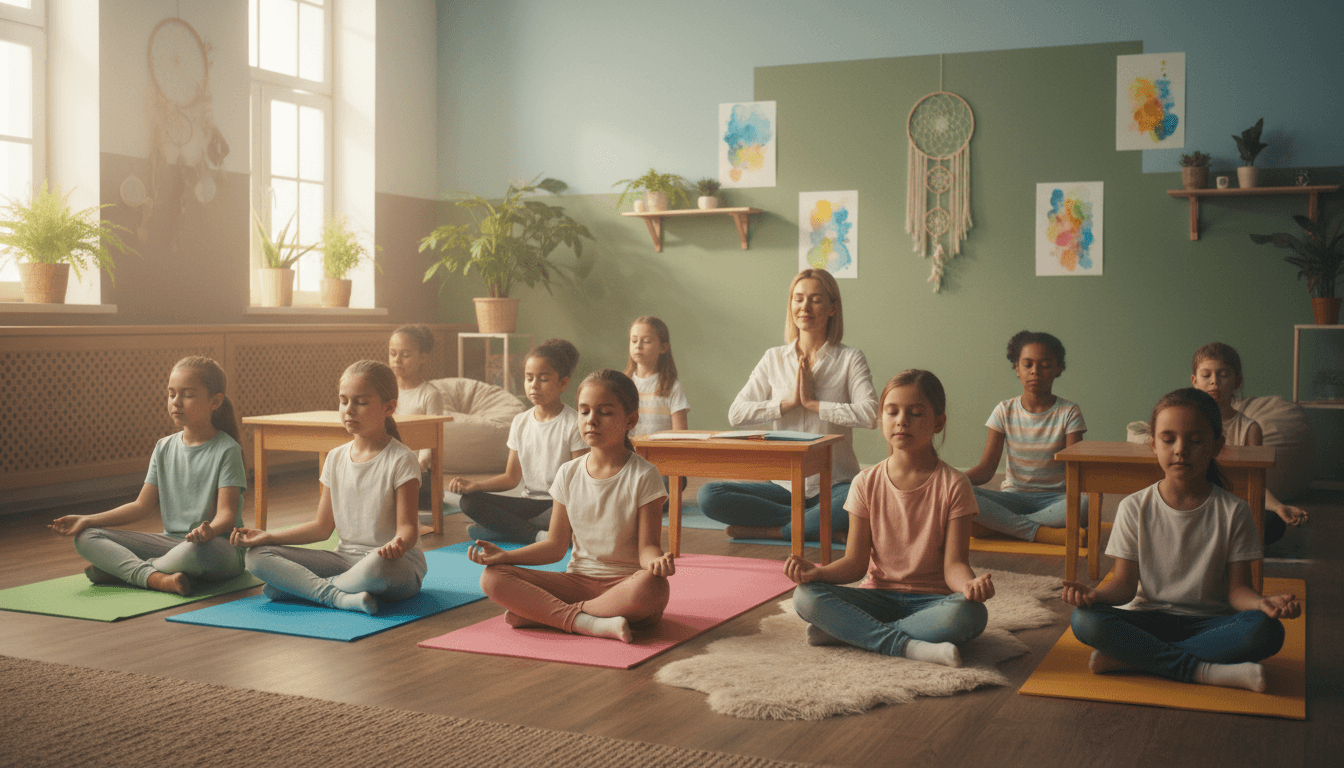
"At the start of each class, students spend two minutes in a structured breathing exercise. They sit in their chairs, both feet on the floor, and follow a guided count of four counts in, four counts hold, four counts out. No special position, no sound, no eyes closed unless they choose to close them. The goal is to give students a reliable way to transition from the hallway energy of passing period into a state where they can focus."
Two minutes. Specific instructions. A clear purpose. That description answers every practical question a skeptical parent might have.
Address the Religious Concern Directly
Some families have concerns about mindfulness practices and religious boundaries. This concern is sincere and deserves a direct response rather than being ignored.
"The mindfulness practices we use at school are secular and skills-based. They draw on breathing and attention techniques that have been studied in clinical research settings and do not involve religious beliefs, spiritual frameworks, or philosophical worldviews. Students are never asked to adopt any belief as part of these exercises. If your family has specific concerns, please contact [name] so we can discuss the details."
Connect It to Stress and Academic Performance
Student stress is at historically high levels, and most families are aware of this even if they are not sure what to do about it. Connecting your mindfulness program to student stress management gives families a practical reason to support it.
"Students who practice structured attention and breathing techniques show measurable improvements in focus, reduction in self-reported anxiety before tests, and faster recovery from stressful events. We use these practices specifically before high-stakes assessments and after incidents that have disrupted the school day."
Teach One Practice Families Can Use at Home
The most effective wellness newsletters give families something they can actually use. Include one brief, jargon-free technique per newsletter. Make it something a parent can try with their child in two minutes.
"The 5-4-3-2-1 grounding exercise: when your child is anxious or overwhelmed, ask them to name five things they can see, four they can touch, three they can hear, two they can smell, and one they can taste. This shifts attention to the immediate environment and interrupts the anxiety spiral. Students in grades four through eight learn this in our wellness curriculum. Most can do it independently within two weeks of practice."
Report on Usage and Outcomes
Wellness programs are sometimes viewed as soft because schools rarely report on them with data. If you have any data, use it.
"This year, 94 percent of students in grades five through eight have completed at least eight wellness sessions. In our spring survey, 71 percent reported that they use at least one breathing or grounding technique independently outside of school. That number was 34 percent in the fall."
The comparison between fall and spring is the most persuasive detail. It shows that students are not just participating in the program but actually using the skills on their own. That is what skill-building looks like.
Get one newsletter idea every week.
Free. For teachers. No spam.
Frequently asked questions
When should schools communicate their mindfulness program to families?
Before the program begins and again when students start each new practice. Families who understand what their child is doing in a mindfulness session before they hear about it from the child are far less likely to raise objections based on misunderstanding. Early, clear communication prevents most of the skepticism schools encounter.
What should a school mindfulness newsletter include?
A plain-language description of exactly what happens during a session, a direct response to the religious concern, research-connected reasoning for why the school uses these practices, one simple technique families can try at home with their child, and outcome data showing usage and skill transfer rates.
How can schools share wellness practices through newsletters?
Describe sessions in behavioral terms, what students sit, do, and hear, rather than in mindfulness philosophy language that can trigger skepticism. Publish data on how many students report using techniques outside school. Include one specific, two-minute home practice per issue so families experience the approach rather than just reading about it.
What are common mistakes in school mindfulness communication?
Using wellness and mindfulness jargon that sounds vague or ideological to skeptical families. Ignoring the religious concern rather than addressing it directly. And reporting on program participation without data on whether students are actually using skills independently, which is the outcome that matters most.
How does Daystage help schools communicate wellness programs?
Schools using Daystage can build newsletter templates that include a recurring wellness section, making it easy to share a new home practice and program update each issue without rebuilding the newsletter structure from scratch every time.

Adi Ackerman
Author
Adi Ackerman is a former classroom teacher and curriculum writer with 8 years in K-8 schools. She writes about school communication, parent engagement, and what actually works in real classrooms.
More for School Culture
Ready to send your first newsletter?
3 newsletters free. No credit card. First one ready in under 5 minutes.
Get started free