
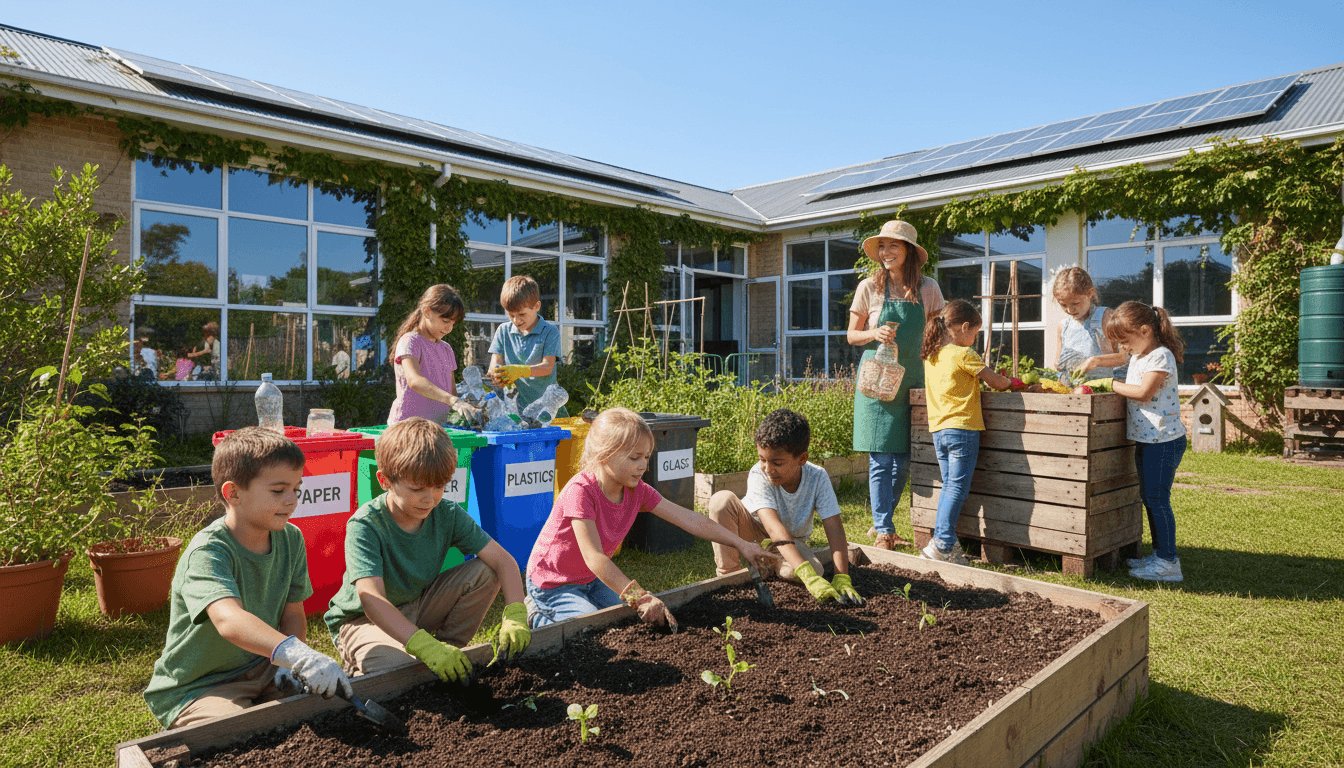
School Sustainability Newsletter: Communicating Green Initiatives to Parents
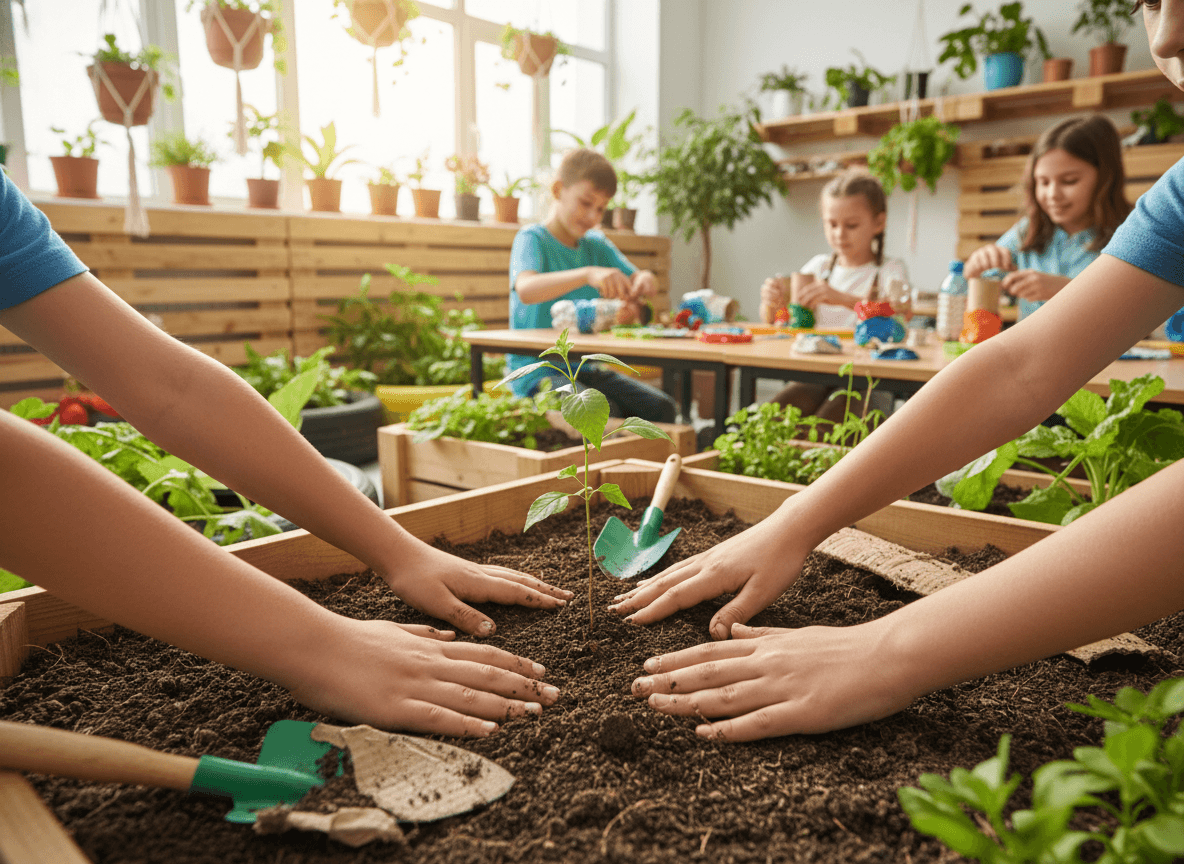
School sustainability programs generate enthusiasm from some families and indifference from others. The difference is usually whether families understand what the program is actually doing, how it connects to what their child is learning, and whether they feel invited to participate. A newsletter that answers those three questions turns a school garden into a community asset rather than a staff project families walk past.
Connect Every Initiative to a Curriculum Standard
Sustainability programs that are clearly curriculum-connected are easier to defend and easier for families to support. Name the academic connection every time you describe a sustainability initiative.
"Our school garden is not just a garden. It is an outdoor science lab. Fourth graders use it to study plant life cycles, soil composition, and the water cycle. Fifth graders use it for their plant biology unit and are currently experimenting with different soil amendments to test their effect on germination rates. The academic standards covered are specific and documented."
This framing matters because it repositions the garden from "nice enrichment activity" to "science curriculum delivered in a different setting."
Report the Environmental Impact in Numbers
Sustainability programs produce measurable outcomes. Report them. Numbers make abstract environmental efforts concrete and give families something to share with their children.
"This school year through April, our composting program has diverted 1,240 pounds of food waste from the landfill. Our recycling program has collected and processed 380 pounds of mixed recyclables. Our new LED lighting in the gym and main corridors has reduced electricity consumption in those spaces by an estimated 34 percent compared to last year."
These numbers are manageable to collect and powerful to share. They also give students a sense of scale and real-world impact.
Feature Student Leadership
Sustainability programs are most effective when students are running them, not just participating in them. When students lead, the program belongs to them. When adults run it for students, it is an adult program that students are required to participate in.
"Our Eco Team is a student-led group of 14 students in grades six through eight who manage the composting stations in the cafeteria, conduct monthly waste audits, and propose changes to school practices based on their findings. This month, the Eco Team presented a proposal to the principal to switch from plastic utensils to compostable ones at school events. The proposal is under review."
Give Families Specific Ways to Extend Learning at Home
Sustainability practices are most powerful when they cross between school and home. Give families one specific, low-cost action they can take that connects to what students are learning.
"Students in our composting unit this month are learning which materials are compostable and which are not. A simple activity to try at home: ask your child to sort your kitchen waste for one dinner into 'compostable,' 'recyclable,' and 'landfill' piles. Then ask them to explain their reasoning. You do not need a compost bin to do this. The sorting and reasoning practice is the skill."
Be Honest About What Is Not Working Yet
Sustainability newsletters that only report wins feel like marketing. Families trust programs more when the newsletter includes an honest note about what the program is still working on.
"Our recycling contamination rate, the percentage of recyclables that are actually not recyclable, is currently around 28 percent. The target is below 15 percent. We are working with students on identifying common problem items: food-soiled paper, soft plastics, and certain cardboard types. If you want to help us on this, ask your child what the three most common contaminants in our recycling stream are. They have been doing the audits."
Get one newsletter idea every week.
Free. For teachers. No spam.
Frequently asked questions
When should schools communicate sustainability initiatives to families?
Connect sustainability communication to the academic calendar. Report at the start of units when students begin curriculum-connected projects, share cumulative impact numbers mid-year, and publish full-year outcome data in spring. Families who see sustainability tied to the academic calendar understand it as curriculum, not extracurricular.
What should a school sustainability newsletter include?
The academic standards each sustainability initiative addresses, measurable environmental impact data like pounds of food diverted from landfill or energy reduction percentages, examples of student leadership in program management, one specific activity families can try at home, and an honest note about what the program is still working to improve.
How can schools share green initiatives through newsletters?
Name the academic connection every time rather than letting the environmental benefit stand alone. Feature students who lead programs rather than only participate in them. And report honest numbers including progress and gaps, because sustainability newsletters that only show wins lose family trust faster than ones that acknowledge challenges.
What are common mistakes in school sustainability communication?
Describing sustainability programs without connecting them to curriculum, which makes them look like feel-good projects rather than academic work. Reporting only the initiative and not the impact. And missing the opportunity to give families one specific, low-cost action that connects what their child is learning at school to daily life at home.
How can Daystage support school sustainability newsletter communication?
Daystage makes it easy to build recurring newsletter sections where sustainability metrics are updated each issue, so families see cumulative impact data building over the year rather than receiving isolated updates that lack context.

Adi Ackerman
Author
Adi Ackerman is a former classroom teacher and curriculum writer with 8 years in K-8 schools. She writes about school communication, parent engagement, and what actually works in real classrooms.
More for School Culture
Ready to send your first newsletter?
3 newsletters free. No credit card. First one ready in under 5 minutes.
Get started free