
Third Grade Gifted Enrichment Newsletter: Communicating Advanced Learning to Families
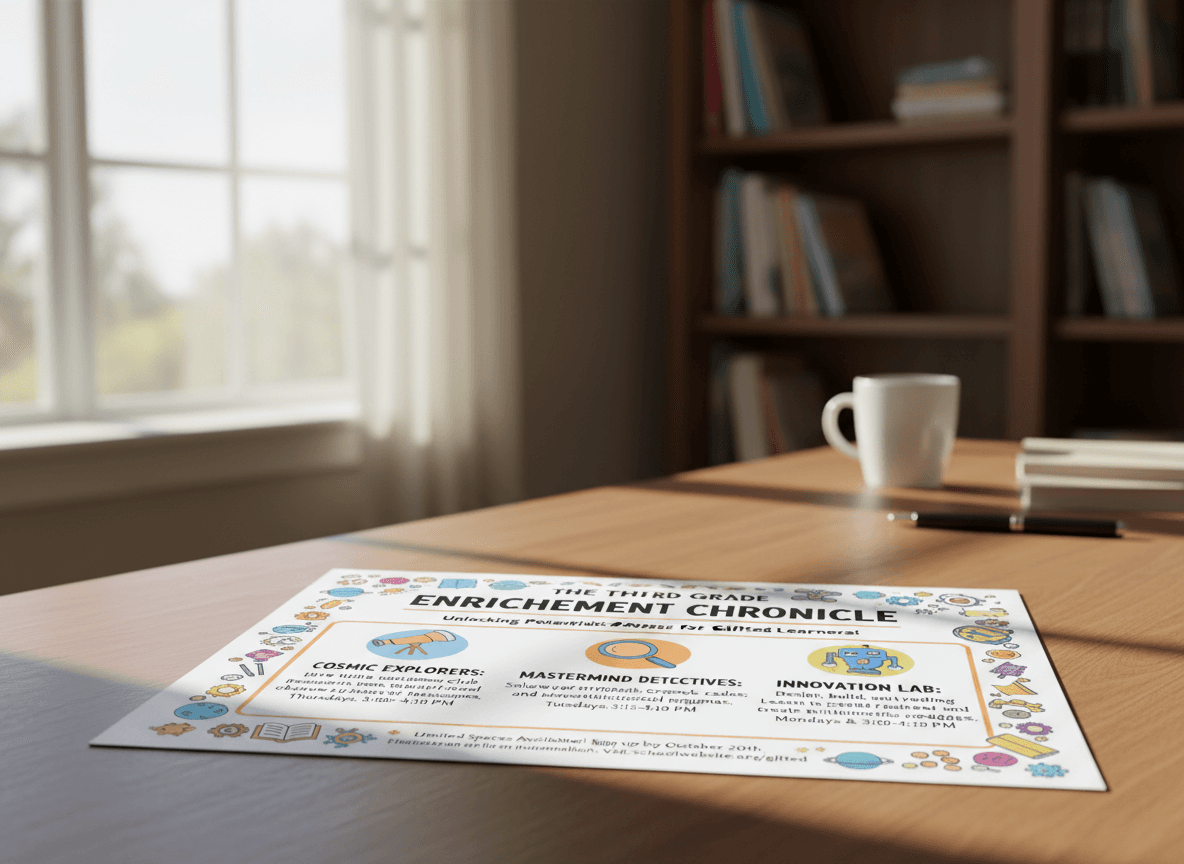
Families of gifted and advanced learners in third grade tend to be deeply invested in their child's education. They ask detailed questions, they research programs, and they want to understand not just what their child is doing, but why. A well-crafted enrichment newsletter meets that interest with substance and keeps families genuinely informed about the work happening in your classroom or pull-out program.
What Gifted Families Want to Know
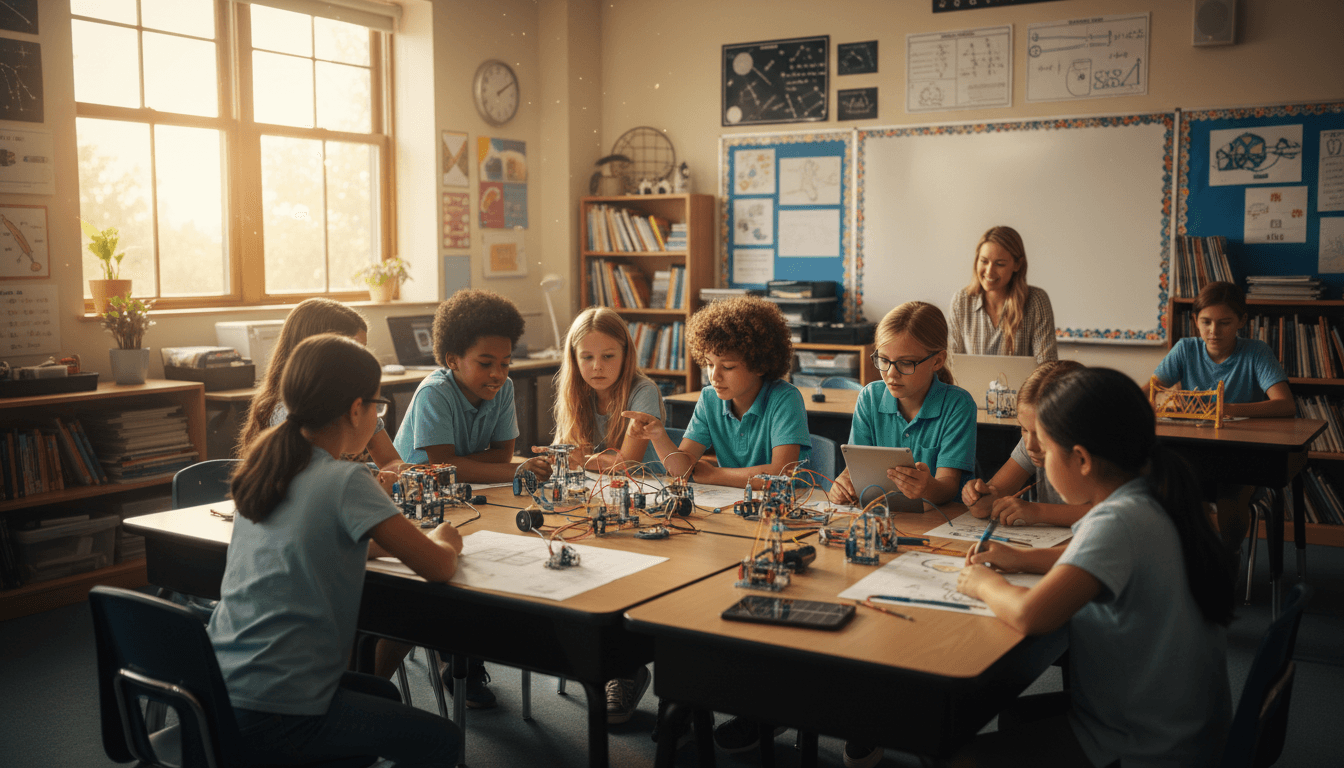
Families of gifted students are often paying attention to whether their child is being appropriately challenged. They want to know that the enrichment program is offering something meaningfully different from the standard curriculum, not just more of the same work. Your newsletter is an opportunity to make that case concretely by describing the actual projects, problems, and investigations students are engaged with.
Be specific. "Students are working on a research project" tells a family very little. "Students are investigating the question of whether ancient Rome or ancient Greece had a greater influence on modern government, and they are building arguments using primary and secondary sources" tells them a great deal.
Describing the Enrichment Curriculum
Third grade gifted programs vary widely in structure. Some pull students out of the regular classroom for dedicated enrichment time. Others offer differentiated work within the general education setting. Some do both. Use your newsletter to help families understand what model you are using and what it means for their child's experience.
Describe the units or themes you are exploring across the year. If you organize enrichment around concept-based learning or problem-based investigations, explain that framework briefly. Families who understand the structure of the program are better positioned to support it at home and advocate for their child within it.
Highlighting Student Work and Projects
Gifted learners often produce work that is genuinely impressive, and sharing highlights of that work in a newsletter is one of the best things you can do to build family connection. A photo of a student's research poster, a quote from a student's written argument, or a brief description of a class debate gives families a window into what their child is actually doing.
When students see their work featured in the newsletter, it also reinforces the value of the work itself. Third graders are old enough to understand that their projects matter beyond the classroom walls.
Connecting Enrichment to Broader Learning Goals
Some gifted families worry that enrichment time pulls their child away from essential skills. Your newsletter can address this proactively by showing how enrichment activities build and extend core competencies. A complex research project builds reading, writing, and critical thinking. A math challenge unit deepens number sense and problem-solving. An interdisciplinary investigation develops content knowledge alongside academic skills.
Make these connections explicit. When families see that enrichment is not separate from rigorous learning but rather an intensification of it, the program gains credibility and support.
Extension Opportunities at Home
Families of gifted learners are often looking for ways to extend their child's learning beyond the school day. Your newsletter is a natural place to share ideas. Suggest books that connect to current topics of study. Mention documentaries, museum exhibits, or science programs that relate to what students are exploring. Point families toward math challenge resources or writing competitions if those fit your students' interests.
Frame these as options, not assignments. The goal is to open doors for families who want them, not to create additional pressure for students who are already working hard during the school day.
Social and Emotional Notes
Giftedness brings unique social and emotional dynamics that families often appreciate having named. Third grade is a time when gifted students sometimes become aware that they are different from their peers, and they may respond to that in a range of ways.
Use your newsletter to occasionally note how your program addresses these dimensions. If you build in time for students to collaborate, to struggle productively with difficult problems, or to practice receiving and giving feedback, mention that. Families want to know that the program is developing the whole child, not just academic ability.
Upcoming Events and Competitions
Many gifted programs include opportunities for students to participate in academic competitions, presentations, or special events. Give families plenty of notice about these, and explain what participation involves. Some families may want to help prepare their child. Others may need to arrange transportation or schedule changes. Clear, early communication removes obstacles to participation.
Follow up after events with a brief recap in the next newsletter. Celebrating student achievement publicly, even in a small way, reinforces that the work matters and that the program is a meaningful part of their child's school experience.
Get one newsletter idea every week.
Free. For teachers. No spam.
Frequently asked questions
What should a gifted enrichment newsletter for third grade include?
Cover what enrichment activities students are working on, how those connect to broader learning goals, opportunities for extension at home, upcoming projects or competitions, and any program logistics families should know about. Gifted families tend to appreciate depth and specificity rather than generic updates.
How do I explain what gifted enrichment actually looks like in the classroom?
Describe specific projects, problems, or investigations students are engaged with. If students are doing a unit on ancient civilizations that goes deeper than the standard curriculum, explain what questions they are exploring and what they are producing. Concrete descriptions are far more meaningful than vague references to 'higher-level thinking.'
How often should I send newsletters to gifted program families?
Monthly is a reasonable baseline. Gifted pull-out programs often have distinct units or projects that align naturally with a monthly update. If students are in the middle of an intensive project, a mid-month brief update can keep families engaged and give them conversation starters for home.
How do I address the social-emotional side of giftedness in a newsletter?
Briefly and positively. You might note that your classroom focuses on intellectual risk-taking and resilience alongside academic challenge, or that students are working on collaboration and giving feedback to peers. This signals to families that you see the whole child, not just academic performance.
What newsletter tool is a good fit for gifted and enrichment program communication?
Daystage makes it easy to build polished newsletters with photos of student projects, event announcements, and clear text sections. For gifted programs where families tend to be highly engaged, a well-formatted Daystage newsletter signals professionalism and makes it easy to include the depth of information these families appreciate.

Adi Ackerman
Author
Adi Ackerman is a former classroom teacher and curriculum writer with 8 years in K-8 schools. She writes about school communication, parent engagement, and what actually works in real classrooms.
More for Classroom Teachers
Third Grade Classroom Newsletter Ideas Parents Actually Read
Classroom Teachers · 6 min read
Third Grade Curriculum Overview Newsletter: What to Cover and How to Say It
Classroom Teachers · 6 min read
Fourth Grade Curriculum Overview Newsletter: What Families Need to Know About the Year Ahead
Classroom Teachers · 7 min read
Ready to send your first newsletter?
3 newsletters free. No credit card. First one ready in under 5 minutes.
Get started free