
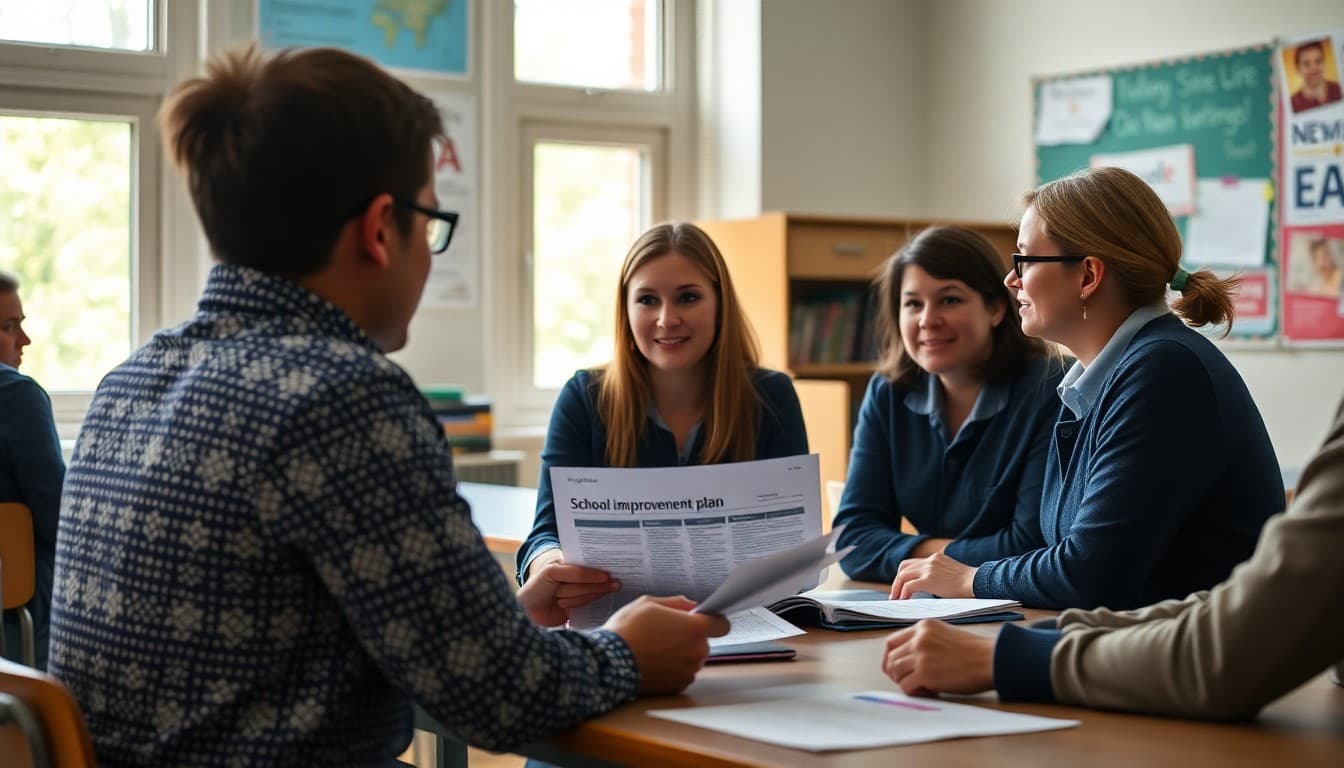
Sharing School Improvement Goals With Families in Your Teacher Newsletter
Why School Improvement Communication Belongs in the Classroom Newsletter
School improvement plans sit in binders, get presented at board meetings, and appear on school websites where few families ever find them. What families actually read is their child's classroom newsletter. If you can translate the relevant parts of your school's improvement goals into what families will see in the classroom, you make the plan real rather than bureaucratic.
Start With What Matters to Families
School improvement plans often contain multiple goals, data targets, and strategic initiatives. Families do not need all of that. They need to know two things: what the school is focusing on, and how it affects their child. Filter the full plan through that lens and share what remains. A three-sentence summary of the goals most relevant to your grade level is more useful than a full-plan summary that buries the practical implications.
Connect School Goals to Classroom Practices
The most useful thing you can do in your newsletter is show families how the school improvement goal shows up in your classroom. "One of our school's goals this year is improving reading fluency. In our classroom, we are responding to that goal by adding ten minutes of partner reading three days per week and tracking fluency growth monthly." That connection turns an abstract plan into something observable and real.
Share the Data That Drove the Goals
When families understand why a goal was set, they support it more actively. "Last year's assessment data showed that a significant number of students were reading below grade level by spring. This year's school goal directly addresses that gap." A data point gives the goal credibility. Families who see that the school is responding to real evidence rather than trend-following invest more in the effort.
Give Families a Specific Supporting Role
For any school improvement goal you share in your newsletter, include one action families can take at home. If the goal is reading: fifteen minutes of reading aloud together three times per week. If the goal is attendance: a reminder that ten missed days per year is equivalent to missing two weeks of instruction. Specific, actionable asks are more likely to produce real behavior than general encouragement.
Report Progress Across the Year
School improvement goals are most meaningful when they are tracked publicly. A brief mid-year newsletter update on progress tells families the goal was real and that the school is measuring what it said it would measure. "Our fall-to-winter reading assessment data shows significant growth in the students who were below benchmark in September. The strategies we put in place are working." That update builds trust in the school's capacity to set goals and achieve them.
Celebrate Milestones Without Overstating Them
When the school reaches a milestone on an improvement goal, acknowledge it in your newsletter. Not with excessive celebration, but with genuine recognition. "We hit our first-quarter attendance goal for the first time in three years. That reflects real effort from every family. Thank you." Acknowledgment like that shows families their contribution was noticed and keeps them invested in the goals that remain.
Get one newsletter idea every week.
Free. For teachers. No spam.
Frequently asked questions
Should classroom teachers communicate the school improvement plan to families in their newsletter?
Yes, to the extent it directly affects what happens in your classroom. You do not need to share the full administrative document. Summarize the goals that affect student experience and explain how they connect to your classroom work.
How do I explain a school improvement plan to families who are unfamiliar with the term?
Keep it simple: 'Each year our school sets specific goals for what we want to improve. This year's focus is reading fluency in grades K-3 and family engagement. Here is how that affects our classroom.'
How can families support school improvement goals?
Name one or two specific actions families can take that align with the school's goals. If the goal is reading, suggest a home reading routine. If the goal is attendance, share the data on attendance and its impact on achievement. Specific asks get more response than general invitations.
What do I do if the school improvement plan reveals a weakness I am not proud of?
Frame it as growth. 'Our assessment data showed that math fact fluency was a gap for many students last year. This year, we are addressing it directly with a new practice structure.' Identifying a weakness and having a plan for it is not a failure. It is accountability.
How does Daystage help teachers communicate school-level goals to families?
Daystage lets you include a school context section in your classroom newsletter where you translate school-wide goals into what families see in the classroom. That translation is the most useful thing a classroom teacher can do with school improvement communication.

Adi Ackerman
Author
Adi Ackerman is a former classroom teacher and curriculum writer with 8 years in K-8 schools. She writes about school communication, parent engagement, and what actually works in real classrooms.
More for Classroom Teachers
Preparing Families for a School Accreditation Visit in Your Teacher Newsletter
Classroom Teachers · 6 min read
Explaining Professional Development Days to Families in Your Teacher Newsletter
Classroom Teachers · 6 min read
Teacher Newsletter for MAP Testing: Prepare Families for Assessment Season
Classroom Teachers · 6 min read
Ready to send your first newsletter?
3 newsletters free. No credit card. First one ready in under 5 minutes.
Get started free