
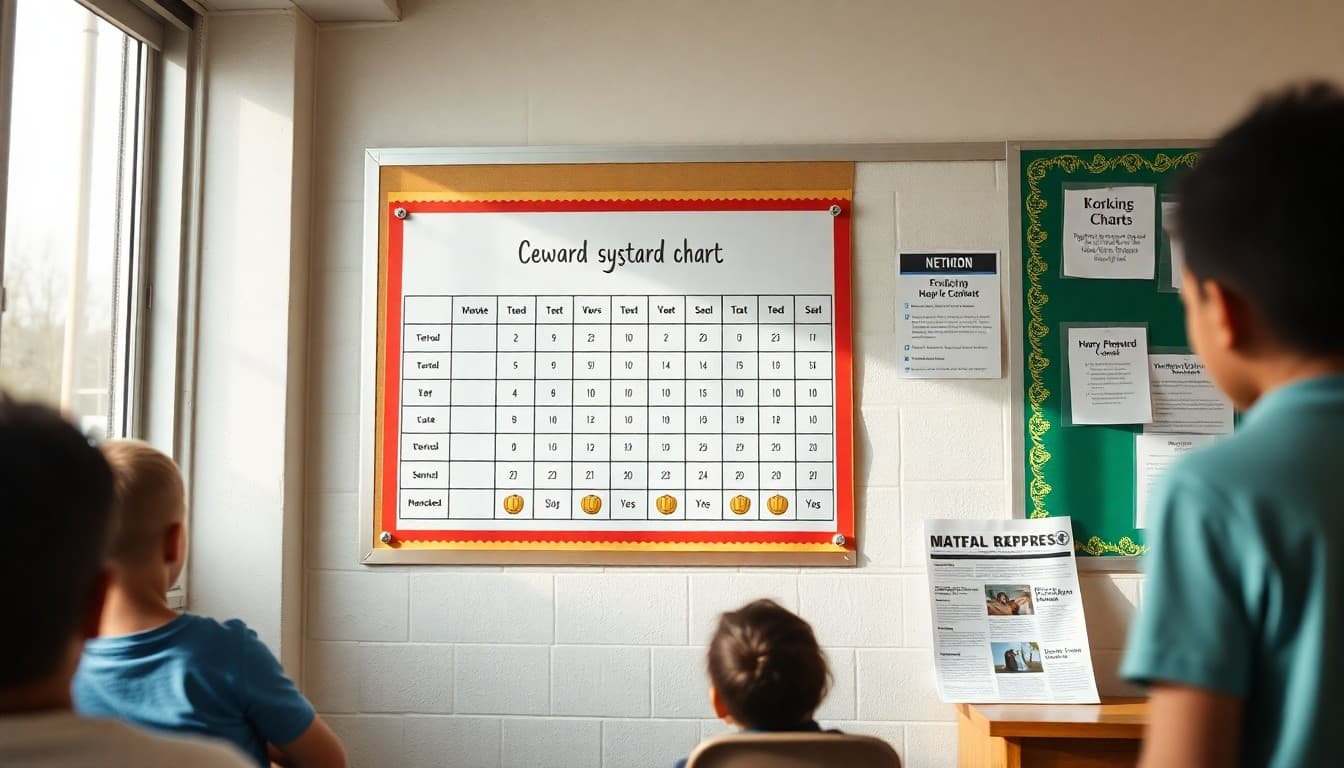
Introducing Your Classroom Reward System to Families in Your Newsletter

A Reward System Only Works If Families Know About It
Students who earn points, tokens, or privileges in your classroom will go home and talk about it. If families understand the system, they reinforce it: "You earned a golden ticket today? Tell me what you did." If they have no context, the conversation either goes nowhere or takes a direction that undercuts what you are building at school.
Your newsletter is the right place to introduce the system clearly before students start coming home with stories about it.
Explain What the System Rewards
Start with the behaviors. What earns recognition in your classroom? Name them specifically: completing work independently, showing kindness, demonstrating perseverance, following classroom procedures without reminders. When families know what the system values, they can look for the same things at home and give their child language for what "good choices" actually means in practice.
Describe How the System Works
Walk families through the mechanics in plain language. Do students earn points individually or as a class? How do they redeem rewards? How quickly can they accumulate recognition? Is there a reset? The specifics help parents have informed conversations. "How close are you to earning your reward?" is a much better dinner table question than a vague "Did you behave today?"
Connect the Rewards to the Larger Goal
A brief sentence about why you use this system goes further than you might expect. "I use a class points system because I find it helps students notice their own positive contributions and builds a culture of recognition rather than just correction." That kind of honest explanation earns parent trust because it shows you have thought about the purpose, not just the mechanics.
Give Families a Way to Participate
Some families want to be involved. Your newsletter can offer options without creating obligations. "If you'd like to contribute a small item to our classroom reward store, here's a list of things that work well" or "You can nominate your child for a class shout-out by sending me a note about a moment you noticed at home." Optional participation builds engagement. Mandatory participation creates stress.
Update Families on Class Progress
Once or twice a month, include a brief update in your newsletter. "The class earned enough points for a free-choice Friday activity this week" or "We are close to our next class goal." These updates make the system feel alive rather than theoretical, and they give families good news to celebrate with their children.
Revisit the System If It Changes
If you adjust the reward system mid-year, explain why in your newsletter. "We are shifting from individual tokens to a class points system to focus more on teamwork." That transparency prevents confusion and invites families into the reasoning behind your classroom decisions. A system that evolves with a clear explanation feels thoughtful. One that changes without notice feels arbitrary.
Get one newsletter idea every week.
Free. For teachers. No spam.
Frequently asked questions
How much detail should I include when introducing a reward system in the newsletter?
Explain the basics: what behaviors earn rewards, what the rewards are, and how students track their progress. One paragraph is usually enough. If the system is complex, include a simple graphic or a brief FAQ.
Should I explain the educational purpose of a reward system to parents?
Yes. Parents who understand that the system reinforces intrinsic motivation, not just compliance, are more likely to support it. A sentence or two connecting the rewards to classroom values goes a long way.
How do I handle parents who object to reward systems?
Acknowledge that families have different views on external motivation. Explain your approach and how the rewards connect to genuine skill-building. If a family has a strong preference, offer a one-on-one conversation rather than debating it through the newsletter.
Can I involve families in the reward system?
Absolutely. Some teachers let families submit nominations for student recognition. Others invite parents to contribute small reward items. Your newsletter can present these options and invite participation without making it mandatory.
How does Daystage help teachers communicate reward systems efficiently?
Daystage makes it easy to include a photo of your reward chart, a short explanation, and a weekly update all in one place. Families stay current without needing a separate app, printed notice, or separate communication channel.

Adi Ackerman
Author
Adi Ackerman is a former classroom teacher and curriculum writer with 8 years in K-8 schools. She writes about school communication, parent engagement, and what actually works in real classrooms.
More for Classroom Teachers
Communicating Weekly Behavior Charts to Families via Teacher Newsletter
Classroom Teachers · 6 min read
Explaining Your School PBIS Framework to Families in Your Teacher Newsletter
Classroom Teachers · 6 min read
How to Explain Your Classroom Behavior Policy in a Newsletter
Classroom Teachers · 6 min read
Ready to send your first newsletter?
3 newsletters free. No credit card. First one ready in under 5 minutes.
Get started free