

Explaining Response to Intervention to Families in Your Teacher Newsletter
Response to Intervention is one of the most misunderstood frameworks in public education communication. When families hear "your student is receiving intervention," the word intervention carries a weight the RTI framework does not intend. A newsletter that explains the system proactively, before any individual conversation, changes the lens through which families understand it. They arrive at any individual conversation informed rather than defensive.
Introduce RTI as a universal framework, not a remediation program
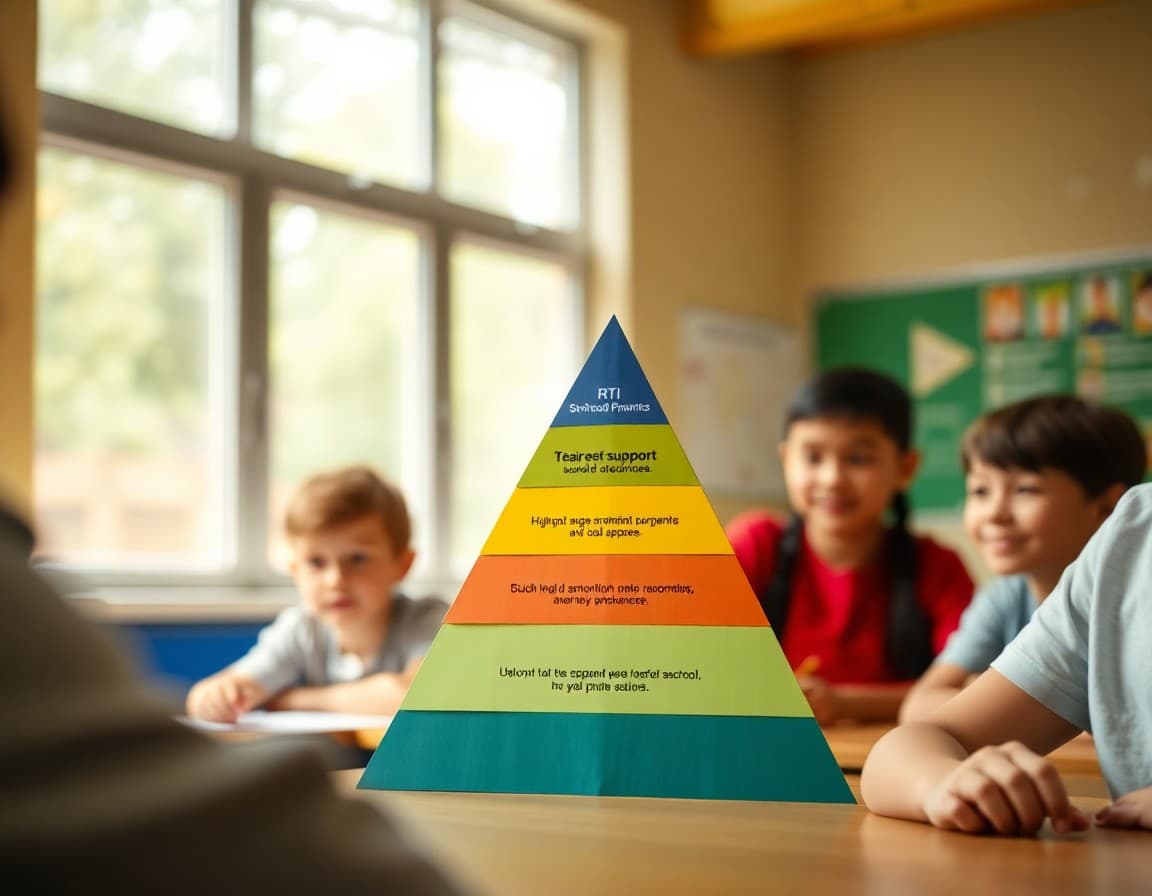
The most important reframe in any RTI newsletter is that the system applies to all students. "Our school uses a framework called Response to Intervention, or RTI, to ensure every student receives appropriate support. RTI has three tiers. Tier 1 is the high-quality instruction every student receives in the classroom. Tier 2 adds targeted small-group support for students who need extra practice in specific skills. Tier 3 is intensive individual support for students with significant needs. Most students operate primarily in Tier 1, with some brief Tier 2 support at different points in the year."
Describe what Tier 2 support looks like in practice
Families who know what Tier 2 actually looks like are less alarmed when their student is in it. "Tier 2 support typically means a small group of four to six students meets with a support teacher three to four times per week for twenty to thirty minutes. The group works on specific skills the students are developing. Students are in and out of Tier 2 groups throughout the year as their needs change." The description of a small group working on targeted skills is much less alarming than the abstract concept of being placed in intervention.
Explain how decisions about support tiers are made
Families who understand the data-driven process behind tier decisions trust it more. "Decisions about support tiers are based on universal screening data from the beginning of the year, progress monitoring data collected every two to three weeks, and teacher observation. Students move between tiers as their skills develop. Tier placement is not a fixed label." That explanation removes the fear of a permanent categorization.
Address the relationship to special education clearly
The concern families have most often about RTI is whether it means their student has or will be diagnosed with a learning disability. Address this directly. "RTI is not special education and being in Tier 2 or Tier 3 does not mean a student has a learning disability. If RTI data suggests a student might benefit from a special education evaluation, we have a separate referral and evaluation process and families are always notified and involved. Most students who receive Tier 2 support return to Tier 1 within a semester."
Invite families to ask about their student's specific tier
After explaining the framework, invite families to ask about their individual student. "If you would like to know which tier your student is currently working in and what that means for their learning support, please email me. I am happy to share that information and explain what it means in practical terms for our class."
Note that RTI includes enrichment, not just remediation
Some RTI frameworks include an enrichment strand for students who are significantly above grade level. If your school's RTI model includes this, mention it. "Our RTI system also includes a Tier 1 enrichment component for students who are significantly ahead of grade-level expectations. RTI is about meeting every student where they are, not just supporting students who are behind."
Daystage newsletters that introduce RTI early in the year create a foundation of understanding that makes every subsequent individual conversation easier.
Get one newsletter idea every week.
Free. For teachers. No spam.
Frequently asked questions
Why do families sometimes have a negative reaction to hearing their student is in RTI?
Because RTI is sometimes introduced as an indication that something is wrong rather than as a proactive support system. Families who hear 'your student has been placed in intervention' often interpret it as a warning sign. A newsletter that explains RTI as a universal system that includes supports for all learners reframes it before any individual conversation is necessary.
What should an RTI explanation in a newsletter include?
What RTI is and how the tiered system works, that Tier 1 is universal instruction that applies to all students, what Tier 2 and Tier 3 involvement looks like, what families should expect if their student receives targeted support, and how RTI relates to special education evaluation.
How do I explain RTI at the start of the year without alarming families?
Introduce it as a school-wide support framework rather than a remediation program. 'Our school uses a tiered support system to ensure every student gets what they need. This is not a label or a program for struggling students. It is how we make sure we catch and respond to learning needs early, across the full range of students.'
How does RTI relate to special education referral and how should I explain that connection?
Briefly note that RTI data can inform a special education referral but that most students who receive Tier 2 or Tier 3 support do not go on to receive special education services. Removing the implicit connection between RTI and special ed reduces family anxiety.
Can Daystage help teachers communicate about RTI in newsletters?
Yes. A Daystage newsletter with a clear RTI explainer section at the start of the year sets the right frame for any individual conversations that may follow.

Adi Ackerman
Author
Adi Ackerman is a former classroom teacher and curriculum writer with 8 years in K-8 schools. She writes about school communication, parent engagement, and what actually works in real classrooms.
More for Classroom Teachers
How to Explain Progress Monitoring to Families in Your Teacher Newsletter
Classroom Teachers · 6 min read
How to Explain Universal Screening to Families in Your Newsletter
Classroom Teachers · 6 min read
How to Explain Enrichment Pullout Programs to Families in Your Newsletter
Classroom Teachers · 6 min read
Ready to send your first newsletter?
3 newsletters free. No credit card. First one ready in under 5 minutes.
Get started free