

Teacher Newsletter for Etymology Unit: Explore Word Origins with Families
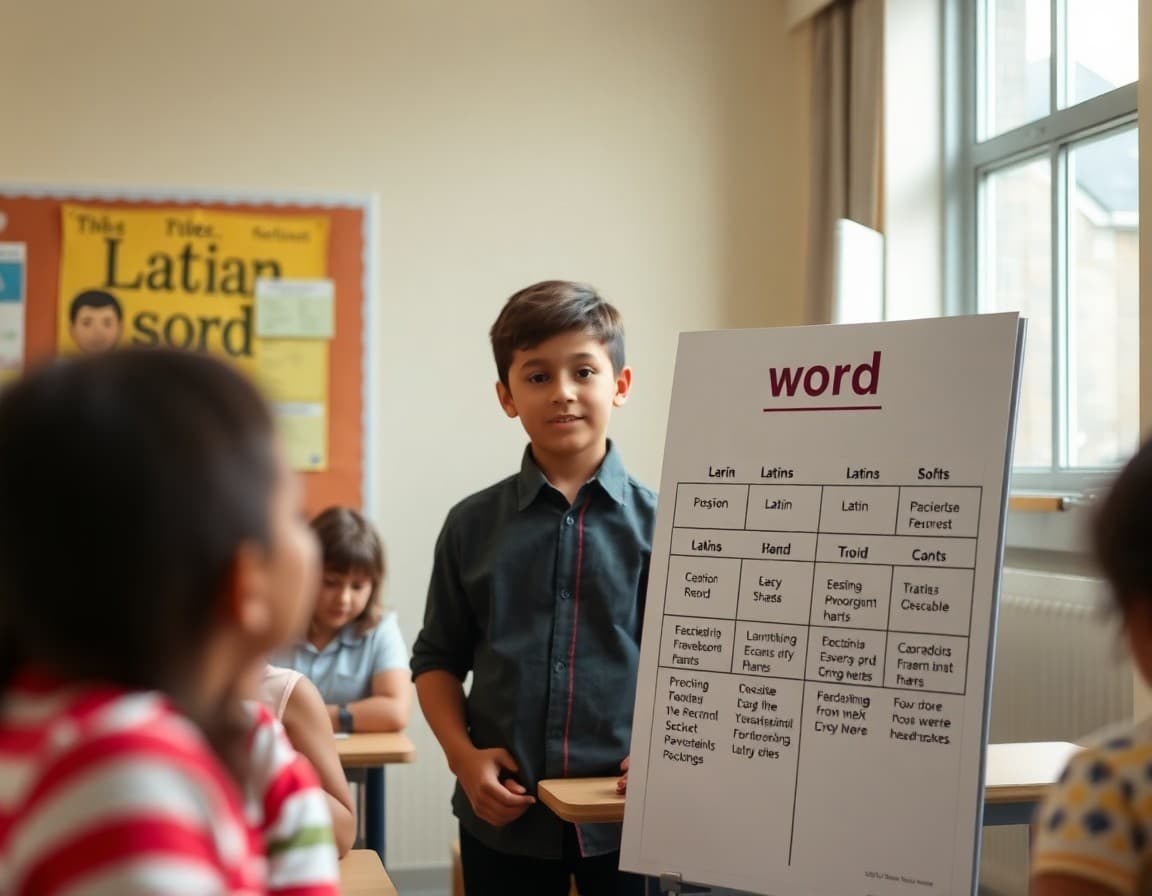
Etymology teaches students that language is not arbitrary. Every word has a history, a journey through different cultures and centuries that shaped its current meaning. When students discover that the word disaster literally means bad star or that salary comes from the Latin word for salt, they see language as a living record of human experience. Your newsletter is what brings that wonder home.
Open with a Word Story That Hooks Families
Start the newsletter with one fascinating etymology from your current unit. Pick the most surprising or counterintuitive one. The word lunatic comes from luna, the Latin word for moon, because people once believed that madness was caused by the phases of the moon. Or the word disaster comes from dis (bad) and aster (star), reflecting the ancient belief that misfortune was written in the stars. A single word story that surprises creates curiosity for everything that follows.
Explain Why Etymology Matters
Beyond being fascinating, word origins are practically useful. A student who knows that terra means earth can make educated guesses about the meanings of territory, terrestrial, Mediterranean, and extraterrestrial. Understanding word origins makes vocabulary acquisition faster and more durable because connections to known meanings anchor new words more effectively than memorization alone.
Name the Word Origins Being Studied
List the specific roots, prefixes, and origins your unit has covered with their meanings and a word family for each. Families who see the actual content can look for the roots in everyday language and reinforce them in conversation. Specificity drives engagement far more effectively than general statements about word study.
Connect Etymology to History and Culture
Words are cultural artifacts. The story of a word's origin often reveals something about the people who created it. Your newsletter can highlight one or two etymologies that connect to historical or cultural content your class is studying. That connection positions the etymology unit as interdisciplinary rather than purely linguistic.
Suggest a Family Etymology Investigation
Challenge families to look up the origin of their family name, their first names, or a word they use every day. Free online etymology dictionaries make this a quick activity. The investigation turns into a conversation about language, culture, and identity that extends the unit far beyond the classroom. Using Daystage, you can include a link to a family-friendly etymology resource directly in the newsletter.
Celebrate Student Discoveries
When students uncover a particularly surprising or meaningful etymology, share it in the newsletter. Students who see their discovery featured feel proud and motivated to keep investigating. Other families, reading about a classmate's find, become curious themselves. That kind of peer-to-peer intellectual contagion is what makes an etymology unit extend naturally beyond the three weeks you planned for it.
Get one newsletter idea every week.
Free. For teachers. No spam.
Frequently asked questions
What is etymology and why should students study it?
Etymology is the study of word origins and how words have changed meaning over time. Understanding where words come from deepens vocabulary knowledge, improves spelling, and builds historical and cultural awareness. Students who know that disaster originally meant bad star, combining dis and astrum, see language as alive and layered rather than arbitrary.
What languages are most common sources for English words?
About 60 percent of English words come from Latin or Greek roots, either directly or through French. Old English, Norse, and more recently languages like Arabic, Hindi, and Nahuatl have also contributed significantly. Your etymology unit can focus on Latin and Greek as the highest-utility foundation while acknowledging the broader linguistic richness.
How does etymology connect to history and social studies?
Words carry the history of their origins. The word salary comes from the Latin word for salt because Roman soldiers were paid in salt. Knowing that tells you something about Roman economics and the value of salt in the ancient world. Etymology is a form of cultural and historical literacy as well as linguistic literacy.
How can families explore etymology together at home?
Pick a word at dinner and look up its origin together. Many free online etymological dictionaries make this a two-minute activity. Ask your child which word history from the classroom unit surprised them most. Looking for familiar roots in the words on packaging, signs, and books during everyday activities turns etymology into an ongoing game.
What tool helps teachers send newsletters efficiently?
Daystage makes etymology unit newsletters engaging with word origin stories, student discoveries, and family activity suggestions in one polished message. The visual format supports the storytelling nature of etymology content.

Adi Ackerman
Author
Adi Ackerman is a former classroom teacher and curriculum writer with 8 years in K-8 schools. She writes about school communication, parent engagement, and what actually works in real classrooms.
More for Classroom Teachers
Teacher Newsletter for Morphology Unit: Teach Students to Decode Any Word
Classroom Teachers · 6 min read
Teacher Newsletter for Academic Vocabulary Instruction and Home Practice
Classroom Teachers · 6 min read
ELA Curriculum Update in Your Classroom Newsletter: What Parents Need to Know
Classroom Teachers · 6 min read
Ready to send your first newsletter?
3 newsletters free. No credit card. First one ready in under 5 minutes.
Get started free