
Using Your Teacher Newsletter to Reinforce the Character Counts Framework
Why Character Education Needs a Home Connection
Character Counts works when students hear the same language about character from the adults in their life, not just at school. When a parent can reference the same pillars the classroom uses, the concepts stop being school rules and start being values the family shares. That shift from compliance to character is exactly what the framework is designed to create.
Your newsletter is how you make that connection happen.
Introduce the Six Pillars in Your First Newsletter
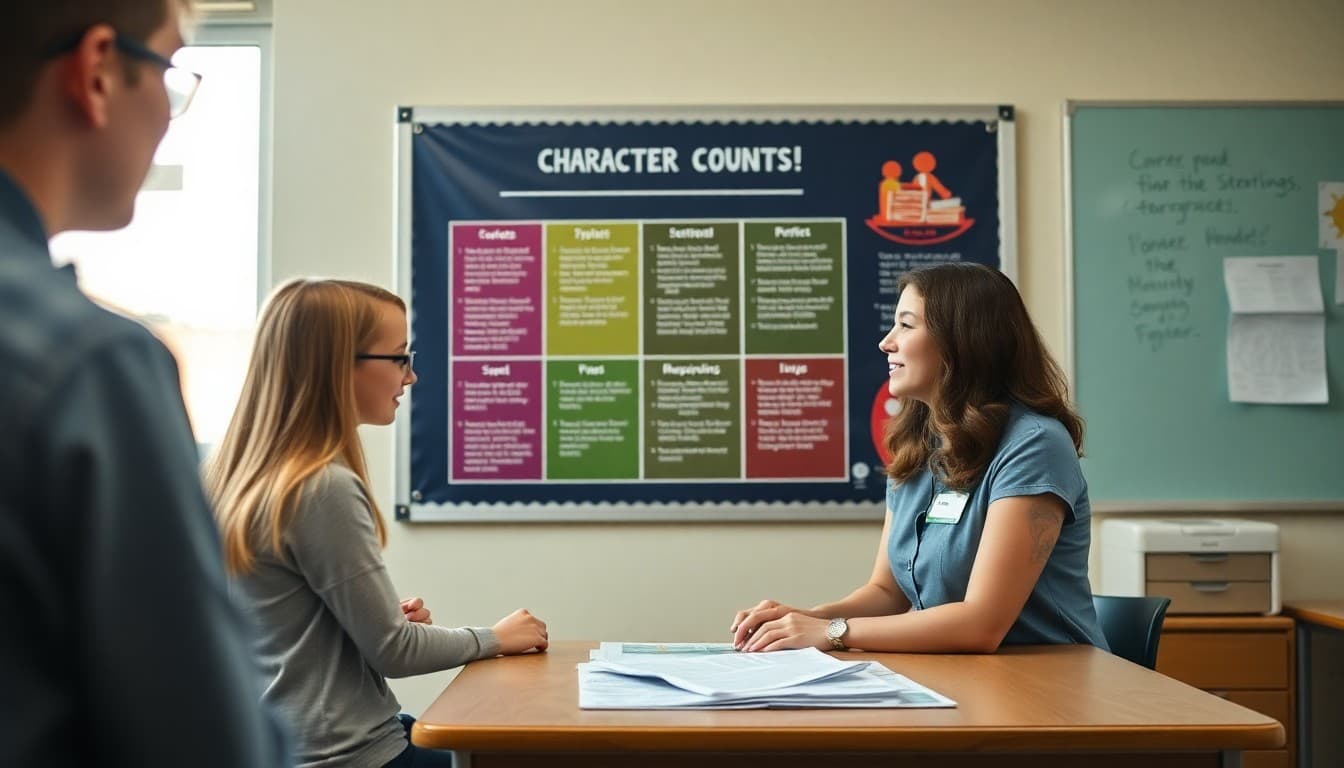
Before families can reinforce character education at home, they need to know what the pillars are. Your first newsletter of the year should name all six: Trustworthiness, Respect, Responsibility, Fairness, Caring, and Citizenship. Pair each with one concrete classroom example. Families who see "Responsibility means completing work even when it is hard" understand immediately what their child is being asked to demonstrate.
Feature One Pillar Per Month
Many schools rotate through Character Counts pillars on a monthly schedule. Aligning your newsletter spotlight to the current pillar creates consistency between what students hear in your classroom, in the hallway, and at the monthly assembly. Each newsletter month, dedicate a section to the current pillar. Share an example from your class that week, give a home conversation prompt, and keep it brief.
Celebrate Real Examples From Your Classroom
Abstract pillars become real through specific stories. "This week, Zara showed Citizenship by organizing our classroom recycling without being asked" is worth ten times more than "Citizenship is being a good community member." When families read a real story from your classroom, they have something concrete to discuss at dinner. Ask your child to tell you the story they heard in class about Zara.
Give Families a Discussion Prompt Each Month
Include one question or challenge tied to the current pillar. For Fairness month: "Ask your child about a time this week when something felt unfair and how they handled it." For Caring month: "Challenge your child to do one specific kind act for someone outside the family this week and share it at dinner." These prompts are low effort for families but create the home reinforcement that makes character education stick.
Connect Character to Academic Behavior
One of the most useful things you can do in your newsletter is show families how the pillars connect to school performance. Responsibility is doing your homework. Trustworthiness is telling the truth when you did not finish an assignment. Fairness is not copying a classmate's work. When character and academic expectations share the same language, students understand that both belong to the same standard.
Recognize Students by Their Character
When your newsletter features student recognition, name the pillar alongside the behavior. "Marcus was recognized for Caring this week when he noticed a new student was eating alone and invited him to join the group." Naming the pillar in the recognition tells students and families that you are teaching character on purpose, not just managing behavior in the moment.
Get one newsletter idea every week.
Free. For teachers. No spam.
Frequently asked questions
What are the six pillars of Character Counts?
The six pillars are Trustworthiness, Respect, Responsibility, Fairness, Caring, and Citizenship. Each pillar is a teachable character trait that schools using Character Counts integrate into curriculum, recognition, and daily interactions.
How do I introduce Character Counts to families who have never heard of it?
Keep it simple. In your first newsletter, name the six pillars and give one real example of each from your classroom. 'Responsibility means completing your work even when it's hard. Last week, our class showed responsibility by turning in every homework assignment.'
How often should I feature a Character Counts pillar in my newsletter?
Monthly works well. Many schools rotate through the pillars across the school year. Aligning your newsletter spotlight to the school-wide focus of the month keeps your communication consistent with what students hear everywhere.
What home activities can I suggest that connect to Character Counts?
Keep suggestions simple: ask your child to name a time they showed fairness this week, share a family story about a time someone demonstrated caring, or challenge them to do one act of citizenship in the community this weekend. Low-effort prompts get higher follow-through.
How does Daystage help teachers send character education newsletters efficiently?
Daystage lets you create newsletter templates with a recurring 'Character Spotlight' section. Each month you update the pillar and example, and the rest of the template stays consistent. Families quickly learn where to find the character education content.

Adi Ackerman
Author
Adi Ackerman is a former classroom teacher and curriculum writer with 8 years in K-8 schools. She writes about school communication, parent engagement, and what actually works in real classrooms.
More for Classroom Teachers
Explaining Your School PBIS Framework to Families in Your Teacher Newsletter
Classroom Teachers · 6 min read
Sharing the 7 Habits of Happy Kids With Families in Your Teacher Newsletter
Classroom Teachers · 6 min read
Using a Strength-Based Approach in Your Teacher Newsletter Communications
Classroom Teachers · 6 min read
Ready to send your first newsletter?
3 newsletters free. No credit card. First one ready in under 5 minutes.
Get started free