
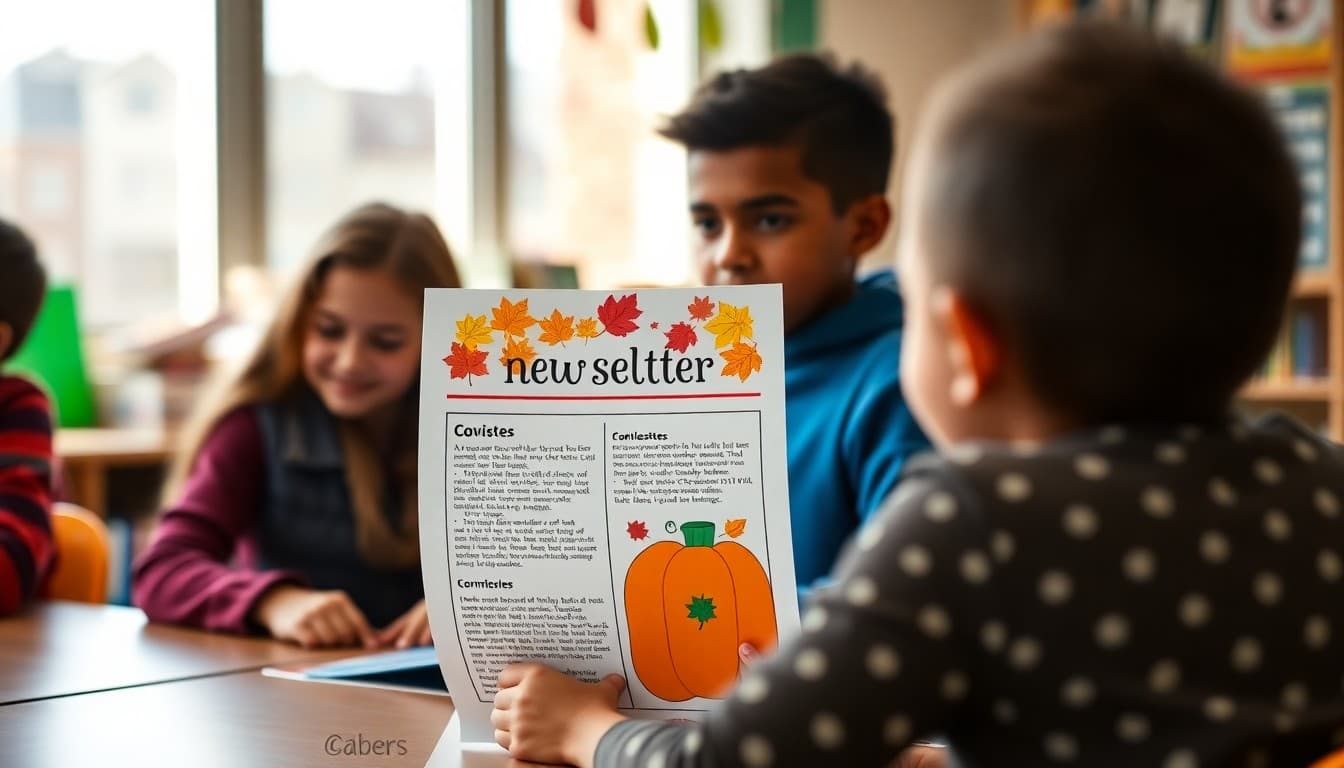
October Newsletter Ideas for Teachers: Fall Fun and Learning

October lands in the middle of the first quarter, which makes it one of the most information-dense months of the school year. Halloween logistics, mid-quarter academic updates, fall conferences for some schools, and the rush of content before November: families need a lot of information in October. A well-organized newsletter puts it all in one place before the question emails start arriving.
Halloween: Communicate Early and Specifically
Nothing generates more October parent emails than ambiguous Halloween policies. Whether your class celebrates with a parade, a party, or nothing at all, tell families clearly and early. If costumes are allowed, specify any restrictions. If there is a party, give the exact time and explain volunteer opportunities. If your school has moved to an Autumn Festival or non-costume celebration, explain why and what it involves. One specific paragraph saves you from 30 individual responses.
Mid-Quarter Academic Update
By October, the first quarter is half over. Give families a quick overview of what the class has covered and what skills students are working on. "We have completed our first writing unit on personal narrative and are moving into informational writing. In math, we have finished our unit on place value and are now working on addition and subtraction with larger numbers." Two sentences per subject area is enough. This context makes mid-quarter grades make sense when they arrive.
Upcoming Assessments and Projects
List any assessments or projects due in the next two to three weeks with specific dates. Families who know about a science project due October 28th can plan accordingly. Families who find out about it October 25th are stressed and resentful. A brief upcoming deadlines section in your October newsletter handles this.
Fall Conferences: If Applicable
If your school schedules fall parent-teacher conferences in October or November, use your October newsletter to prepare families. Tell them what to expect: how long each conference is, what you will cover, whether student work will be shared, and how to sign up or respond to an invitation. If conferences are not happening in October, note when they are scheduled so families can plan.
October Seasonal Content in the Curriculum
Many October curricula include natural connections to the season: fall harvest in science, election awareness in social studies, or narrative writing that uses autumn imagery. Mentioning these in your newsletter gives families easy conversation starters at home. "Ask your child what they learned about how leaves change color this week" is the kind of practical connection that extends school learning into family time.
Volunteer and Contribution Opportunities
October often includes class events that benefit from family help. Be specific about what you need: two volunteers for the Halloween party from 1:00 to 2:30 PM, or three bags of individually wrapped snacks by October 30th. Vague asks like "help is welcome" generate no responses. Specific asks with dates and requirements get covered quickly.
A Template Section for October Dates
End your newsletter with a clean October dates list: field trips, events, assessment windows, early dismissals, and any important deadlines. A well-formatted dates list at the bottom of a newsletter gets referenced repeatedly throughout the month. Families will look at it, save it, and come back to it. It is one of the highest-value pieces of information you can include.
Get one newsletter idea every week.
Free. For teachers. No spam.
Frequently asked questions
What should teachers include in an October classroom newsletter?
October newsletters should cover Halloween event logistics if your school participates, fall conference scheduling if coming up, mid-quarter academic progress context, upcoming projects and due dates, and any October seasonal content topics like fall science units or harvest themes. Keep it to one page and three to four topics.
How should teachers handle Halloween in the classroom newsletter?
Be specific about your school and classroom policies: whether costumes are allowed, what time the party or event is, what food policies apply, and how families can contribute or volunteer. Ambiguity around Halloween generates more parent questions than almost any other topic in October.
What academic updates should teachers communicate in October?
October is typically mid-first-quarter, which means progress reports may be coming. Include a note on what the first quarter has covered, what skills are being assessed, and what is coming in the second half of Q1. Families who get academic context mid-quarter are less surprised by report cards.
What is a good length for an October newsletter?
One page, ideally 300 to 500 words for the written content. If you include a list of dates or a weekly schedule, that can extend it slightly. Newsletters that try to cover everything in October become overwhelming. Pick the four or five most important pieces of information and cut the rest.
Is there a newsletter tool that makes October communications easier?
Daystage is designed for exactly this. You can create a visually polished October newsletter with event blocks for Halloween and conference dates, a weekly schedule view, and custom sections for academic updates. Families open these at much higher rates than plain text emails.

Adi Ackerman
Author
Adi Ackerman is a former classroom teacher and curriculum writer with 8 years in K-8 schools. She writes about school communication, parent engagement, and what actually works in real classrooms.
More for Classroom Teachers
October Newsletter Ideas for 5th Grade Teachers: What to Send This Month
Classroom Teachers · 6 min read
October Newsletter Ideas for Kindergarten Teachers: What to Send This Month
Classroom Teachers · 6 min read
How to Write About Tests and Quizzes in Your Classroom Newsletter
Classroom Teachers · 5 min read
Ready to send your first newsletter?
3 newsletters free. No credit card. First one ready in under 5 minutes.
Get started free