
November Kindergarten Parent Newsletter Template: What to Include This Month
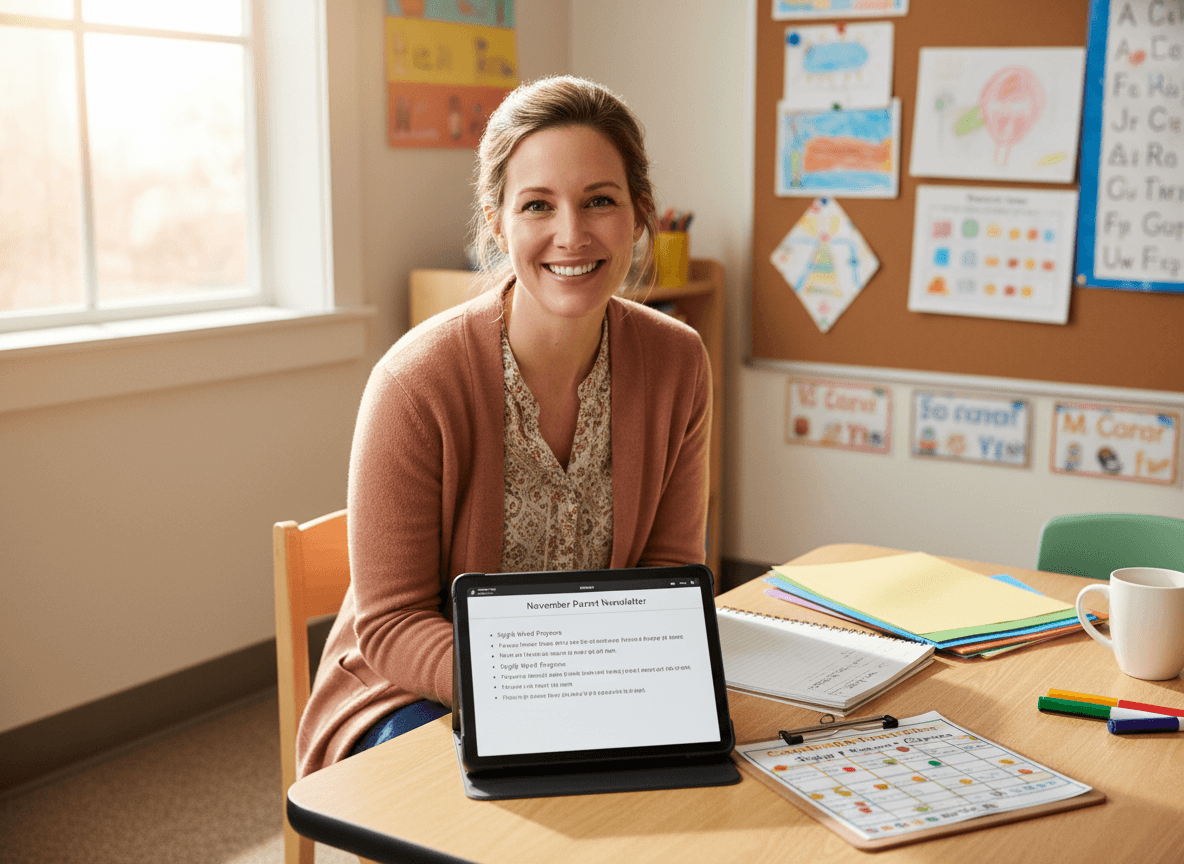
November is a full month in kindergarten. The Thanksgiving and gratitude unit brings rich conversations about family and community, fall conferences give you real time with each family, and the first long break of the year is on the horizon. A November newsletter to kindergarten parents covers the learning, manages the logistics, and helps families arrive at Thanksgiving feeling connected to what their child has been doing in school.
The gratitude and Thanksgiving unit
Share what your class is exploring in the November thematic unit. If you are doing gratitude journals, where children draw or write one thing they are thankful for each day, describe what that looks like and invite families to ask their child what they wrote. If you are exploring family traditions from different cultures, name that explicitly so families understand the scope of the unit goes beyond a single cultural narrative.
If your class is making a Thanksgiving-related craft or doing a small sharing activity, let families know. Kindergartners love telling their families about what they made, and families who know to ask will get much more than "I don't know" as an answer at pickup.
Family tree and heritage project
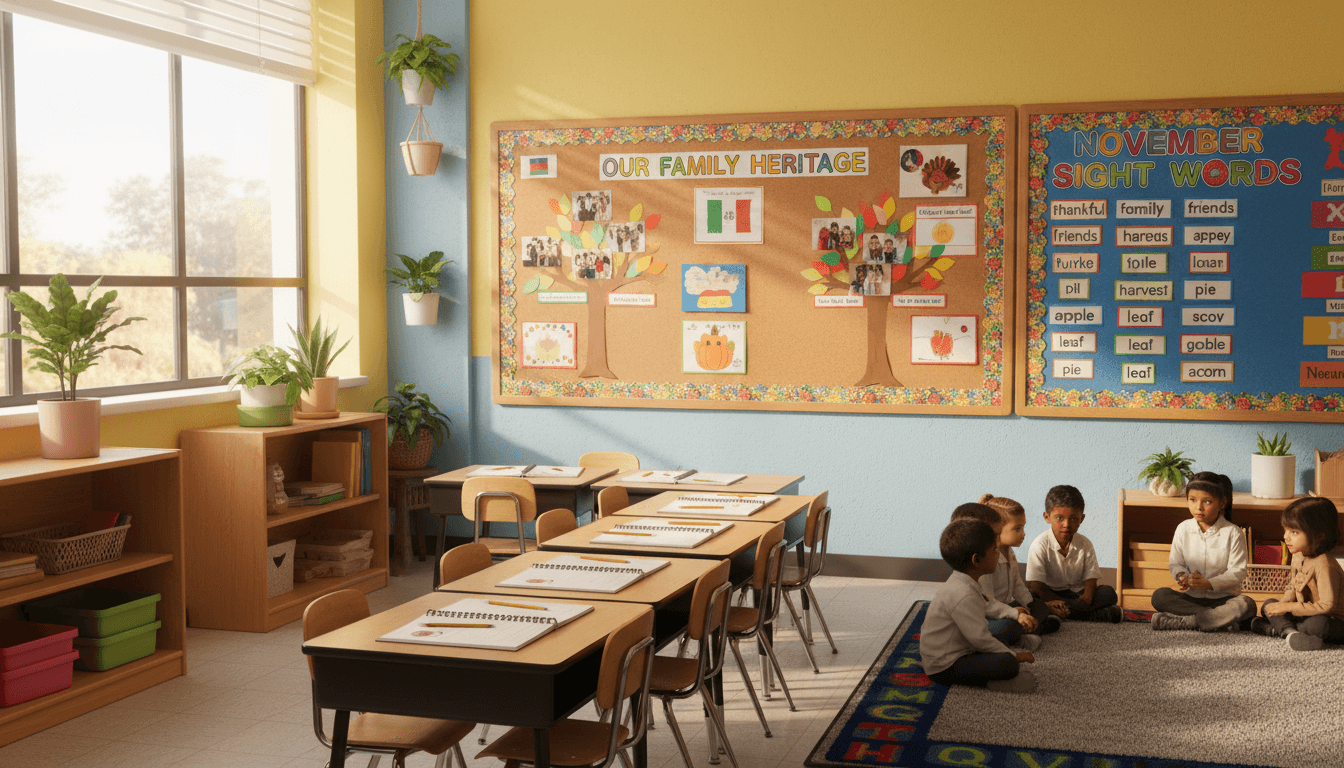
Many kindergarten classrooms do a family heritage project in November, whether that is a family tree, a "this is where my family comes from" map, or a traditions share-out. If you are doing one, explain the project and what families need to provide: a few photos, names of grandparents or extended family, information about where family members were born, or a family tradition they are willing to share with the class.
Be sensitive in how you frame this. Not all kindergartners have the same family structure, and some families have complicated histories with immigration or family separation. A flexible framing, such as "the people who are most important in your child's life" rather than a strict family tree, is more inclusive and results in better participation.
Sight word and literacy progress update
By November, most kindergartners have a growing set of sight words and are working on letter-sound blending. Update families on the current sight word list and share how practice has been going in class. Let them know which phonics patterns you have introduced and which ones are coming in December.
If families are practicing at home with flashcards or word games, acknowledge that effort directly. Consistent at-home practice makes a real difference by this point in the year, and telling families so is both true and motivating.
Early literacy milestones to watch for
Give families a clear picture of what on-track kindergarten literacy looks like in November. By mid-fall, children who are developing on pace typically recognize most uppercase letters and many lowercase letters, can produce the sounds for the letters they know, recognize several sight words by sight, and are beginning to blend sounds together to decode very simple words. They may also be starting to write their own name and a few familiar words independently.
Families who know these benchmarks are better equipped to support learning at home and to flag any concerns that need your attention. Remind families that range is wide in kindergarten and that you will be sharing individual assessment information at conferences.
Fall conferences: what to expect
If you are holding fall parent-teacher conferences in November or early December, use the newsletter to set expectations. Share the dates, sign-up process, and length of each conference. Tell families what you will cover: assessment results, work samples, academic strengths and areas for growth, and social-emotional development. Invite families to come with questions.
A brief note that conferences are a conversation, not a report card reading, helps families feel less anxious walking in. Families who arrive prepared to talk and share what they observe at home are the most productive conference partners.
Attendance reminder before the break
November often sees a dip in attendance as the holiday approaches, and in kindergarten, missed days have a real impact on the routines and skills that are still being built. A brief, non-judgmental reminder in the November newsletter about the importance of consistent attendance through the end of the month is appropriate. Name the specific dates school is in session and the Thanksgiving break dates clearly so families can plan accordingly.
November reminders and upcoming dates
Close the newsletter with a scannable list of November dates: conference sign-up deadline, any special November events or assemblies, the Thanksgiving break schedule, and any supply needs or volunteer opportunities. Families who can find dates quickly in the newsletter are less likely to miss something important in a month that is already full of calendaring for most households.
Get one newsletter idea every week.
Free. For teachers. No spam.
Frequently asked questions
What should a November kindergarten newsletter include?
November newsletters for kindergarten parents typically cover the Thanksgiving or gratitude unit, any family heritage or cultural project, a sight word and literacy progress update, early literacy milestones families can watch for at home, fall conference scheduling if conferences are happening, and an attendance reminder before the November break. Families appreciate knowing both what their child is learning and what milestones indicate healthy progress at this point in the year.
How do I handle Thanksgiving in a kindergarten newsletter inclusively?
Focus on the gratitude and community themes rather than a historically simplified Pilgrim-and-Native narrative. Share what the class is exploring: gratitude practices, things students are thankful for, family traditions from different cultures, and the idea of sharing and community. If your class includes Native American students or families, be especially thoughtful about avoiding the traditional Pilgrim-and-Indian story without context. A brief, inclusive framing in the newsletter signals to all families that the classroom reflects their children.
What early literacy milestones should I mention in a November kindergarten newsletter?
By November, kindergartners who are on track are typically recognizing most uppercase and many lowercase letters, producing the sounds for the letters they know, reading a handful of sight words by sight, and beginning to blend two or three sounds together to decode simple words like 'at' or 'in.' Families who know what to listen for can reinforce these skills at home and flag anything that seems like it is not developing. Sharing these milestones also helps parents understand that a child who cannot yet read full sentences in November is completely normal.
How should I schedule fall conferences in the November newsletter?
Include the conference dates, the sign-up process, the length of each conference, and what families can expect to discuss. Let them know you will share assessment results, show examples of their child's work, and talk about both strengths and areas where you are focusing your instruction. Give families a way to submit a question in advance if they want to, since parents who feel prepared for a conference are more engaged participants. Close with a reminder that you want to hear from them as much as they want to hear from you.
What newsletter tool works best for November kindergarten parent newsletters?
Daystage is designed for teachers who want to send a monthly newsletter that families actually read. A November newsletter covering the gratitude unit, heritage projects, literacy milestones, conferences, and attendance reminders fits cleanly in one Daystage send. It arrives in parents' inboxes as a well-formatted, readable email, and most teachers put the whole thing together in under twenty minutes, even with a conference season happening at the same time.

Adi Ackerman
Author
Adi Ackerman is a former classroom teacher and curriculum writer with 8 years in K-8 schools. She writes about school communication, parent engagement, and what actually works in real classrooms.
More for Classroom Teachers
ELA Curriculum Update in Your Classroom Newsletter: What Parents Need to Know
Classroom Teachers · 6 min read
Communicating a Community Service Project in Your Classroom Newsletter
Classroom Teachers · 5 min read
Cultural Heritage Month in Your Classroom Newsletter: What to Communicate
Classroom Teachers · 6 min read
Ready to send your first newsletter?
3 newsletters free. No credit card. First one ready in under 5 minutes.
Get started free