
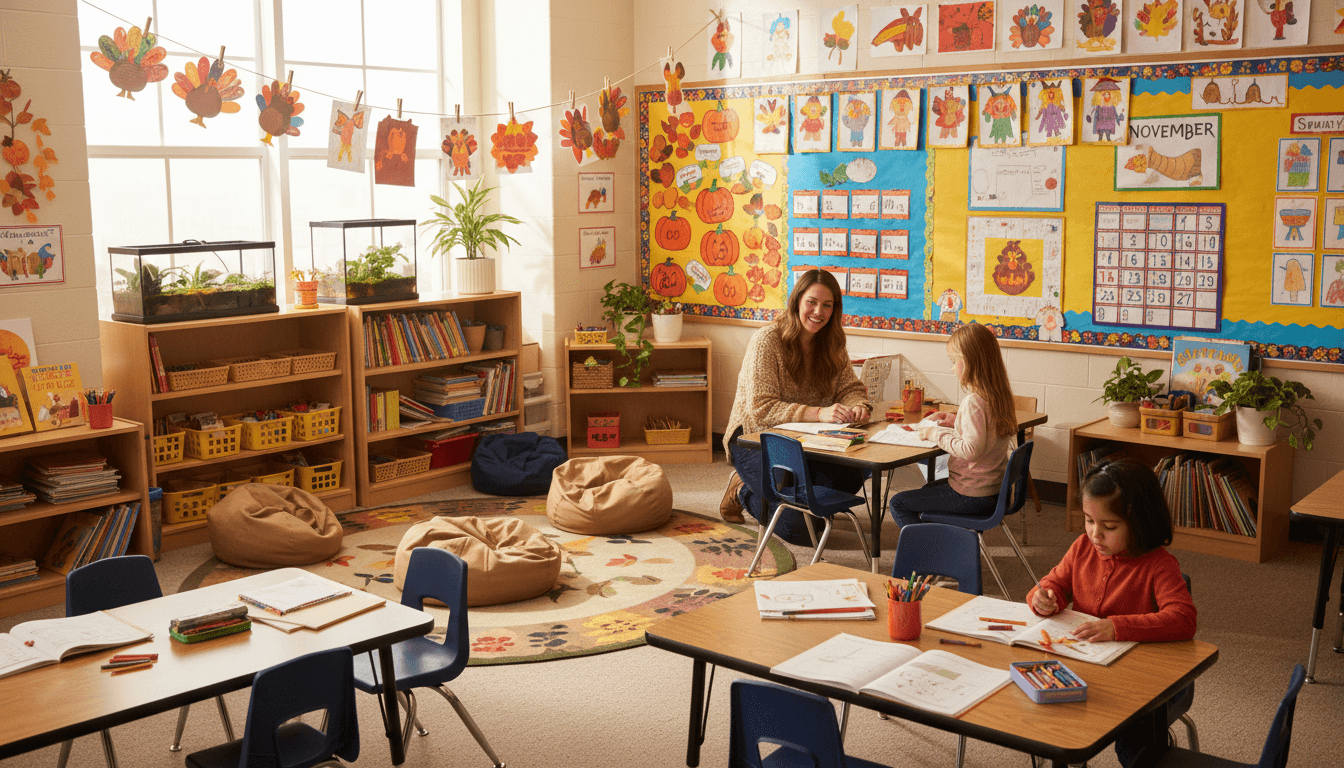
November Newsletter Ideas for 1st Grade Teachers: What to Send This Month
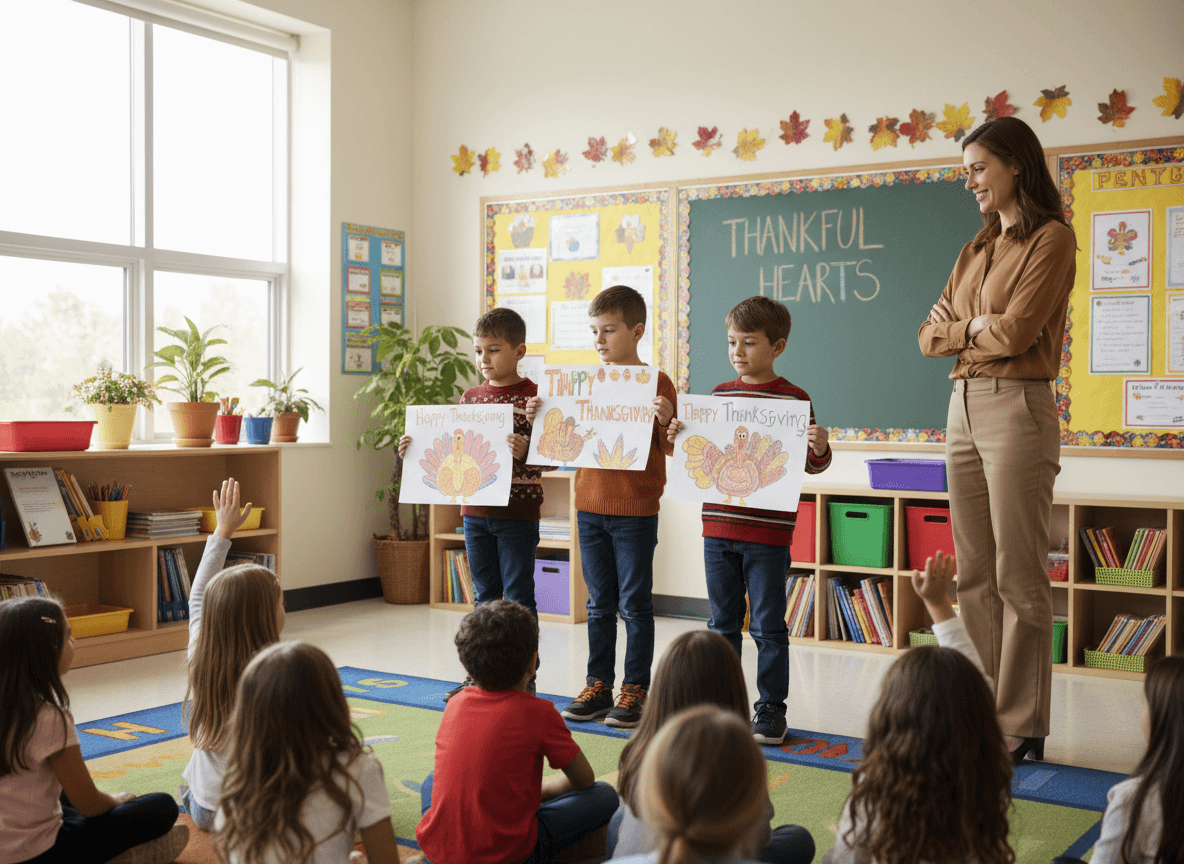
November is a big month for 1st grade: reading benchmarks, parent-teacher conferences in many schools, Thanksgiving projects, a short week before break, and the first real signs of the holiday energy that will build through December. Your November newsletter keeps parents informed and connected through all of it.
Lead with the reading update
Reading is the primary academic focus of 1st grade and parents watch it closely. By November, you have assessment data and enough classroom observation to give a meaningful update. Describe where the class is broadly: fluency on sight words, decoding strategies the class is building, and what the reading groups are working on in guided reading.
A general progress note reassures parents who are watching anxiously for signs their child is on track. Parents who do not hear anything about reading tend to assume the worst. Consistent updates prevent that.
Prepare parents for conferences
If parent-teacher conferences fall in November, use your newsletter to prepare parents to make the most of the time. Include the scheduling link or process, the meeting format, and one or two questions they might think about in advance. "What is one thing I can do at home to support reading fluency right now?" is more productive than a blank 15-minute slot with no preparation on either side.
Even if conferences are scheduled through a different system, a reminder in the newsletter increases the sign-up rate and reduces no-shows.
Update on sight words and phonics
First grade sight word programs move fast. By November, students have typically covered their first 30 to 50 words depending on the curriculum. Your November newsletter should note how the class is doing with the current word set, what the next group looks like, and what practice at home still helps most. Families who have let the nightly word review slip benefit from a specific reminder here.
Describe the November projects and themes
Thanksgiving and fall themes show up in 1st grade writing, reading, and art in November. Tell parents what projects are coming, what the learning goals are, and whether any project requires something from home. A family photo for a project, a sentence dictated by a parent about a family tradition, or a small item brought in for a "things I'm thankful for" display all need advance notice. Give at least ten days.
Address the November schedule clearly
November usually includes at least one early release day, conference days, and the short week before Thanksgiving. List every schedule change with dates and times in your newsletter. Parents who know the schedule in advance can arrange childcare, plan pickups, and avoid the scramble that comes with a last-minute reminder.
Acknowledge the pre-break energy
First graders feel the approaching break and it shows up in their behavior and focus. The week before Thanksgiving in a 1st grade classroom is genuinely lively. Telling parents this in your November newsletter, without alarm and without extensive apology, gives them a useful frame for afternoon pickups that week. "Your child may come home more wound up than usual the week before break. We have strong routines in place and the class handles it well."
Close with what is coming in December
Give parents a brief preview of what December looks like so they are not surprised when the pace shifts. Holiday projects, any classroom celebrations, winter break dates, and whether there is anything they need to contribute or plan for. A forward-looking close in the November newsletter prevents a flurry of December questions that could have been answered now.
Daystage makes it easy to send a November newsletter that covers reading benchmarks, conference details, project descriptions, and the November schedule in one clean email. Your August template carries forward. You update the content for November, add a photo from the classroom if you have one, and send.
Get one newsletter idea every week.
Free. For teachers. No spam.
Frequently asked questions
What reading benchmark update belongs in the November 1st grade newsletter?
By November, most 1st graders have completed their first formal reading benchmark assessment. Your newsletter should describe where the class is broadly: how many students are reading at or above the expected level, what skills the class is building collectively, and what parents can do at home to support continued growth. Avoid naming individual levels in the newsletter itself. Use conference time for those conversations.
How should the November 1st grade newsletter handle parent-teacher conferences?
If conferences fall in November, your newsletter should include the scheduling link or instructions, the format for each meeting, and what parents should bring or think about in advance. A suggested question like 'What is one thing I can do at home to support my child's reading right now?' is more useful than an open-ended invitation to talk. Prepared parents make better use of the 15-minute slot.
What sight word update makes sense in a November 1st grade newsletter?
By November, first graders have typically covered 30 to 50 sight words depending on the program. A progress note explaining how the class is doing collectively and what the next set of words looks like helps parents maintain their practice routine at home. If a child is struggling with fluency on the current list, that is a conference conversation, not a newsletter item.
Should the November 1st grade newsletter address the holiday energy?
Yes, with a light touch. First graders feel the pull of upcoming holidays and it shows in their behavior and focus. Telling parents that the week before Thanksgiving tends to bring extra energy, and that you have routines in place, is honest and helpful. It also gives parents a framework for the afternoon pickup mood without them assuming something went wrong at school.
What is the best tool for sending a November 1st Grade teacher newsletter?
Daystage helps 1st grade teachers send newsletters with a reading update, upcoming dates, and homework reminders in a clean, consistent format. Once your section structure is set from August, November is just a content update. You spend about 20 minutes writing the new content and hit send. Parents get it in their inbox without a PDF attachment or a school app they have to remember to open.

Adi Ackerman
Author
Adi Ackerman is a former classroom teacher and curriculum writer with 8 years in K-8 schools. She writes about school communication, parent engagement, and what actually works in real classrooms.
More for Classroom Teachers
Ready to send your first newsletter?
3 newsletters free. No credit card. First one ready in under 5 minutes.
Get started free