
May Newsletter Ideas for 5th Grade Teachers: What to Send This Month

May in fifth grade carries more weight than any other month of elementary school. State testing is behind you, the capstone project is wrapping up, and every family in your class is thinking about the same thing: middle school. A well-written May newsletter addresses all of it, gives parents accurate information about where their child stands, and sets everyone up for a confident finish to elementary school.
Lead with the middle school transition
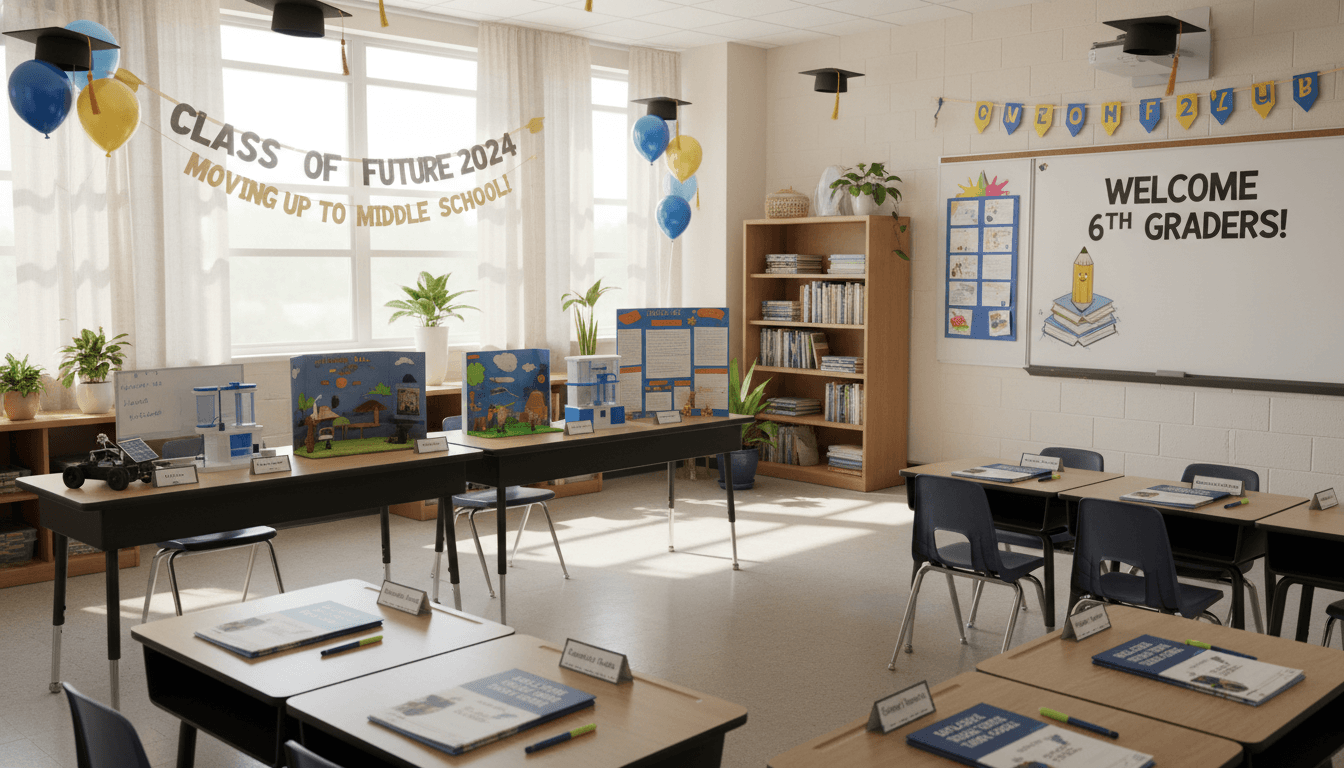
The middle school transition is the first thing fifth grade families want to hear about in May, and it deserves the lead position in your newsletter. Cover the practical details: orientation dates, registration deadlines for electives or specials, what a typical middle school day looks like, and who to contact at the middle school with questions.
Parents who receive specific, organized information from the teacher feel significantly less anxious than parents who are piecing it together from school website pages and word of mouth. Your newsletter is often the most trusted source of information families have, and this month that trust matters most.
Address the emotional side of leaving elementary school
Fifth graders feel the weight of this transition even when they act like they do not. Some are excited, some are genuinely nervous, and most are a mix of both. A brief section of the newsletter that normalizes the range of feelings, and gives parents language for talking about it at home, is one of the most useful things you can send this month.
Let parents know that conversations about middle school are most helpful when they are curious and calm rather than warning-heavy. Suggesting that families ask open questions, "What are you most looking forward to?" rather than "Are you worried about getting lost?", gives parents something practical to do with the advice.
Share state test results in context
State test scores arrive in May for many fifth grade classes. Communicate them clearly in the newsletter, explaining what the assessments measure and what proficiency at the fifth grade level means for middle school readiness. Avoid leaving parents to interpret scores on their own, because families who do not have context tend to read too much or too little into the numbers.
If the class overall showed strong growth, name it. If there are areas where students are still developing, name the academic supports available. Individual scores go home separately, but the newsletter can set the frame for how families receive that information.
Showcase the end-of-year capstone
The capstone project is one of the defining experiences of fifth grade for many students. Whether it is a research paper, a multimedia presentation, a community action project, or a science fair entry, it represents the synthesis of skills built across the year. Feature it in the newsletter with a photo, a description of the process, and a student quote or two if you have them.
This is also the project parents are most likely to want to attend or hear about if there is a presentation component. Include the date and any logistics for families who want to see the work.
Reflect on fifth grade academic growth
May is the right moment to step back and name what the class built over the year. Fifth graders grew as readers, writers, mathematicians, researchers, and thinkers in ways that are worth stating plainly. A brief reflection on where students started in September and where they are now gives parents a sense of the year's arc, and reminds them that the daily work added up to something real.
Give families a summer preparation list
Parents want to know how to help their child prepare for middle school over the summer. Keep your recommendations short and realistic: read regularly, practice organizational skills, get enough sleep, and stay curious. If your school has a summer reading list or math review packet for incoming sixth graders, include a link or note about where to find it. Families appreciate a concrete list more than general encouragement.
Close with a real goodbye
A fifth grade May newsletter deserves a closing paragraph that means something. You spent a year with these kids. Name something specific about what you watched them become, or a moment from the year that captures the class. A closing that is honest and specific is what families remember long after the school year ends.
Daystage makes it easy to send a May fifth grade newsletter that covers the middle school transition, test results, capstone projects, and a genuine send-off, all in one clean layout that families will actually read before the last day arrives.
Get one newsletter idea every week.
Free. For teachers. No spam.
Frequently asked questions
What should a fifth grade May newsletter prioritize above all else?
The middle school transition is the single most important topic for fifth grade families in May. Parents have questions about schedules, lockers, electives, lunch, and how to support their child emotionally through the change. A newsletter that addresses those questions directly, with specific information about your school's transition supports, helps families feel prepared rather than anxious. Everything else in the newsletter, including test results and capstone projects, can follow from there.
How should a fifth grade teacher handle state test results in the May newsletter?
Acknowledge them clearly and put the scores in context. Explain what the assessments measure, what proficiency looks like at the fifth grade level, and how the results connect to middle school readiness. If the class performed well overall, celebrate that. If there are areas where students still need growth, name the supports your school has in place. Individual scores should be shared privately, but the newsletter can frame how to interpret results without alarm.
What is an end-of-year capstone project and how do I feature it in a newsletter?
A capstone project is typically a culminating research or creative project that draws on the skills students built across the year. In fifth grade this might be a research paper, a multimedia presentation, a community service project, or a science experiment with a full write-up. In the newsletter, describe what students had to produce, what skills they used, and share a photo or a student quote if you can. Parents who see capstone work understand that the end of the year is still full of real learning.
How do I help parents support their child emotionally through the elementary-to-middle transition?
Give them specific language to use at home. Tell parents to acknowledge that middle school is a real change and that feeling nervous is normal. Suggest they ask open questions rather than pressure-testing their child with warnings. Let families know what your school does to ease the transition, whether that is an orientation day, a buddy program, or a tour of the building. Parents who have a script for the conversation are less likely to accidentally amplify their child's anxiety.
What newsletter tool works best for fifth grade teachers?
Daystage is built for teachers who need to communicate a lot of important information without spending hours on formatting. A May fifth grade newsletter covering the middle school transition, state test results, capstone projects, and end-of-year logistics is exactly the kind of complex send Daystage handles well. The platform keeps everything in one clean layout that parents open, read, and actually act on.

Adi Ackerman
Author
Adi Ackerman is a former classroom teacher and curriculum writer with 8 years in K-8 schools. She writes about school communication, parent engagement, and what actually works in real classrooms.
More for Classroom Teachers
ELA Curriculum Update in Your Classroom Newsletter: What Parents Need to Know
Classroom Teachers · 6 min read
Communicating a Community Service Project in Your Classroom Newsletter
Classroom Teachers · 5 min read
Cultural Heritage Month in Your Classroom Newsletter: What to Communicate
Classroom Teachers · 6 min read
Ready to send your first newsletter?
3 newsletters free. No credit card. First one ready in under 5 minutes.
Get started free