
March Newsletter Ideas for 4th Grade Teachers: What to Send This Month
March in 4th grade is one of the busiest months of the year. Research projects are heading toward presentations. Spring testing is on the calendar. Women's History Month deserves real academic attention. And spring break is approaching with all the logistics that come with it. Your March newsletter is how you keep parents oriented, excited, and prepared for the final ten weeks of the school year.
Share the research project presentation schedule
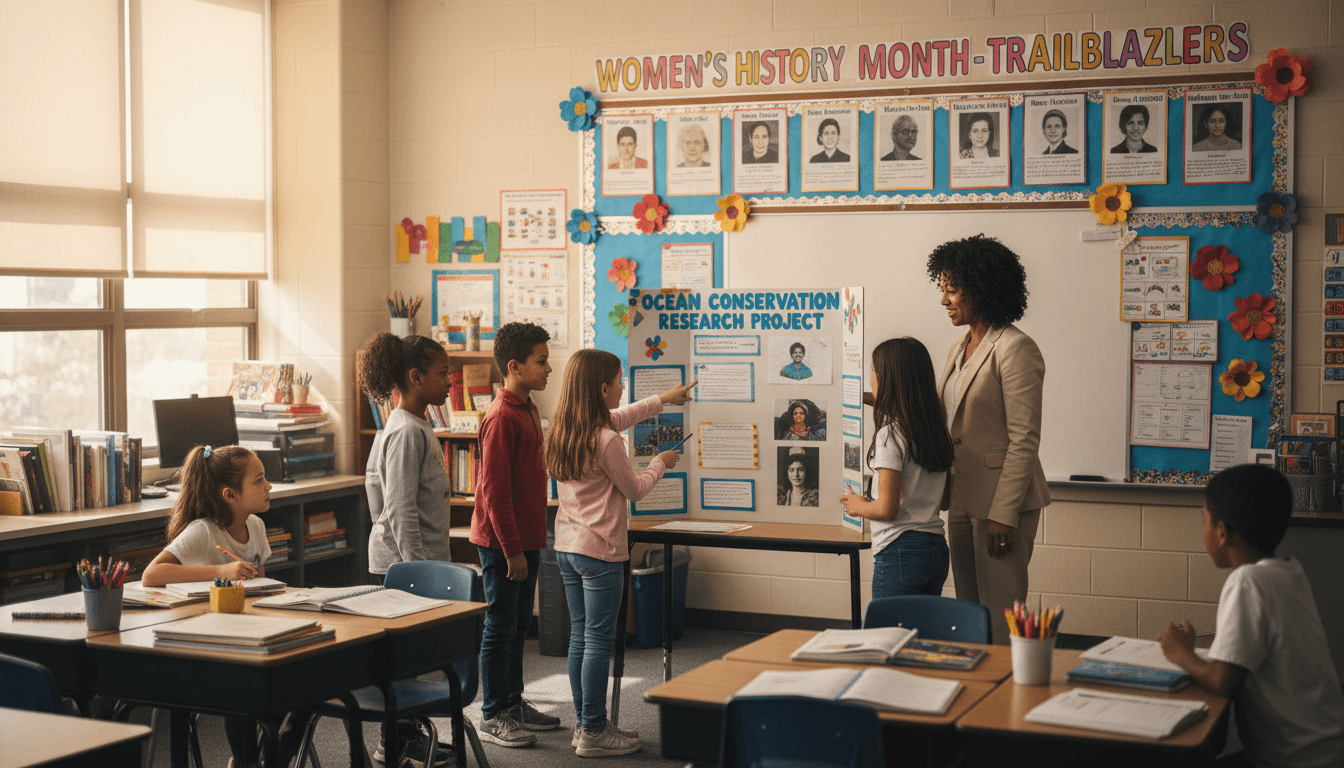
If your class has been working on a research writing project, March is often when presentations happen. Your newsletter should give parents the full picture: what the project is, how students are presenting their work, when presentations happen, and whether parents are welcome to attend.
Fourth grade research presentations are meaningful academic events. Students have spent weeks learning to gather information from multiple sources and synthesize it into a coherent piece. Giving parents enough advance notice to attend, and framing the event as an academic achievement, raises the stakes in the best way. Students who know their parents might come work harder on the final draft.
Connect Women's History Month to biography writing
Fourth grade is an ideal year for biography-driven Women's History Month work. Students are capable of independent research, selecting credible sources, and writing an organized piece that goes beyond surface-level facts. If your class is researching and writing about women scientists, civil rights leaders, athletes, or artists, name the project in your newsletter and describe what the finished work looks like.
Parents who understand the academic goal behind Women's History Month projects support the work at home differently. They ask their child questions about their research, visit the library together, and treat the assignment as the substantive academic work it is.
Address spring testing clearly
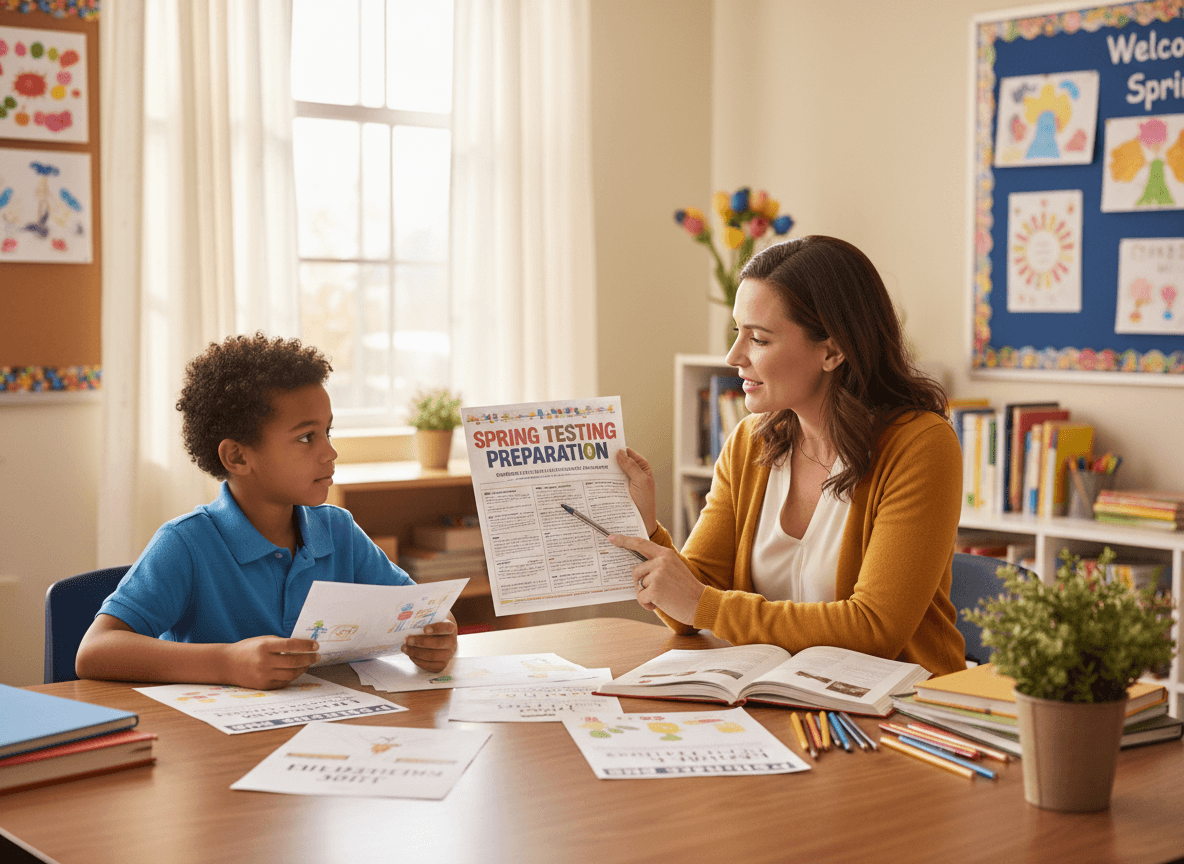
If your district runs spring state testing, your March newsletter should name the window and describe what it covers. Fourth grade state tests typically include ELA reading and writing components and a math component. Some states include science in grade four as well.
Tell parents the specific dates, note any schedule changes on testing days, and give them two or three concrete things to do at home: maintain consistent sleep, have a calm morning routine on testing days, and remind their child that the test is a snapshot, not a verdict. Parents who are calm and specific help their children approach testing with confidence.
Preview spring break and a reading habit for the break
Spring break lands at a sensitive moment in 4th grade. The week off can interrupt the reading and writing habits that have been building all year. Your newsletter should give parents the exact break dates, the return date, and a specific reading suggestion for the week: thirty minutes of independent reading each day, a trip to the library, or choosing a book connected to the biography project the class is working on.
Fourth graders who maintain their reading habit over spring break return noticeably more ready for the final stretch than those who do not. That is worth naming directly.
Update parents on math this month
March 4th grade math often covers multi-step word problems, fraction operations, and the beginning of decimal concepts. If your class is preparing for a math assessment, name what skills are being tested and what home practice would help. For fractions and decimals, a brief explanation of what the vocabulary means, and a simple way to practice, goes further than a generic "support math at home."
Name what the final ten weeks look like
March is the right time to give parents a roadmap of the rest of the year. What writing units are coming after testing? What science or social studies content is still ahead? What end-of-year events or projects should families mark on the calendar? A brief preview builds excitement and helps parents plan around the final stretch rather than treating April and May as time to coast.
Close with a clear family action for this month
End with one specific suggestion tied to March. Attend the research presentation if at all possible. Read together for thirty minutes during spring break. Review the fraction vocabulary before the next math assessment. One concrete ask, tied directly to what is happening in school right now, is what parents remember and act on.
Daystage makes it easy to build a March 4th grade newsletter with research project updates, testing details, and Women's History Month content in one clean, readable send. Parents get consistent information in their inbox every week, and the structure carries through the rest of the year with minimal effort.
Get one newsletter idea every week.
Free. For teachers. No spam.
Frequently asked questions
What should a 4th grade March newsletter lead with?
Lead with whatever is most immediately relevant to parents right now: the research project presentation schedule, the spring testing window, or the Women's History Month biography project if that is what is occupying most of the class time. Prioritize the information that requires parent action or attendance. Everything else can follow. A March 4th grade newsletter that opens with actionable information gets read more carefully than one that leads with general updates.
How should research project presentations appear in a 4th grade March newsletter?
Be specific. Name what the project is, what format the presentation takes, when it happens, and whether parents are invited to attend. Fourth grade research presentations are often a source of pride for students and parents. Giving families enough advance notice to arrange their schedule to attend signals that you take the work seriously. Also note what support at home is appropriate for the final preparation stage.
What does Women's History Month look like in 4th grade and how should the newsletter describe it?
Fourth grade Women's History Month work typically involves independent biography research, persuasive or informational writing about a woman who made a historical impact, and sometimes oral presentation. Your newsletter should name the women students are researching, the writing genre the class is using, and the academic standard the project addresses. Parents who see the rigor respond more seriously than parents who think it is a craft project.
How should a 4th grade newsletter address spring testing without creating anxiety?
State the testing window calmly and specifically. Name the dates, the subjects, and what students should focus on in the weeks before. Then tell parents the single most useful thing they can do: maintain routine. Good sleep, a consistent morning, and a calm conversation about what to expect on testing day does more than last-minute cramming. Framing testing as a normal part of the school year, not a crisis, keeps parents from transmitting anxiety to their kids.
What newsletter tool works best for 4th grade teachers?
Daystage gives fourth grade teachers a clean, structured newsletter format that handles research project updates, testing schedules, and Women's History Month content all in one send. The editor is fast and the output is professional. Parents receive it in their inbox with consistent formatting every week, which makes the newsletter a dependable source of classroom information through the final stretch of the year.

Adi Ackerman
Author
Adi Ackerman is a former classroom teacher and curriculum writer with 8 years in K-8 schools. She writes about school communication, parent engagement, and what actually works in real classrooms.
More for Classroom Teachers
Communicating a Community Service Project in Your Classroom Newsletter
Classroom Teachers · 5 min read
Cultural Heritage Month in Your Classroom Newsletter: What to Communicate
Classroom Teachers · 6 min read
ELA Curriculum Update in Your Classroom Newsletter: What Parents Need to Know
Classroom Teachers · 6 min read
Ready to send your first newsletter?
3 newsletters free. No credit card. First one ready in under 5 minutes.
Get started free