
March Newsletter Ideas for 1st Grade Teachers: What to Send This Month
March in 1st grade is the moment when reading growth is most visible, spring break is on everyone's mind, and Women's History Month gives you a natural hook for meaningful classroom work. Your March newsletter is how you keep parents engaged and informed during what can otherwise feel like a slow drift toward the end of the year.
Share the reading benchmark picture honestly
If you completed a mid-year or end-of-winter benchmark in late February or early March, your newsletter is the right place to share the class-level story. You do not need to share individual results. But a clear, honest class picture, where most students are reading, what the end-of-year target looks like, and what parents can do to help close the gap or accelerate growth, is exactly what parents want and too rarely get.
First grade reading growth is uneven. Some students are decoding fluently; others are still working on foundational phonics. A brief note acknowledging that range and explaining what differentiated reading support looks like in your classroom reassures parents without singling anyone out.
Describe your Women's History Month work
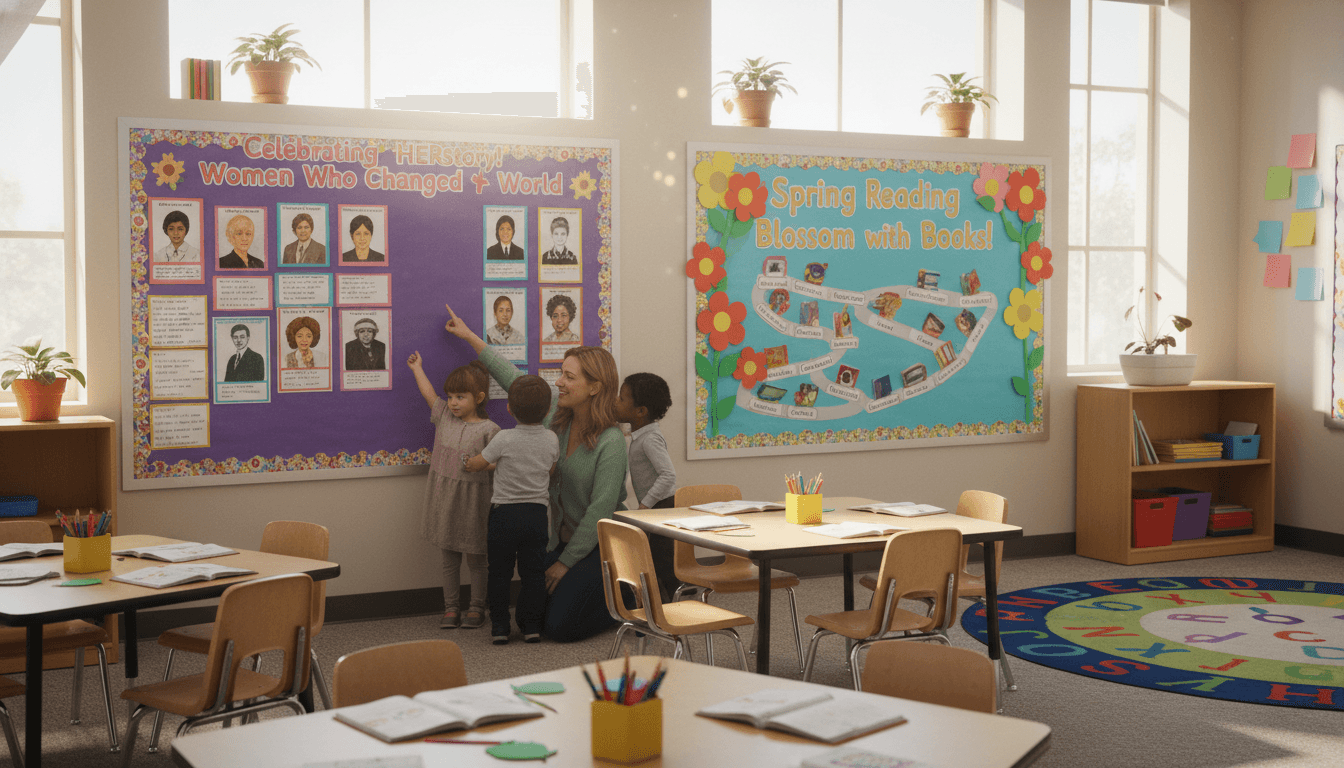
First grade is an ideal age for Women's History Month because picture book biographies make history accessible and memorable. Name the books you are reading and the women students are learning about. If your class is writing pages about women they admire, creating illustrated biographies, or doing a classroom "gallery walk" of women who changed history, describe that project briefly.
Parents who know what their child is studying can ask specific questions at dinner: "Who did you read about in school today? What did she do?" That kind of conversation reinforces the learning more than homework ever could.
Be specific about the spring break packet
If you send a spring break packet, your newsletter needs to give parents full instructions. How many pages are in it? What skills does it cover? How many minutes per day is realistic for a 1st grader? When should it be completed and returned? First grade spring break packets work best when they are short, focused, and clearly tied to skills the class is building rather than filler worksheets. If yours fits that description, say so. Parents who understand the purpose are more likely to actually complete it with their child.
Give spring break dates and a simple structure suggestion
Spring break can reset a month of hard-won habits in 1st grade. The newsletter should give the exact dates school is out, the return date, and one or two low-effort ways for parents to maintain some structure: reading together for fifteen minutes each day, visiting the library, or reviewing sight words a few times during the week. You are not asking parents to run school at home. You are asking for the minimum that keeps skills from regressing.
Preview the final quarter
March is the last natural moment to set expectations for the remainder of the year. What units are coming in reading and writing? What math concepts will the class cover in April and May? When are end-of-year assessments? A brief roadmap helps parents understand that the final quarter is academically important and that the pace does not slow down just because the weather is warming up.
Update parents on phonics and writing progress
By March, most 1st graders should be moving through digraphs, blends, and vowel teams in phonics, and writing should be progressing from simple sentences to small paragraphs or sequential narratives. Give parents a snapshot of where the class is and what the focus is for the next six weeks. If there are specific phonics patterns parents can practice at home, name them. If writing stamina is a focus, explain what that means practically.
Close with a specific ask for this month
End with one clear action tied to what is happening in school right now. Visit the library during spring break. Review the sight word list the class is working on. Ask their child to tell them about one woman they learned about this month. One specific, achievable ask lands better than a general reminder to keep supporting learning at home.
Daystage gives 1st grade teachers a fast, clean way to build a March newsletter with reading updates, Women's History Month content, and spring break logistics all in one place. The format you set stays consistent all year, which means parents know where to look and you spend less time formatting, more time teaching.
Get one newsletter idea every week.
Free. For teachers. No spam.
Frequently asked questions
What reading update should a 1st grade March newsletter include?
March is often when mid-year or end-of-winter-term reading benchmarks wrap up. Your newsletter should give parents a class-level picture of where students are with phonics, fluency, and early comprehension. Name the reading level range without identifying individuals, and tell parents what the end-of-year expectation is so they understand how much runway is left. Parents who know the target are more motivated to support nightly reading.
How should a 1st grade teacher handle Women's History Month in the newsletter?
First grade Women's History Month work is typically built around picture book biographies and class discussions about women who changed history. Name the books you are reading and the women your class is learning about. If students are creating their own 'Women Who Changed the World' pages or other written work, describe the project briefly. Parents who know what their child is studying can extend the conversation at home.
What should a spring break packet section in a 1st grade newsletter say?
If you send a spring break packet, be specific about what is in it and what parents should do: how many pages, which nights, and what the expected time is per session. For 1st grade, a spring break packet is most effective when it is short and achievable, not overwhelming. Name the activities and explain why each supports the skills the class is building. Parents follow through when they understand the purpose.
How do I keep parent engagement strong heading into the final quarter?
Name the engagement directly in the newsletter. Tell parents that the final quarter of 1st grade is when reading growth accelerates fastest and that consistent nightly reading makes a measurable difference. Give them a specific, simple habit to maintain through spring break and into April. Parents who feel like their involvement matters in the final stretch show up differently than parents who feel the year is just winding down.
What newsletter tool works best for 1st grade teachers?
Daystage helps 1st grade teachers send a structured, readable newsletter without spending a full prep period on it. A March newsletter covering reading benchmarks, Women's History Month, and spring break takes about fifteen minutes to build in the Daystage editor. Parents get it in their inbox with consistent formatting every week, which makes it easier to stay on top of what is happening in the classroom.

Adi Ackerman
Author
Adi Ackerman is a former classroom teacher and curriculum writer with 8 years in K-8 schools. She writes about school communication, parent engagement, and what actually works in real classrooms.
More for Classroom Teachers
Ready to send your first newsletter?
3 newsletters free. No credit card. First one ready in under 5 minutes.
Get started free