
June Newsletter Ideas for Kindergarten Teachers: End of Year Done Right
June in kindergarten is unlike any other month of the school year. What started in September as a room full of children who could not yet read is now a room full of readers. Writers. Mathematicians. Students. The June newsletter is your chance to help families see that transformation clearly, prepare for first grade with confidence, and close out a remarkable year together.
Name the milestones families may have stopped noticing
Growth in kindergarten is so constant that families often stop measuring it. The June newsletter is the place to name it all at once. In September, most of your students could not read a single word. In June, they are reading sentences, short books, and in many cases chapter books. They learned to count past 100, add and subtract within 10 or 20, and understand what a number actually represents. They learned to hold a pencil, form letters, and write a sentence with a capital and a period.
List what your class mastered specifically. Parents who see a concrete list of skills understand what a year of kindergarten built, and they carry that understanding into first grade conversations.
Celebrate reading growth with a specific story
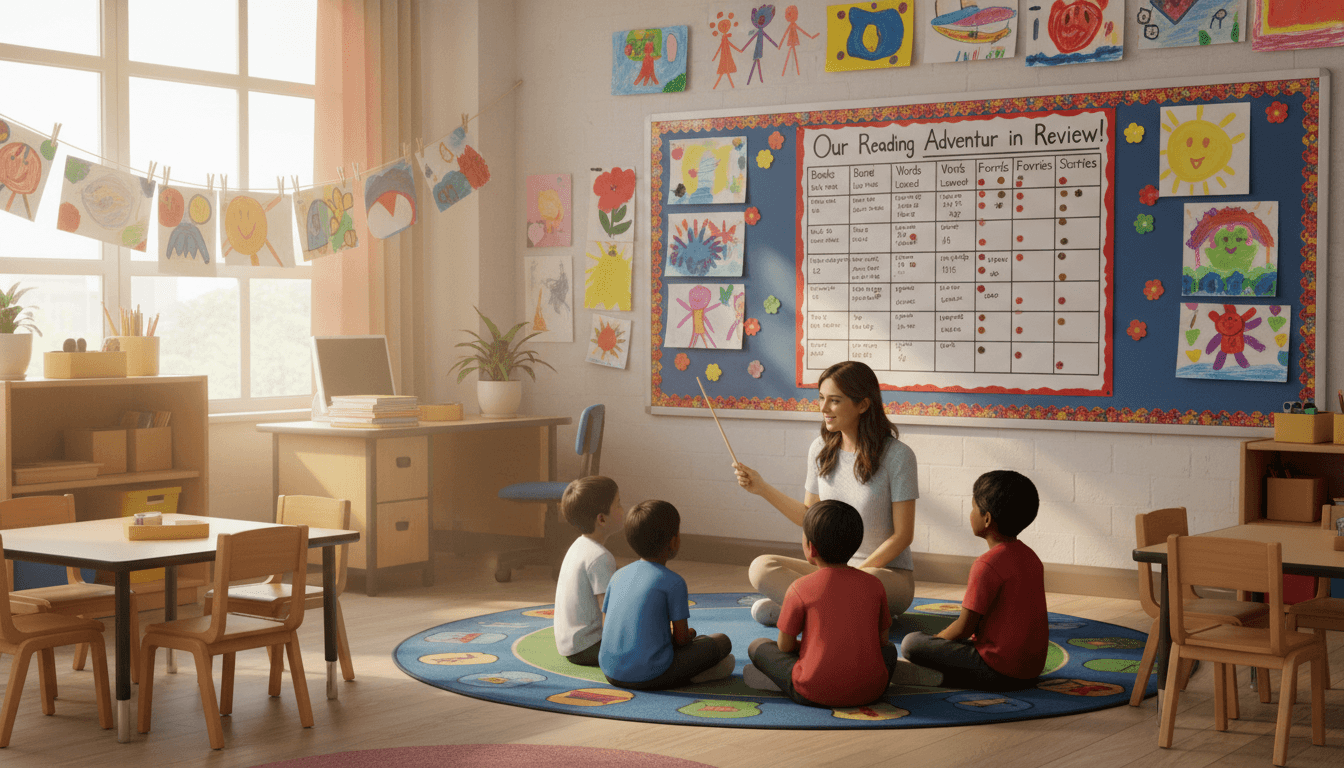
Kindergarten reading growth is one of the most dramatic academic transformations in all of elementary school. Feature it prominently in the newsletter. If you track reading levels, share where the class started and where they finished. If you have a class graph or a milestone wall, describe it or include a photo. A brief story about a moment you watched a student crack the code of reading is the kind of detail that stays with a family forever.
Describe what first grade will look like
Kindergarten families often have very little information about what first grade actually involves. Use the June newsletter to give them an accurate, reassuring preview. First graders read longer texts independently, write more complex sentences, tackle addition and subtraction with larger numbers, and begin more structured science and social studies units. These are all natural extensions of what kindergarten built, not a sudden shift.
If your school has a first grade orientation or meet-the-teacher event, include the date and any details families need to register or attend.
Give families realistic summer habits
The summer after kindergarten is one of the highest-risk periods for reading regression. Families who keep books present and reading part of the daily routine see significantly less slide than families who put learning on hold until September. Give parents three specific, low-pressure habits: read aloud together for fifteen minutes a day, visit the library and let their child pick their own books, and practice counting and simple addition through daily activities like cooking or shopping.
If your library has a summer reading program for incoming first graders, mention it with any sign-up information you have. These programs are free, structured, and genuinely effective at keeping momentum going.
Share one classroom highlight from the year
The June newsletter is also a reflection on what the class built together. Pick one unit, one project, or one moment from the year that captures who your students were as a group. A class-written book, a science observation journal, a cooking project, a performance. Something that shows the classroom was a real community, not just a collection of students. Include a photo if you can. These become the details families talk about for years.
Handle the emotional close with honesty
Kindergarten families feel the end of the year. Some of them are sending their first child through the school system, and this year was a first for them too. A newsletter that acknowledges the weight of the moment, not sentimentally, but honestly, tends to mean more to families than any logistics update.
Name something real about who your students became this year. Keep it specific and earned. A closing paragraph that reflects genuine observation of these particular children is the part of the June newsletter families read twice.
Daystage makes it easy to send a June kindergarten newsletter that captures the year's milestones, prepares families for first grade, and closes the chapter in a way that families will keep.
Get one newsletter idea every week.
Free. For teachers. No spam.
Frequently asked questions
What should a kindergarten June newsletter focus on most?
Celebrate the milestones. Kindergarten is the year when children learn to read, write their names and sentences, count and add, and function as students in a school community. These are enormous accomplishments that happen so gradually families can lose sight of them. A June newsletter that names what students could not do in September and can do now is one of the most meaningful things a kindergarten teacher can send home all year.
How do I prepare kindergarten families for first grade in the June newsletter?
Focus on continuity rather than contrast. Describe what first grade will look like in terms of the skills kindergarten already built, so families understand that their child is ready. Name one or two specific academic areas where first grade will go deeper, like longer independent reading time or more complex addition and subtraction. Avoid framing first grade as a sudden leap, because kindergartners who arrive in first grade feeling confident do better in the first weeks.
What summer habits should a kindergarten teacher recommend in a June newsletter?
Keep the list short and doable. Reading aloud together every day is the single most impactful habit for kindergarten graduates. Point to the library summer reading program as a low-cost, low-pressure structure for keeping books in the home. For math, encourage counting in daily life: steps, snacks, cars in a parking lot. For writing, suggest that children write or draw in a journal a few times a week. None of these need to feel like school, and all of them make a real difference.
How should a kindergarten teacher handle the emotional close of the year in a newsletter?
Name it directly. Kindergarten is a significant transition year, and both children and families feel the end of it. A brief paragraph acknowledging that this year mattered, that the relationships built in the classroom are real, and that first grade is going to be great gives families permission to feel the weight of the moment. A newsletter that handles the emotional close with honesty tends to generate the most heartfelt responses from parents.
What newsletter tool works best for kindergarten teachers?
Daystage is designed for teachers who want to send a polished, warm newsletter without spending half a Sunday on it. A June kindergarten newsletter with milestone photos, summer tips, and a genuine year-end message fits perfectly in the Daystage format, and most teachers finish the whole thing in under fifteen minutes. Parents receive it as a clean, readable email they can save and look back on.

Adi Ackerman
Author
Adi Ackerman is a former classroom teacher and curriculum writer with 8 years in K-8 schools. She writes about school communication, parent engagement, and what actually works in real classrooms.
More for Classroom Teachers
ELA Curriculum Update in Your Classroom Newsletter: What Parents Need to Know
Classroom Teachers · 6 min read
Communicating a Community Service Project in Your Classroom Newsletter
Classroom Teachers · 5 min read
Cultural Heritage Month in Your Classroom Newsletter: What to Communicate
Classroom Teachers · 6 min read
Ready to send your first newsletter?
3 newsletters free. No credit card. First one ready in under 5 minutes.
Get started free