
June Newsletter Ideas for First Grade Teachers: End of Year Done Right

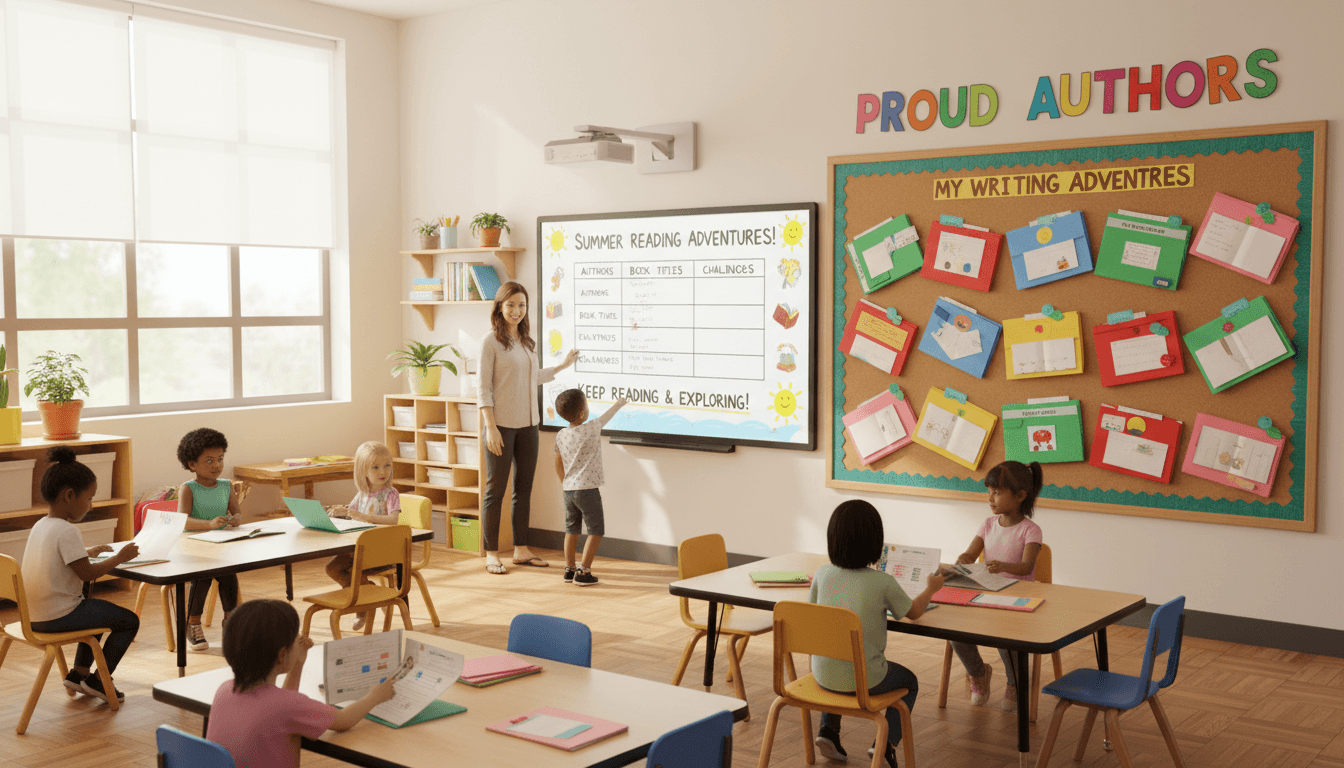
June in first grade marks a genuine turning point. The children who arrived in September sounding out three-letter words are leaving as real readers, real writers, and real mathematicians. The June newsletter is your opportunity to show families the full arc of that growth, prepare them for second grade, and close the year in a way that matches how much the year actually meant.
Lead with reading growth
First grade is defined by reading development, and by June the growth is measurable and dramatic. If you track reading levels, share where the class started in September and where they finished in June. If you use a different measure, describe what students can do now that they could not do at the start of the year: read chapter books independently, decode unfamiliar words using phonics strategies, and retell a story with characters, setting, and plot.
A brief story about a reading breakthrough you witnessed, or a moment when you watched a student choose to read during free time, grounds the growth in something real that parents can picture.
Share a concrete summer reading plan
The summer reading slide is real, and first grade is one of the grade levels most affected by it. Families who keep books in the home and reading in the daily routine protect the gains their child made all year. Give parents something specific: a short list of recommended books at the level their child is reading, a recommendation to visit the library once a week, and a note about the local summer reading program if your library runs one.
The most effective advice is also the simplest: read together for fifteen minutes every night, even if your child can do it independently. Read-alouds at first grade level build vocabulary and comprehension faster than independent reading alone.
Preview second grade with confidence
First grade families often arrive in September with a vague sense that second grade is harder, without a clear understanding of what that means. Use the June newsletter to fill in that picture. Second graders read longer, more complex texts. They write paragraphs with topic sentences and supporting details. They tackle addition and subtraction with two-digit numbers and start working with place value more deeply.
Frame all of this as a continuation of first grade work, because that is exactly what it is. Students who understand that their first grade skills are the foundation for second grade arrive there with confidence rather than apprehension.
Recap field day and end-of-year celebrations
Field day is one of the most memorable days of the first grade year, and families who could not attend want to know what happened. Share a photo, name one or two specific activities, and describe the energy in the room. The same goes for a class picnic, an end-of-year party, or a performance. Keep the recap brief and specific: one moment, one photo, one detail that brings the day home for parents who were not there.
Celebrate writing growth alongside reading
First grade writing growth is often underappreciated by families who are focused on reading. In June, most first graders can write multiple sentences, use punctuation, and communicate a clear idea on paper. Some are writing short stories with beginnings, middles, and ends. A portfolio of student writing, or even a single piece from September alongside a piece from June, is one of the most powerful things you can share in the newsletter.
Give families a simple summer math habit
Reading tends to dominate summer learning conversations, but math benefits from consistent practice too. Recommend one low-pressure daily habit: counting money, measuring ingredients while cooking, or practicing addition and subtraction facts through a simple card game. First grade math skills stay sharp when they are woven into daily life rather than assigned as drills.
Close with something true about this class
A June newsletter that ends with a genuine observation about who your students became this year is the one families keep. Not a generic "what a wonderful year" sign-off, but a specific sentence or two about something real: the way the class took care of each other, the moment everyone figured out long vowels at the same time, the book that made the whole room laugh. Honest specifics land. Closings that mean nothing fall away.
Daystage makes it straightforward to send a June first grade newsletter that captures a year of real growth, prepares families for second grade, and closes the chapter with the honesty it deserves.
Get one newsletter idea every week.
Free. For teachers. No spam.
Frequently asked questions
What should a first grade June newsletter highlight most?
Reading growth is the centerpiece of first grade, and the June newsletter is the place to show it clearly. Most first graders entered the year as emergent readers and are leaving as independent readers who can tackle books with chapters, complex sentences, and new vocabulary. Naming that transformation specifically, with reading levels or examples of what students can now do, gives families a tangible picture of what a year of first grade instruction accomplished.
How do I preview second grade without overwhelming first grade families?
Keep it grounded in what first grade already built. Second grade deepens the same skills: longer independent reading, more complex addition and subtraction, paragraph writing, and richer science and social studies units. Let parents know their child is ready because of the work done in first grade, not despite it. If your school has a second grade orientation or meet-the-teacher event, include the date so families have something concrete to look forward to.
What should a first grade summer reading list include?
Aim for variety rather than a single required text. Include a few books at the level your students are reading now, a few slightly above grade level for families who want to read aloud together, and a note about the local library's summer reading program. First grade readers are often highly motivated to keep going when they have choice, so a list that covers different genres and topics serves them better than a narrow recommended list.
How should I handle field day and end-of-year events in the newsletter?
A brief recap with one or two photos is perfect. Field day is often a highlight of the year for first graders, and parents who could not attend appreciate seeing a moment from it. Keep the description short and specific: name an activity, describe the energy, share something a student said. The goal is to bring the moment home, not write a full report. End-of-year parties and picnics get the same treatment.
What newsletter tool works best for first grade teachers?
Daystage is built for teachers who want to send a warm, organized newsletter without spending hours on layout. A June first grade newsletter with reading growth highlights, summer recommendations, field day photos, and a genuine close fits cleanly in the Daystage format. Most teachers finish the whole newsletter in under fifteen minutes, and parents receive it as a clean email they can actually read at pickup or after bedtime.

Adi Ackerman
Author
Adi Ackerman is a former classroom teacher and curriculum writer with 8 years in K-8 schools. She writes about school communication, parent engagement, and what actually works in real classrooms.
More for Classroom Teachers
ELA Curriculum Update in Your Classroom Newsletter: What Parents Need to Know
Classroom Teachers · 6 min read
Communicating a Community Service Project in Your Classroom Newsletter
Classroom Teachers · 5 min read
Cultural Heritage Month in Your Classroom Newsletter: What to Communicate
Classroom Teachers · 6 min read
Ready to send your first newsletter?
3 newsletters free. No credit card. First one ready in under 5 minutes.
Get started free